In a quiet corner of central Florida, a woman named Coretta sits at her kitchen table, the steam rising from a cup of tea as she reflects on two decades of life in her community. For Coretta—a Black mother of three whose professional background in real estate gives her a keen eye for property dynamics—the neighborhood she calls home has become a source of profound weariness. While she has lived in this mostly Hispanic community for more than 20 years, the initial frustrations she felt regarding the local homeowners association (HOA) have long since calcified into a quiet, steady apathy.
Coretta’s experience is not an isolated one, nor is it merely a dispute over lawn maintenance or house paint. According to her, the very structure of the community feels designed to filter out those who do not fit a specific mold. "I don’t think the community developers intended for it to be a heavily Hispanic population," she observed during an interview. "They were expecting a certain economic class to come here. I think they were trying to push out the ones that they felt didn’t belong. I think they’re doing that and have done that."
This sentiment captures a growing concern among sociologists and housing advocates: that HOAs, while appearing to be neutral administrative bodies, may be functioning as "racialized organizations." These private governments, which now oversee the lives of tens of millions of Americans, possess the power to shape the demographics, culture, and financial stability of neighborhoods in ways that often disadvantage people of color.
The Sociological Framework of Private Oversight
Stephanie A. Dhuman, an Assistant Professor of Sociology at Hamilton College, spent years investigating these dynamics. Between 2017 and 2020, Dhuman interviewed 47 residents of a central Florida community, including Coretta, to understand how people of color navigate the complexities of HOA governance. All of the participants identified as Latino, Caribbean, or Black, and their testimonies revealed a consistent theme: a pervasive sense that they were being signaled by governing officials that they did not truly belong.
The research suggests that HOAs meet the criteria for what sociologists define as racialized organizations. These are entities that, despite maintaining a veneer of neutrality or colorblindness, often create and sustain systemic inequality. By their very nature, they can diminish the agency of racialized groups—those perceived as different from the white majority—and legitimize an unequal distribution of community resources. In many of these organizations, "whiteness" remains an unspoken standard for belonging, and the gap between formal rules and actual enforcement is often bridged by racial bias.
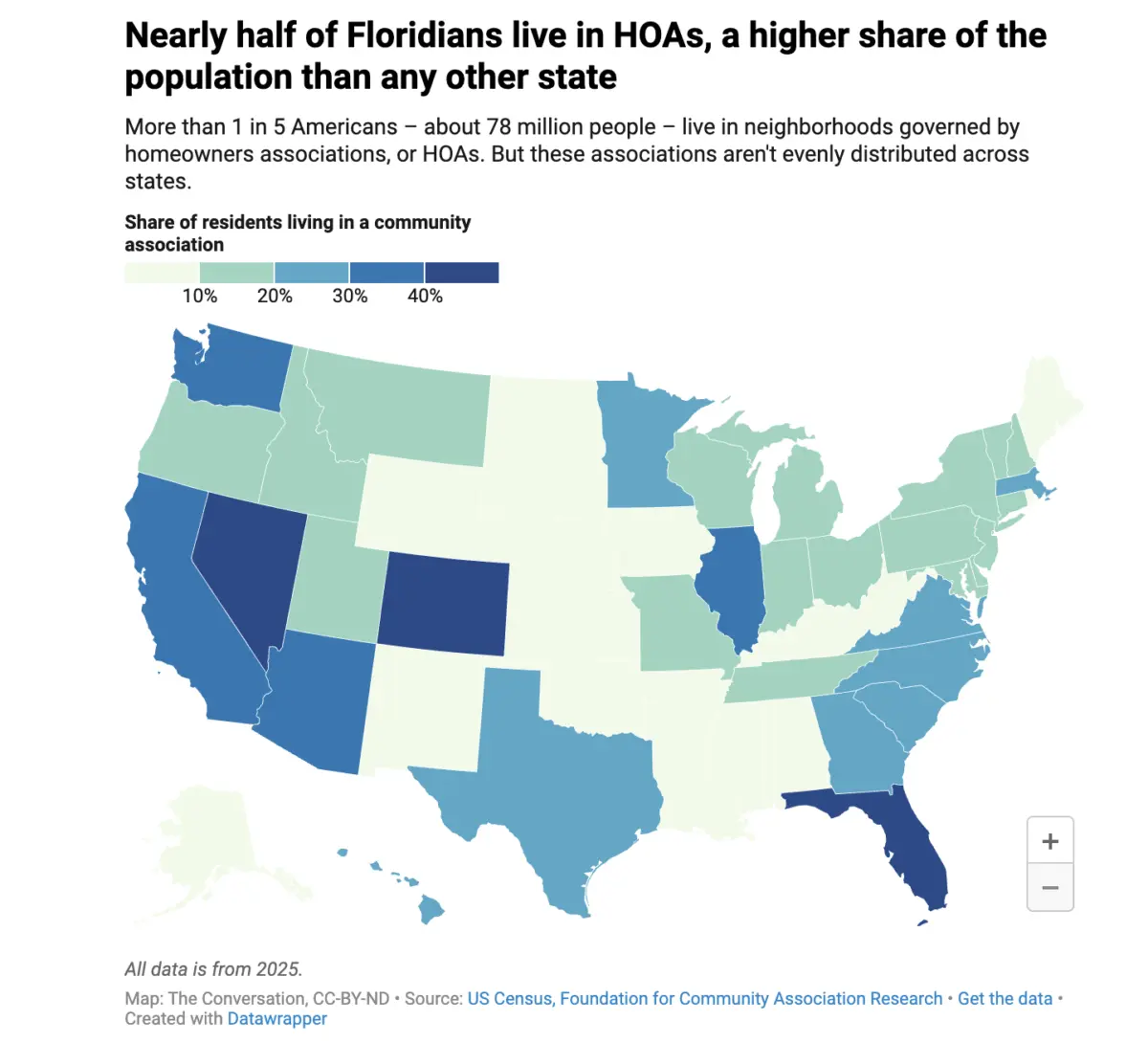
The stakes of this issue are particularly high in Florida. Nearly half of the state’s residents live in communities governed by HOAs, the highest proportion in the United States. For families like Coretta’s, moving is rarely a viable solution. Not only have surging housing prices made relocation financially prohibitive, but the ubiquity of HOAs means that any new home would likely come with a similar set of restrictive covenants. Nationally, 80% of new single-family homes in subdivisions and 60% of all new single-family homes are governed by HOAs, making them an inescapable feature of modern American homeownership.
The Reach of Rules and Regulations
HOAs function as a form of private government, overseen by an elected board of volunteer directors. While many homeowners associate these boards with aesthetic choices—ensuring that every mailbox looks the same or that lawns are mowed to a specific height—their legal authority extends far deeper. HOA boards act as policymakers with the power to pass and enforce community restrictions, levy fines, and issue sanctions.
Perhaps the most significant power held by an HOA is the legal authority to foreclose on a home. If a homeowner fails to pay dues, special assessments, or even accumulated fines, the association can, in many jurisdictions, initiate foreclosure proceedings. This places an extraordinary amount of leverage in the hands of volunteer neighbors, often with very little government oversight.
Beyond the financial and legal ramifications, HOAs frequently regulate the cultural and expressive life of a neighborhood. In 2019, a Florida HOA gained national attention when it demanded that a veteran remove a Puerto Rican flag from her property. Such incidents highlight how boards can use "aesthetic" rules to suppress cultural identity. Furthermore, HOAs often control the sponsorship of community events, festivals, and holiday celebrations. By deciding which holidays are recognized and which cultural symbols are permitted in public spaces, these boards exert a measure of control over the "social fabric" of the community, often favoring traditions that align with a traditional, white-centric middle-class norm.
The Exclusionary Nature of Private Communities
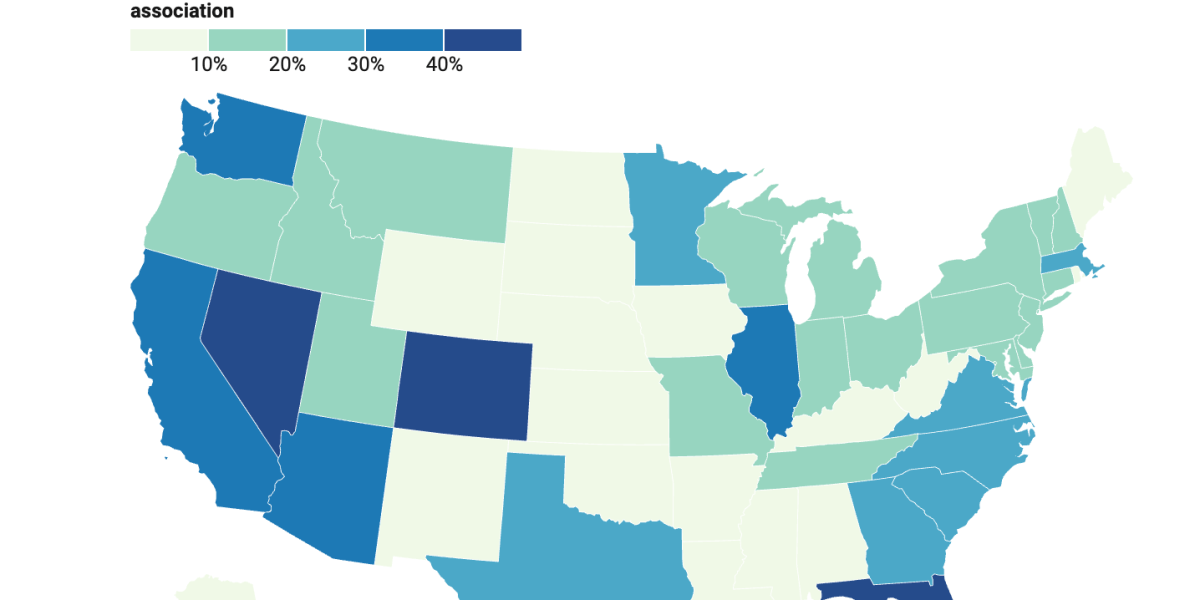
The scale of HOA influence is staggering. Approximately 373,000 HOAs currently exist across the United States, affecting the housing of more than 78 million Americans. Despite this massive footprint, there is a notable lack of consistency in how these organizations are regulated. Laws governing how board members are elected, or whether they must even reside within the community they govern, vary wildly from state to state.
While federal laws provide some protections against outright discrimination, research indicates that HOAs often act as spaces of exclusion. By maintaining strict residential standards and high socioeconomic barriers, they can inadvertently or intentionally preserve residential segregation. A 2024 survey revealed that fewer than half of Americans living under an HOA believe their neighborhood is actually better off for it, and one in ten residents has seriously considered selling their home specifically because of HOA-related friction.
The financial barrier to entry is one of the most effective tools of exclusion. In Florida, the median monthly HOA fee is approximately $230, though it is common for homeowners to pay $500 or more depending on the amenities provided. For many prospective buyers, these dues—which can increase at the board’s discretion—act as a secondary mortgage that prices out lower-income families. Because economic status is closely tied to race in the United States due to historical factors, these financial barriers often fall along racial lines, effectively serving as a modern mechanism for maintaining the property values of the "right" kind of resident.
The Mechanics of Voter Suppression
One of the most striking findings in Dhuman’s research was the sense of political powerlessness among residents. None of the individuals interviewed for the study were currently attending HOA meetings. Most had tried in the past but stopped when they realized their voices carried no weight.
In the community studied, residents pointed to specific tactics that they characterized as voter suppression. The HOA board had established rules that made participation nearly impossible for working-class and multigenerational families. For example, the board refused to allow "proxy voting," a common practice that permits a homeowner to designate a neighbor to cast a vote on their behalf. This required all votes to be cast in person, usually on a Tuesday during business hours.
For residents like Elena, a woman living in a multigenerational household, these rules were an insurmountable wall. Although Elena paid the mortgage, the home was listed in her son’s name. Because the HOA bylaws only permitted the listed homeowner to vote, Elena was barred from the process. Her son, who worked grueling hours starting at 3:00 a.m., could never make it to a Tuesday afternoon meeting.
"I’m not allowed to vote. You’re not allowed to vote with a proxy," Elena explained. "My son… works crazy hours. He gets up at 3 in the morning to work, he comes home, has dinner and goes straight to bed… he never makes it. They should have that on the weekends."
Furthermore, the HOA restricted meeting attendance and voting rights to homeowners only, explicitly excluding renters. In many communities, renters are treated as second-class citizens with no right to participate in the governance of the place where they live, despite being subject to the association’s rules. The lack of transparency compounded the issue, as the board was only required to post meeting notices at a physical office located at the far end of the community, rather than communicating digitally or through more accessible means.
A Challenge to the American Dream
The implications of HOA governance reach far beyond the aesthetics of a suburb; they touch upon the core of the American Dream. Historically, discriminatory practices like redlining, which began in the 1930s, systematically denied Black and Latino families the opportunity to build wealth through homeownership. While homeownership rates have risen since then, the progress remains uneven. Census data shows that the Black homeownership rate stands at 45%, significantly lower than the 73% rate among non-Hispanic whites.
As the racial wealth gap continues to widen, Black and Latino residents remain more likely to rent or live in multigenerational arrangements. At the same time, the housing market is moving toward a future where almost all new inventory is tied to an HOA. This creates a collision course: as racialized minorities increasingly enter these communities, they find themselves in a system of private governance that was not built with them in mind and often works to limit their autonomy.
Homeownership has long been sold as a path to independence, a "voice" in one’s community, and a stake in the future. However, when an HOA uses its power to "fence out" the culture and participation of its minority residents, it effectively devalues the experience of homeownership for those groups. For residents like Coretta and Elena, the "American Dream" of owning a home is tempered by the reality of living under a private government that views their presence—and their participation—with skepticism.