Perhaps the most significant power held by an HOA is the legal authority to foreclose on a home. If a homeowner fails to pay dues, special assessments, or even accumulated fines, the association can, in many jurisdictions, initiate foreclosure proceedings. This places an extraordinary amount of leverage in the hands of volunteer neighbors, often with very little government oversight.
Beyond the financial and legal ramifications, HOAs frequently regulate the cultural and expressive life of a neighborhood. In 2019, a Florida HOA gained national attention when it demanded that a veteran remove a Puerto Rican flag from her property. Such incidents highlight how boards can use "aesthetic" rules to suppress cultural identity. Furthermore, HOAs often control the sponsorship of community events, festivals, and holiday celebrations. By deciding which holidays are recognized and which cultural symbols are permitted in public spaces, these boards exert a measure of control over the "social fabric" of the community, often favoring traditions that align with a traditional, white-centric middle-class norm.
The Exclusionary Nature of Private Communities
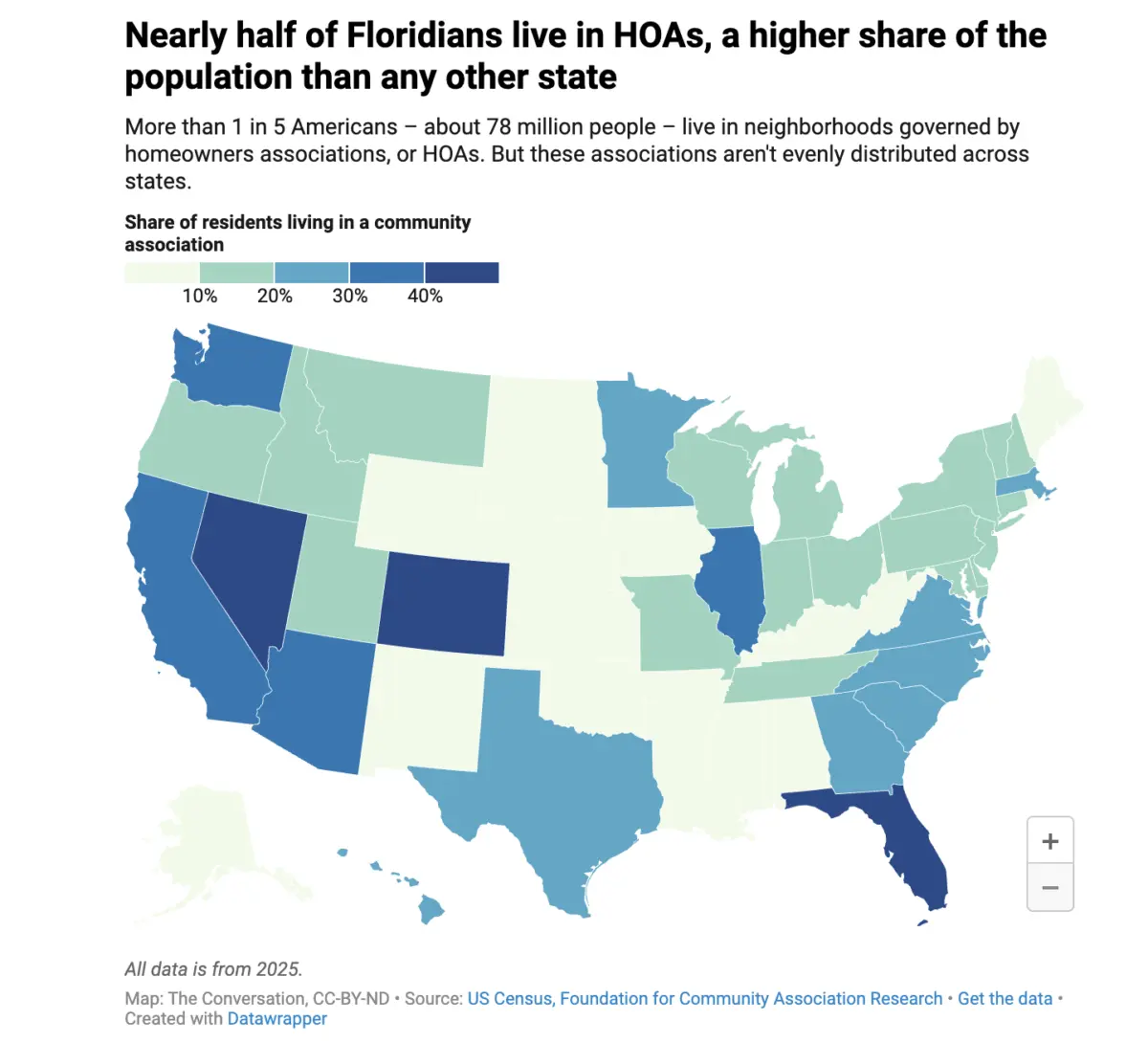
The scale of HOA influence is staggering. Approximately 373,000 HOAs currently exist across the United States, affecting the housing of more than 78 million Americans. Despite this massive footprint, there is a notable lack of consistency in how these organizations are regulated. Laws governing how board members are elected, or whether they must even reside within the community they govern, vary wildly from state to state.
While federal laws provide some protections against outright discrimination, research indicates that HOAs often act as spaces of exclusion. By maintaining strict residential standards and high socioeconomic barriers, they can inadvertently or intentionally preserve residential segregation. A 2024 survey revealed that fewer than half of Americans living under an HOA believe their neighborhood is actually better off for it, and one in ten residents has seriously considered selling their home specifically because of HOA-related friction.
The financial barrier to entry is one of the most effective tools of exclusion. In Florida, the median monthly HOA fee is approximately $230, though it is common for homeowners to pay $500 or more depending on the amenities provided. For many prospective buyers, these dues—which can increase at the board’s discretion—act as a secondary mortgage that prices out lower-income families. Because economic status is closely tied to race in the United States due to historical factors, these financial barriers often fall along racial lines, effectively serving as a modern mechanism for maintaining the property values of the "right" kind of resident.
The Mechanics of Voter Suppression
One of the most striking findings in Dhuman’s research was the sense of political powerlessness among residents. None of the individuals interviewed for the study were currently attending HOA meetings. Most had tried in the past but stopped when they realized their voices carried no weight.