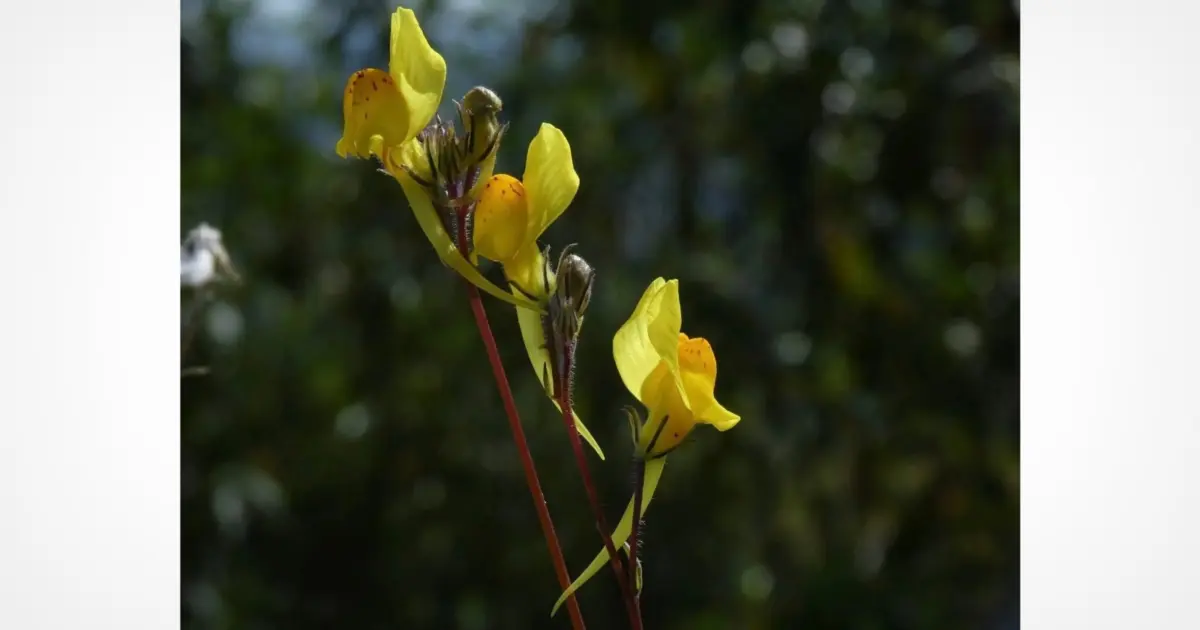
The story began in March 2023, when an unnamed German tourist was exploring the rugged terrain near Monchique, a town nestled in the mountainous interior of the Algarve. While traversing the area around Cerro do Castelo de Alferce, she encountered a striking yellow flower that caught her eye. Using her camera, she documented the plant—a vertical stalk adorned with spurred, yellow blossoms featuring distinct reddish-brown spots. Like many modern nature enthusiasts, she chose to share her find on iNaturalist, a global social network where members of the public record and share observations of plants and wildlife. At the time, the image was tentatively identified by the community as a known species, but its digital presence soon caught the expert eye of João Farminhão, a botanist and researcher at the University of Coimbra’s Centre for Functional Ecology (CFE).
Farminhão, who has spent years studying the flora of the Iberian Peninsula, noticed something unusual about the photograph. While the plant bore a resemblance to other members of the Linaria genus, certain morphological characteristics seemed out of place for any species recorded in that specific geographic region. The "toadflax" genus is known for its complex floral structures and diverse evolutionary adaptations, but the specimen in the tourist’s photo exhibited a unique combination of traits. Intrigued by the possibility that this was not merely a variation of a common plant but something entirely new, Farminhão decided to investigate the site in person.
A year after the original photograph was taken, Farminhão traveled to the specific coordinates in Monchique to conduct a field survey. In the spring of 2024, he successfully located a small, isolated population of the plants at Cerro do Castelo de Alferce. Upon close physical examination, his suspicions were confirmed: the species had never been described in scientific literature. The discovery was later detailed in a study published in the journal Plant Ecology and Evolution, a collaborative effort involving Farminhão and researchers from the University of Lisbon, the University of Barcelona, and the Royal Botanical Garden in Madrid.
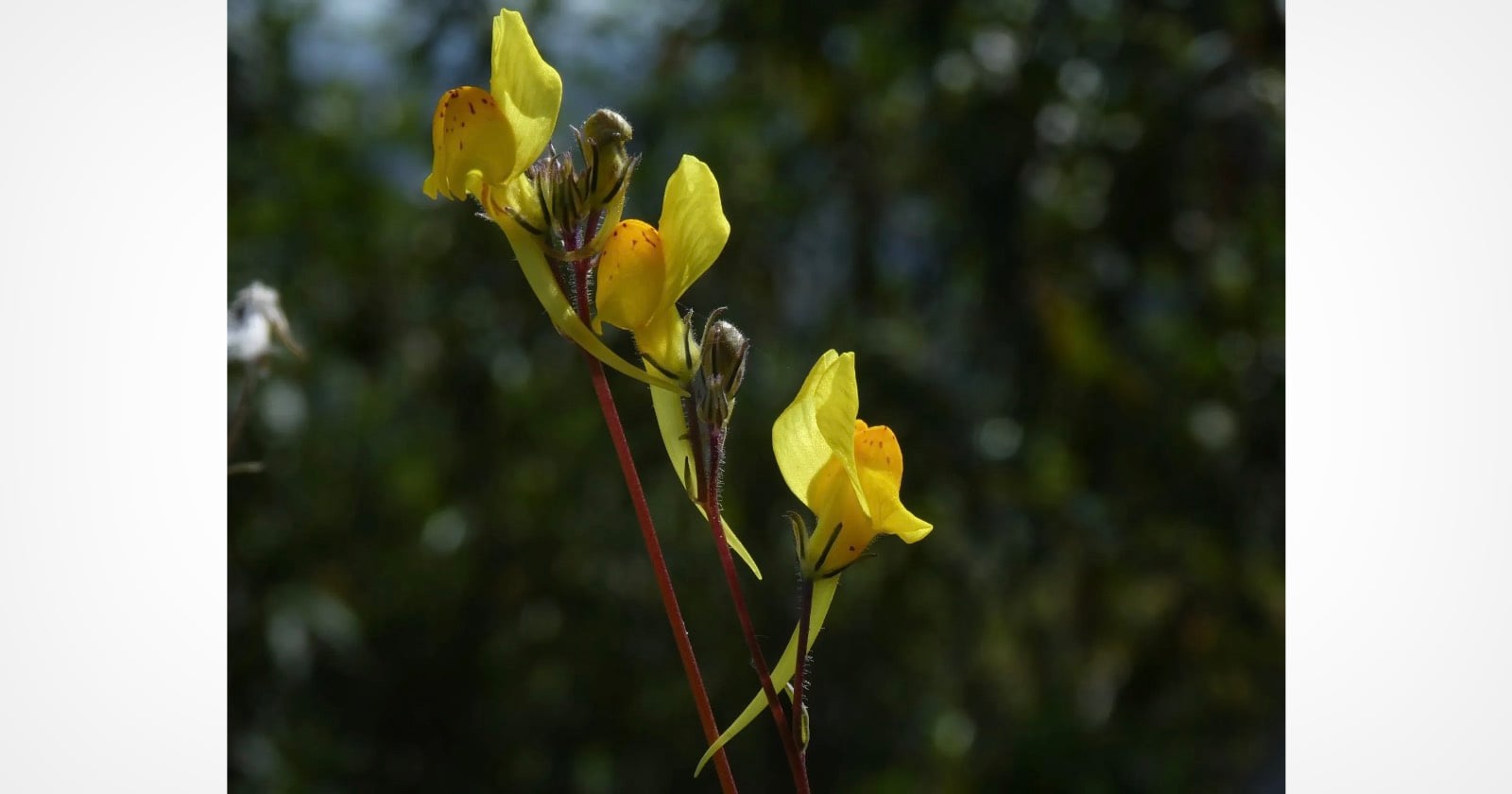
The new species was officially named Linaria alfercensis, or Alferce ansarina, paying homage to the locality where it was first identified. Morphologically, the flower is distinguished by its speckled yellow petals and two prominent dark stripes on the underside of the bloom. Beyond its coloration, the plant is characterized by an erect growth habit, which sets it apart from its closest botanical relatives that often exhibit more sprawling or prostrate growth patterns. These physical nuances, while perhaps subtle to the untrained eye, represent significant evolutionary distinctions that justify its classification as a unique species.
However, the excitement of the discovery is tempered by the precarious nature of the plant’s existence. During his field research, Farminhão found that the population of Linaria alfercensis is alarmingly small, consisting of only a few dozen flowering individuals. This limited distribution has led the research team to propose that the species be classified as "Endangered" under international conservation standards. The fragility of this newly discovered life form is exacerbated by several environmental pressures specific to the Monchique region.
One of the primary threats identified by the researchers is the prevalence of industrial eucalyptus plantations. While eucalyptus is a major economic crop in Portugal, it is an exotic species that can significantly alter local ecosystems, depleting soil nutrients and outcompeting native flora. Additionally, the area is plagued by the invasive mimosa acacia, another non-native plant that spreads aggressively and displaces indigenous species. Perhaps most pressing is the recurring threat of wildfires, which have historically devastated the Monchique mountain range. For a species with a population numbering in the dozens, a single high-intensity fire could potentially result in its total extinction before it is even fully understood by science.
In response to these findings, Portuguese officials have already begun to implement conservation measures. Efforts are being concentrated at the specific site where the plant was discovered to manage invasive species and protect the local habitat from further degradation. The hope is that by securing this small pocket of biodiversity, Linaria alfercensis can be preserved for future generations and further study.
The discovery of the Alferce ansarina is not an isolated incident but part of a growing trend where photography acts as a bridge between the general public and the scientific community. The rise of high-quality smartphone cameras and accessible digital platforms has turned millions of people into potential field observers. This democratization of data collection allows scientists to monitor vast areas of the planet that they could never hope to cover on their own. In this instance, a tourist’s casual curiosity provided the "missing link" that led a professional botanist to a breakthrough that might have otherwise remained hidden for decades.
This phenomenon has been mirrored in other branches of natural science recently. Earlier this year, the world of ornithology was stunned when two nature photographers captured images of a Rusty Lark in Africa’s Sahel region. The small, unassuming bird had not been seen or documented for 94 years and was widely feared to be extinct. The photographs provided the first definitive proof of the species’ continued existence in nearly a century, offering a glimmer of hope for its conservation. Similarly, in the field of marine biology, photographers documenting humpback whales recently captured the first-ever images of the species engaging in sexual intercourse. The photographs were not only a biological first but also revealed that the encounter was between two males, providing researchers with unprecedented insights into the social and reproductive behaviors of these marine giants.
These examples highlight a fundamental shift in how scientific discovery occurs in the 21st century. While traditional expeditions and laboratory research remain the backbone of science, the "accidental" contribution of photographers—be they hobbyists or professionals—is becoming increasingly vital. A photograph is more than just a visual record; it is a data point containing geographical, temporal, and morphological information that can trigger a chain reaction of scientific inquiry.
As for the Linaria alfercensis, its journey from an anonymous upload on iNaturalist to a recognized scientific discovery is a reminder of how much of the natural world remains to be explored. Even in a country as well-studied as Portugal, and in a region as frequently visited as the Algarve, there are still secrets tucked away in the hills. The discovery underscores the importance of preserving wild spaces, no matter how small or seemingly insignificant they may appear.
The researchers involved in the study emphasize that the naming of the plant and its publication in scientific journals is only the beginning. The focus must now shift toward long-term monitoring and genetic study to understand how this species evolved in isolation and what role it plays in the broader ecology of the Monchique mountains. For João Farminhão and his colleagues, the goal is to ensure that the Alferce ansarina does not become a mere footnote in botanical history—a species discovered and lost in the same decade.
The legacy of the German tourist’s photograph serves as a call to action for all travelers and nature lovers. It demonstrates that the simple act of stopping to admire a flower and sharing its image with the world can have a profound impact on our understanding of life on Earth. In an era of rapid environmental change and biodiversity loss, the watchful eyes of the public, armed with cameras, may be one of the most effective tools we have for cataloging and protecting the natural wonders that remain.