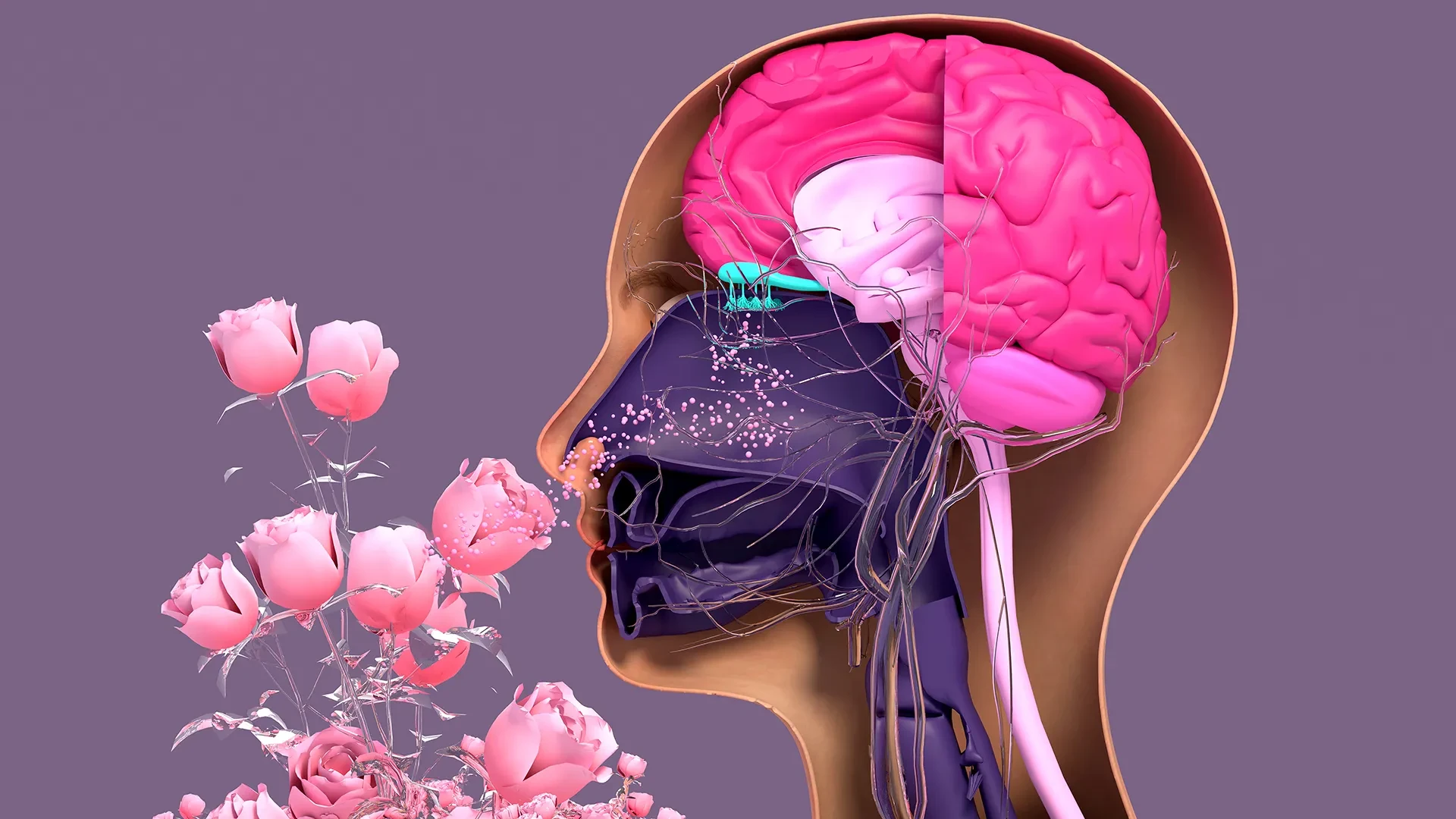
One of the most common complaints regarding the sense of smell is its gradual decline with age. As people grow older, their ability to distinguish subtle scents or even detect strong odors often diminishes. The Tufts team utilized their 3D model to investigate the biological roots of this phenomenon.
The researchers harvested cells from mice of various ages and attempted to grow them into organoids. They observed a clear correlation between the age of the donor mouse and the regenerative capacity of the resulting tissue. Cells taken from older mice demonstrated a marked decline in their ability to generate new neurons compared to those from younger mice.
"We found a decline in the ability of the older mice cells to generate new neurons," explains Lin. "We think this is due to a decrease in the GBC population as we age, but we need to do more work to test this hypothesis and if so, develop ways to rejuvenate them."
This aspect of the research opens a new window into the study of age-related sensory loss. If the decline in smell is tied to a dwindling population of active stem cells, or a breakdown in the communication between HBCs and GBCs, it may eventually be possible to develop therapies that "reboot" these cellular pathways, potentially restoring a degree of olfactory function to the elderly.
An Easy-To-Use Model
Beyond the biological discoveries themselves, the study represents a significant technological contribution to the field of sensory biology. The development of the 3D olfactory organoid was driven by a need for a model that was both physiologically accurate and accessible to the wider scientific community.
The lead author of the study, Juliana Gutschow Gameiro, played a pivotal role in this development. A former Ph.D. student visiting the Graduate School of Biomedical Sciences from the State University of Londrina in Brazil, Gameiro was dedicated to creating a model that did not require the prohibitively expensive equipment or specialized facilities often found in elite biotechnology hubs.
"Because loss of smell is associated with COVID-19, as well as with Parkinson’s disease and other conditions, a much larger number of researchers from a variety of different fields have begun researching olfactory epithelial cells in the last few years," says Lin.
The sudden global focus on anosmia as a symptom of COVID-19 created a surge in interest from researchers who were not necessarily experts in stem cell biology. By designing an "easy-to-use" model, Lin and Gameiro have provided a tool that allows scientists from diverse backgrounds—such as virologists, toxicologists, and neurologists—to study the nasal environment without having to overcome a steep technical barrier.
The mouse-based organoid allows researchers to observe the complex, multi-layered architecture of the nasal tissue in a way that traditional, flat cell cultures (2D models) cannot replicate. In a 3D environment, cells can communicate, move, and differentiate much as they would inside a living organism, providing a more realistic snapshot of how disease and aging affect the nose.