In the lead-up to the most anticipated video game release of the decade, references to Grand Theft Auto VI have become an almost inescapable part of the cultural zeitgeist. From social media memes to fashion aesthetics, the "Sun-drenched Vice City" vibe is everywhere. Now, that influence has reached the hallowed halls of Pixar Animation Studios, though perhaps not in the way audiences might expect. The studio’s latest experimental project, an artist-driven short film titled Fruit & Nut, opens with a pink and cyan neon title card that immediately evokes the high-stakes, neon-soaked world of Rockstar Games’ upcoming masterpiece. However, any similarity to the world of triple-A gaming ends the moment the animation begins, as the film quickly pivots into a surreal, handcrafted journey that challenges the very definition of the "Pixar style."
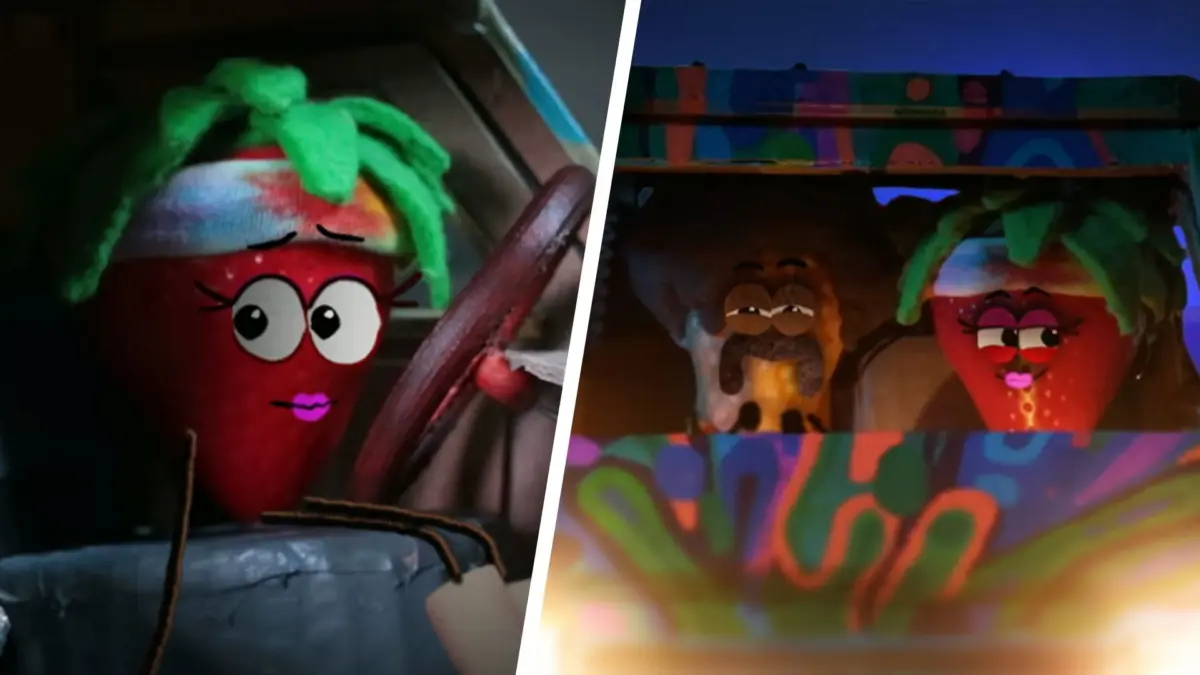
Directed by veteran Pixar artists Rej Bourdages and Tony Maki, Fruit & Nut is being billed by the studio as the "untold story of the most famous duo of all time." While Pixar is globally renowned for its cutting-edge 3D computer-generated imagery (CGI), this seven-minute short represents a bold departure from the digital perfection of films like Toy Story or Finding Nemo. Instead, Bourdages and Maki have opted for a tactile, stop-motion approach, utilizing physical puppets and tangible sets to tell a story that is as absurd as it is visually arresting.
The short film follows the unlikely partnership between a lonely peanut and a hitchhiking strawberry. What begins as a mundane encounter at a dive bar quickly escalates into a high-octane "couple in crime" narrative. After the peanut flees the bar to avoid a bill, he inadvertently becomes the getaway driver for a strawberry involved in a bank robbery. The plot, which draws thematic inspiration from classic road trip cinema like Thelma & Louise, serves as a psychedelic origin story for a popular snack combination. The narrative journey is punctuated by unexpected twists, culminating in a finale that has left viewers both baffled and delighted.
A Stylistic Departure for the Animation Giant
For decades, Pixar has been the gold standard for 3D animation. The studio practically invented the medium with the original Toy Story and has spent the last thirty years refining the physics of light, hair, and water to near-photorealistic levels. However, Fruit & Nut stands as a testament to the studio’s growing interest in diversifying its visual language. It is only the second stop-motion film ever released by Pixar, following the 2024 experimental short Self.
The decision to use stop-motion is significant. In an era where AI-generated imagery and hyper-clean digital renders are becoming commonplace, the "handcrafted" feel of Fruit & Nut offers a refreshing sense of imperfection. The puppets have weight and texture; the sets feel lived-in and physical. By combining these stop-motion elements with 2D animation sequences, Bourdages and Maki have created a hybrid look that feels more like an independent indie darling than a product of a multi-billion dollar studio.
This shift in direction is not accidental. It is the result of Pixar’s internal artist-driven program, an initiative designed to give employees a creative outlet outside the rigid structures of feature film production. This program serves as a spiritual successor to the studio’s earlier SparkShorts initiative, which produced acclaimed works like Kitbull and Float. These programs are vital for the health of the studio, allowing artists who usually spend years working on a single aspect of a massive feature—such as lighting or character rigging—to take the reins as directors and explore their own unique visions.