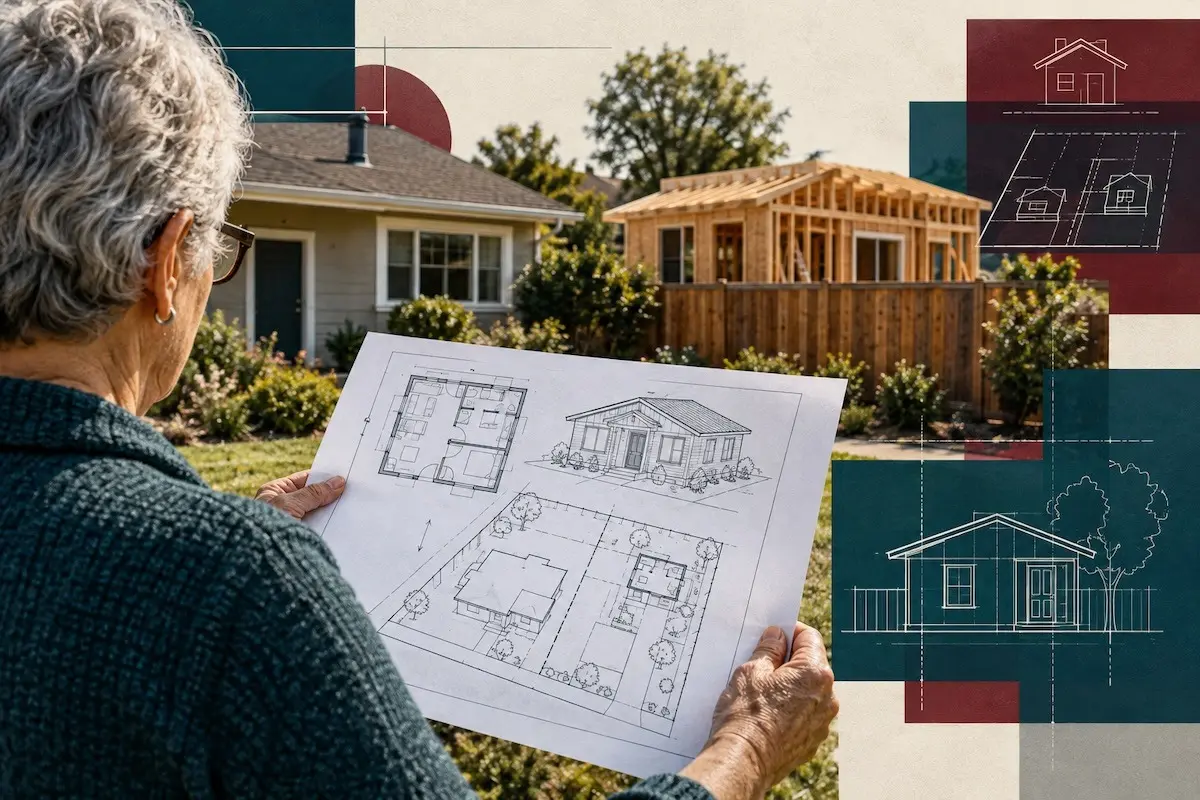
In an effort to address the dual crises of senior financial instability and a chronic shortage of family housing, Alameda County, California, is developing a first-of-its-kind initiative. The program seeks to empower older homeowners on fixed incomes to leverage their property’s value by building accessory dwelling units (ADUs), subdividing their lots, and selling their original family homes. This strategic move is designed to provide seniors with modern, accessible living spaces while simultaneously creating new homeownership opportunities for families in one of the nation’s most expensive real estate markets.
The initiative, currently being refined by the Alameda County Housing Department, offers a specialized pathway for seniors who are often described as "house rich but cash poor." Many long-term residents in the East Bay own properties that have appreciated significantly over decades, yet they struggle to cover rising property taxes, healthcare costs, and daily living expenses on stagnant retirement incomes. By utilizing a combination of recent state laws, the county hopes to provide a structural solution that allows these residents to remain in their neighborhoods while gaining financial independence.
A Strategic Framework Built on State Legislation
The proposed program does not exist in a vacuum; rather, it is a sophisticated integration of several landmark California housing laws passed in recent years. To make the "build, split, and sell" model viable, Alameda County is drawing on the combined power of Assembly Bill 68, Senate Bill 9, and Proposition 19.
Assembly Bill 68, which significantly eased the restrictions on ADU construction across the state, serves as the foundation for the physical expansion of housing on existing lots. By streamlining the permitting process and reducing requirements for parking and setbacks, the law made it feasible for homeowners to add secondary units even on smaller suburban lots. However, building an ADU is only the first step in the Alameda County model.
The critical mechanism for financial liberation comes from Senate Bill 9 (SB 9), the California Homebuild Act. This legislation allows qualifying property owners to split a single-family residential lot into two separate parcels. Under the county’s proposed program, a senior would build a high-quality ADU on their property, legally subdivide the lot so the ADU sits on its own parcel, and then sell the original primary residence. This allows the homeowner to retain ownership of the new, smaller unit while generating a significant windfall from the sale of the larger home.
Furthermore, the program utilizes Proposition 19, a constitutional amendment approved by California voters in 2020. Prop 19 allows homeowners who are over 55, severely disabled, or victims of wildfires or natural disasters to transfer the taxable value of their primary residence to a replacement residence. In the context of the Alameda County program, this is vital; it ensures that a senior moving from a large family home into a newly built ADU on the same subdivided lot does not face a massive, unaffordable spike in property taxes based on current market valuations.
The Vision of ‘Right-Sizing’ and Community Stability
Michelle Starratt, the director of the Alameda County Housing Department, views the initiative as a way to facilitate "right-sizing" for a demographic that is often overlooked in traditional housing development. For many seniors, the large multi-bedroom homes where they raised their families have become a physical and financial burden. Maintaining a large structure and yard can be grueling, and many older homes lack the accessibility features—such as single-floor layouts or walk-in showers—necessary for aging in place safely.
“That senior is then walking away with a smaller unit, a right-sized unit that they then can live in, hopefully more accessible, and we have created an opportunity for a new family to have a home,” Starratt told the San Francisco Chronicle.
The program aims to solve a circular problem in the California housing market. When seniors remain in large homes because they have no viable or affordable local alternatives to move into, those homes never reach the market for young families. By creating a pathway for seniors to move into smaller, modern units on their own land, the county effectively unlocks "starter homes" for the next generation without requiring the senior to leave their established social networks, doctors, or community centers.
Implementation and the Role of the Program Administrator
While the concept is theoretically sound, the logistics of managing a lot split, a construction project, and a real estate sale simultaneously are daunting for any homeowner, let alone those in their 70s or 80s. Recognizing this barrier, Alameda County is seeking a dedicated program administrator.
This administrator will act as a guide and project manager for the participants. Their role will involve helping seniors navigate the complexities of construction financing, overseeing the permitting process for the ADU, managing the legal requirements of the SB 9 lot split, and eventually assisting with the sale of the original home. The county plans to use construction loans as a bridge; the debt incurred to build the ADU would be repaid in full from the proceeds of the sale of the primary residence, leaving the senior with a debt-free home and a cash reserve.
The rollout of the program is designed to be methodical. Outreach and participant recruitment are expected to begin in early 2027. The county has set a modest but meaningful initial target of 10 ADUs in the first phase to test the workflow and identify potential legal or bureaucratic bottlenecks. If the pilot proves successful, officials aim to scale the program to 50 units within the following two years.
Navigating Emotional and Practical Obstacles
Despite the clear financial advantages, county officials acknowledge that the program faces significant cultural and psychological hurdles. For many, a home is more than an asset; it is a repository of memories and a legacy.
One of the primary obstacles is the reluctance of homeowners to sell the "family home." There is often a deep-seated desire to pass the property on to heirs. When a senior chooses to subdivide the lot and sell the main house, they are effectively liquidating a portion of that inheritance to fund their own care and lifestyle. While this provides immediate security for the senior, it requires a shift in how families view generational wealth.
There are also practical concerns regarding the future relationship between the senior and the new buyer. Under this model, the senior becomes the next-door neighbor to the person who purchased their former home. Local officials noted that this could create social friction. Buyers might feel a sense of "oversight" from a neighbor who knows every quirk of the house, while the senior might find it difficult to watch a new family make changes to a property they occupied for decades. Addressing these interpersonal dynamics will be a key part of the program’s counseling and administration phase.
Comparing Alternatives: Reverse Mortgages and Market Realities
The Alameda County program emerges at a time when other financial products for seniors are seeing mixed results. Reverse mortgages, specifically the Federal Housing Administration (FHA)-backed Home Equity Conversion Mortgage (HECM), have long been the primary tool for seniors to access home equity.
The HECM for Purchase program, for instance, allows seniors to use the proceeds from the sale of a previous home to buy a new one without the requirement of monthly mortgage payments. Similarly, proprietary reverse mortgages offered by private lenders provide options for higher-value homes that exceed FHA limits. However, industry experts note that these programs remain significantly underused. A lack of consumer awareness, coupled with a lingering stigma surrounding reverse mortgages and a lack of education among real estate professionals, has limited their adoption.
Alameda County’s initiative differs from a reverse mortgage in a fundamental way: it results in the creation of new housing stock. While a reverse mortgage helps a senior stay in their existing home, it does nothing to address the broader housing shortage. The county’s plan, by contrast, adds a new unit to the density of the neighborhood and frees up a large home for a new family, making it a policy tool for urban planning as much as a financial tool for individuals.
The Broader Context of Senior Housing Needs
The urgency of the Alameda County program is underscored by national trends. A 2024 survey conducted by AARP revealed that the vast majority of older adults prefer to remain in their homes and communities as they age. However, the survey also highlighted that housing costs are the primary driver for those who feel they may be forced to move.
The AARP findings also indicated a growing interest in alternative housing arrangements. Approximately one in four homeowners aged 50 and older reported that they have considered building an ADU. The primary deterrents cited were the complexity of the building process and the difficulty of securing financing. By providing a structured program with an administrator and a clear financial exit strategy through the sale of the primary home, Alameda County is directly addressing the two biggest hurdles identified by the AARP.
As the "Silver Tsunami" continues to reshape the American demographic landscape, local governments are increasingly being forced to innovate. If Alameda County’s pilot succeeds, it could serve as a blueprint for other high-cost jurisdictions across California and the United States. By treating the suburban lot not as a static asset, but as a flexible resource that can evolve with the life stages of its owner, the county is attempting to bridge the gap between the needs of the aging population and the demands of a modern, growing workforce.
The success of the initiative will ultimately depend on the county’s ability to simplify the legal labyrinth of lot splits and construction, while providing the emotional support necessary for seniors to transition into a new chapter of homeownership. As 2027 approaches, the housing market will be watching closely to see if this model can truly deliver on its promise of financial security for seniors and new beginnings for families.