
Under the Hood: The RTX Spark Architecture
The true heart of the ProArt P14 is the NVIDIA RTX Spark N1X SoC (System on a Chip). This 20-core processor is built on NVIDIA’s Grace microarchitecture, which has previously been utilized in high-end server environments but is making its consumer debut here. The core configuration is designed for a balance of power and efficiency, featuring ten Cortex-X925 cores for high-performance single-threaded tasks and ten Cortex-A725 cores to handle background processes and more efficient operations.
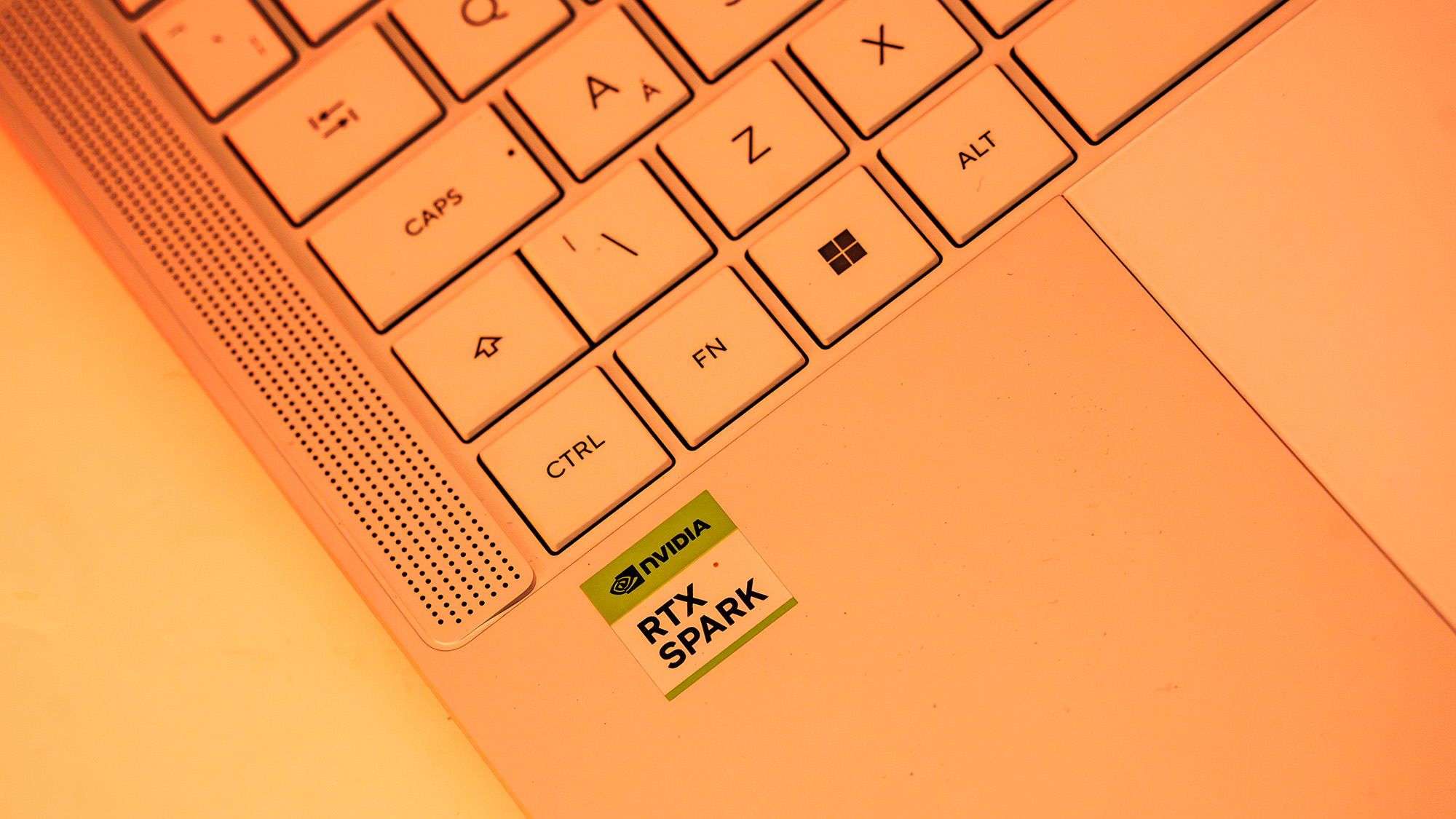
This powerful CPU is paired with a Blackwell-based RTX GPU boasting 6,144 CUDA cores. This puts the graphical performance of the Spark somewhere in the competitive range between the laptop versions of the RTX 5070 and RTX 5080. One of the most significant architectural choices here is the use of a unified memory architecture. Unlike traditional systems where the CPU and GPU have separate pools of RAM, the RTX Spark shares a single pool of high-speed 9400MT/s memory via the NVLink-C2C interconnect. This interconnect provides 600 GB/s of bidirectional bandwidth, allowing the different components of the SoC to communicate far more rapidly than they would over a standard PCIe connection.
The review unit came equipped with 32GB of RAM, which is the current sweet spot for most professional workflows. However, because the memory is shared between the CPU and the GPU, users must be diligent about their requirements at the time of purchase. The system supports up to 128GB, and given the unified nature of the architecture, opting for more RAM is often a wise investment for those working with large AI models or complex 3D scenes.
Performance and the AI Frontier
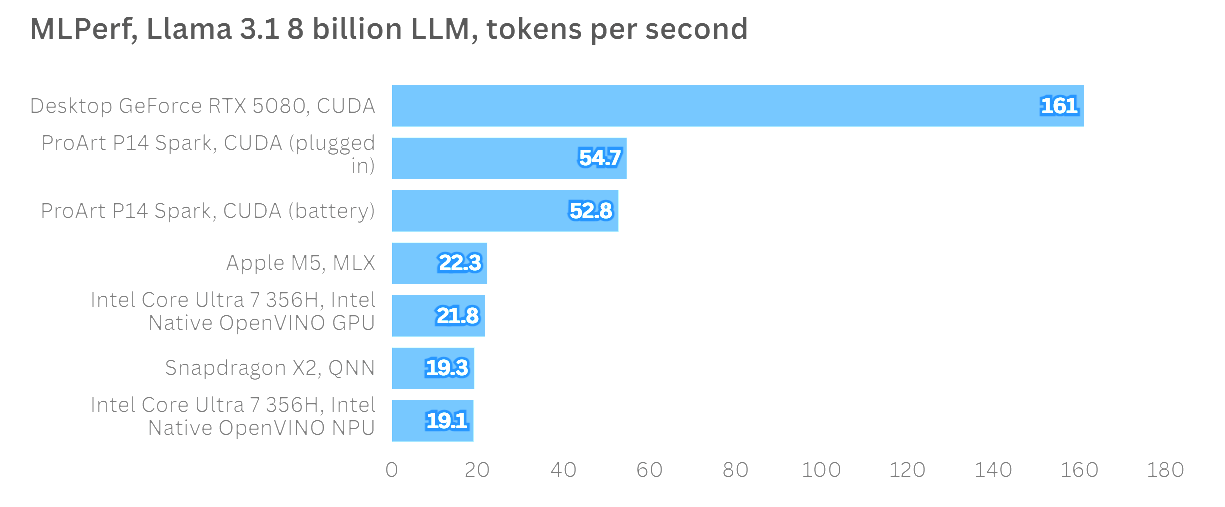
NVIDIA is positioning the RTX Spark as the premier platform for the "AI Agent" era. To test this claim, we looked beyond traditional benchmarks to see how the machine handled large language models (LLMs). Using the MLPerf framework to run the Llama 3.1 8 Billion Instruction benchmark, the ProArt P14 demonstrated its prowess. It produced more than double the tokens per second of Apple’s standard M5 chip. Notably, the performance remained consistent whether the laptop was plugged into a wall outlet or running on its internal battery—a feat that highlights the efficiency of the Grace architecture.
In more traditional creative and gaming tests, the results were a mixture of raw power and early-software hurdles. In Cyberpunk 2077, running at native resolution with Ray-Tracing Ultra settings, the P14 managed a steady 60FPS by utilizing NVIDIA’s DLSS and frame-generation technologies. This performance puts it on par with dedicated gaming laptops equipped with RTX 5070 GPUs, which is remarkable for a machine this thin.
However, the "first-generation" nature of the hardware became apparent in apps like Cinebench, which did not fully support the new GPU at the time of testing. Similarly, while Adobe is aggressively optimizing its Creative Cloud suite for this architecture, many features currently reside in beta versions of Photoshop and Premiere Pro. For tasks like video upscaling in Topaz Video AI, the P14 performed respectably but sat slightly behind some lower-end gaming laptops, likely due to a lack of software-side optimization rather than a lack of raw hardware power.
Efficiency, Battery Life, and Thermal Management