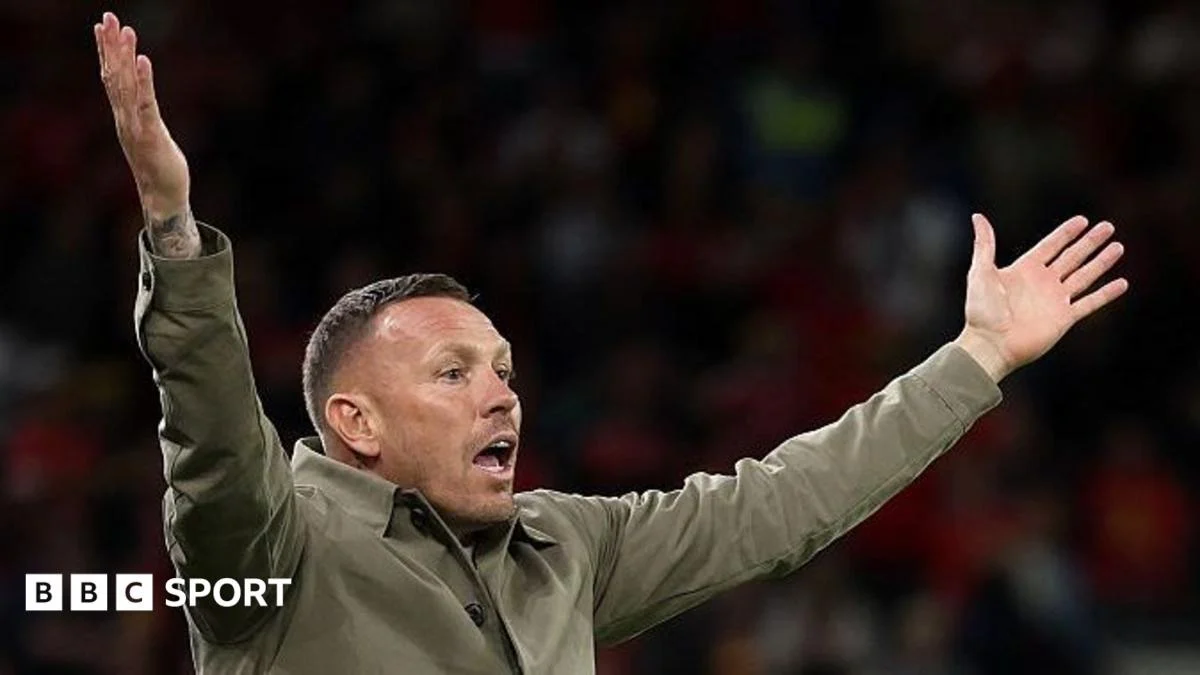
Wales manager Craig Bellamy has voiced serious concerns over the restructuring of the international football calendar, warning that the newly introduced four-game international windows are designed primarily to benefit the sport’s elite nations while placing an unsustainable physical burden on smaller squads. Bellamy’s comments follow a grueling period for his side, which culminated in a narrow defeat to Denmark at the Cardiff City Stadium. The match served as a stark illustration of the difficulties mid-tier international teams face when trying to navigate an increasingly congested calendar, particularly when confronted with a debilitating wave of injuries to key personnel.
The crux of Bellamy’s frustration lies in a major structural change to the international football calendar implemented this year. Historically, the autumn international schedule was structured around a predictable and manageable rhythm. National sides would typically play six matches distributed evenly across three separate international windows in September, October, and November. Each of these windows consisted of two fixtures, allowing players a period of intense focus with their national sides before returning to their domestic clubs to recover and maintain their match fitness. This traditional format provided a balanced cadence that allowed managers of nations with smaller player pools to field their strongest lineups, confident that their players would have ample time to recover between international breaks.
However, this season saw a radical departure from that established tradition. For the first time, football’s governing bodies decided to merge the September and October international breaks into a single, continuous block. Instead of two separate windows featuring two matches each, teams were suddenly tasked with playing four highly competitive international fixtures in rapid succession within a single, extended camp. While the change was designed to streamline the calendar, the practical reality of preparing a squad for four matches in such a short timeframe has introduced unprecedented physical and tactical challenges for managers, exposing the stark disparities in squad depth between the world’s leading footballing nations and those with more limited resources.
Wales’ prospects of successfully adapting to this intensive new schedule were severely compromised from the outset by a relentless series of injuries. In a traditional two-game window, a minor injury might sideline a player for a single match, or perhaps see them miss one international break before returning for the next. Under the new merged system, however, the consequences of injury are multiplied. Wales were forced to enter this critical period without several of their most influential figures, as Karl Darlow, Joe Rodon, Dylan Lawlor, and Harry Wilson were all ruled out of the entire international camp. Losing four key players for the duration of a four-game block stripped Bellamy of his tactical core and left his squad severely depleted before a ball had even been kicked.
The injury crisis deepened further as the camp progressed. Following a demanding opening match against Portugal, which ended in defeat, Wales suffered yet another major setback when David Brooks was forced to withdraw from the squad. The loss of Brooks further limited Bellamy’s options in attack and midfield, forcing the coaching staff to continuously adjust their plans and ask more of the players who remained fit. With each passing game, the physical toll of the merged window became more pronounced, forcing Bellamy into difficult decisions regarding player safety and squad rotation.
These selection dilemmas were brought into sharp focus during the buildup to the Denmark match. Dan James, one of Wales’ most dynamic attacking players, was named on the bench but ultimately played no part in the contest. Speaking after the game, Bellamy confirmed that James was simply not fit enough to play against Denmark, a decision that deprived Wales of a crucial offensive outlet when they desperately needed to inject pace and energy into their play. Bellamy also reflected honestly on his management of veteran defender Ben Davies, admitting that the physical demands of the schedule meant Davies probably should have been rested rather than being pushed to play before his late withdrawal from the match.
Bellamy’s post-match reflections cut to the heart of the systemic issues created by the new four-game format. He argued that the sheer intensity and athletic demands of playing four matches in such a condensed period are tailored specifically for the world’s elite footballing nations, who possess the squad depth to rotate their starting lineups without suffering a drop in quality. "If we have a few injuries, which we had more than one or two, they miss four games," Bellamy explained, highlighting how a depleted squad is uniquely punished under the new system. "We can deal with two, do you understand? And then the squad will get really tested."
The Wales manager pointed out that elite nations are uniquely equipped to handle the rapid turnaround of fixtures because they can make like-for-like substitutions across their entire squad. "The intensity of the squad, the athleticism, really I think the four-game break is designed for the elites," Bellamy observed. "They can say, we can go, we can go, we can turn over these games really, really quickly and we can change, we can change the team like for like because we have the numbers. So, it puts a real stress on a lot of us." For nations like Wales, who rely heavily on a core group of key players, the inability to rotate without a significant drop in experience and quality creates an unequal playing field during these extended international windows.
The consequences of this physical and tactical strain were highly evident on the pitch against Denmark. Throughout the match, Wales struggled to establish any sustained offensive rhythm and rarely looked capable of breaking down a disciplined Danish defense. The lack of fresh legs and creative spark was palpable as Wales found it difficult to transition from defense to attack or create clear-cut scoring opportunities. Denmark, meanwhile, looked the more physically robust of the two sides, posing a constant threat and coming close to breaking the deadlock on several occasions before Rasmus Højlund finally secured the winner in the 75th minute.
Bellamy contrasted the sluggish performance against Denmark with his team’s energetic display in their previous fixture against Norway. On that occasion, Wales had managed to play with the high intensity and tactical aggression that Bellamy demands of his teams. "On Thursday against Norway we were on the front foot so we’re able to shorten distance," Bellamy recalled. However, sustaining that level of physical output over multiple games proved impossible under the current circumstances. "Today, we just couldn’t work it well enough, couldn’t get the energy up enough to be able to have a bigger say in the game." The drop-off in performance highlighted the difficulty of maintaining tactical consistency when players are operating on empty.
Despite Wales’ overall struggles to influence the game, goalkeeper Danny Ward produced a commendable individual performance for much of the evening. Ward made a series of excellent saves to deny both Højlund and Gustav Isaksen, single-handedly keeping Wales level as Denmark threatened to take control of the match. However, the goalkeeper’s evening was ultimately defined by a costly error in the second half. A mistake from Ward led to a foul in the penalty area, resulting in the penalty that ultimately settled the match in Denmark’s favor.
While the error was the turning point in the game, Bellamy was quick to defend his goalkeeper, refusing to lay the blame for the defeat solely on Ward’s shoulders. The manager emphasized that the team’s defensive resilience up to that point had been heavily reliant on Ward’s earlier interventions. "Obviously it’s the decisive moment, but he made two incredible saves before that," Bellamy noted. He also acknowledged that Denmark’s physical dominance had been wearing Wales down, making a goal feel almost inevitable. "I thought Denmark with the physicality were able to just crank it a little bit. You see their runs are really menacing, so I felt they were knocking on the door. He did incredibly well to keep it 0-0 to that time."
Despite the disappointment of the defeat, Wales received a timely boost in their Nations League campaign thanks to results elsewhere in Group A4. Following Norway’s 2-1 defeat at the hands of Portugal, Wales managed to climb to third place in the group standings, courtesy of their superior head-to-head record against the Norwegians. This unexpected turn of events keeps Wales in a competitive position as they prepare for the final stages of the tournament.
The focus now shifts to the final international window of the campaign next month, where Wales will face a decisive set of fixtures. They are scheduled to travel to Oslo to face Norway in a highly anticipated clash that will have a major bearing on the final group standings. Just three days after that demanding away match, Wales will return to home soil to conclude their Nations League campaign with a challenging home fixture against Portugal. Bellamy and his coaching staff will be hoping for a cleaner bill of health as they seek to navigate the final hurdles of a demanding international season.