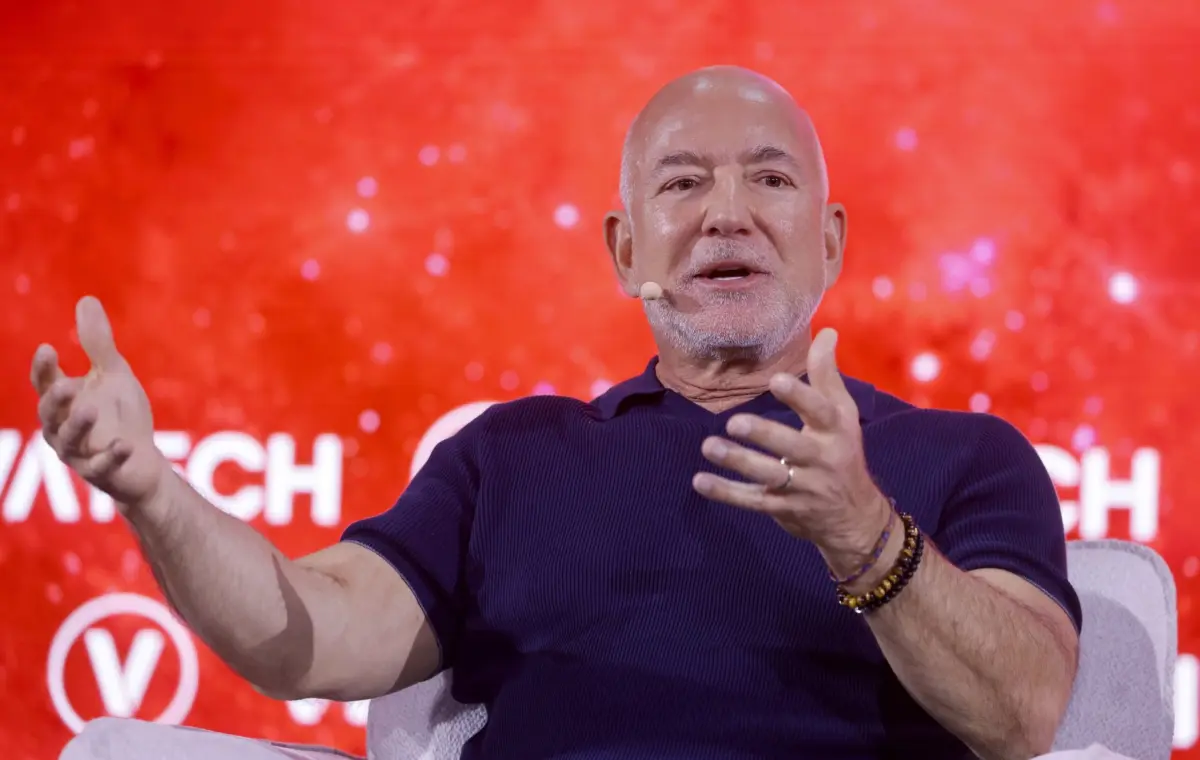
Amazon founder Jeff Bezos has announced the opening of a new tuition-free preschool in Glendale, Arizona, marking a significant expansion of his nonprofit educational initiative. The new facility, Bezos Academy Glendale—Sahuaro Glenn, introduces a unique operational model for the region by sharing its campus with a retirement community, a move designed to foster intergenerational connections between students and senior citizens.
The school is situated on the grounds of the Glencroft Center for Modern Aging, a sprawling senior living community in suburban Phoenix. This location represents the second Bezos Academy to open in Glendale, following the fall 2025 launch of Bezos Academy Glendale—Desert Garden Park, which was established in partnership with the Glendale Elementary School District. The continued expansion into Arizona highlights the organization’s focus on regions where the demand for affordable, high-quality early childhood education far outstrips the current supply.
Bezos Academy, founded in 2020, operates as a nonprofit network of preschools offering a Montessori-inspired curriculum. The program is designed specifically for families who meet certain income requirements, providing full-day, year-round programming at no cost to the parents. By placing this latest school within a senior living center, the organization is doubling down on a social model that integrates early childhood development with senior engagement, creating a shared environment that benefits both ends of the age spectrum.
A preschool inside a retirement community
The decision to house Bezos Academy Glendale—Sahuaro Glenn at 6511 W. Alice Ave. is a deliberate choice to leverage the benefits of intergenerational living. While the concept of a preschool inside a retirement home may seem unconventional to some, it is a cornerstone of the Academy’s strategy to build community-centric educational spaces. The Glendale campus is slated for steady growth; it currently operates four classrooms, with plans to expand to five by the 2027–2028 school year, eventually reaching a total capacity of 100 students.
Under this arrangement, residents of the Glencroft Center for Modern Aging are invited to participate in the daily lives of the students. These volunteers can engage in a variety of roles, ranging from direct classroom support and assisting with arts and crafts programming to collaborating on community service projects. According to school leaders, this daily exposure to older adults helps children develop social-emotional skills, while providing the seniors with a renewed sense of purpose and vital social interaction.
This is not the first time the Bezos Academy has utilized this model. The network’s inaugural school, which opened in 2020 in Des Moines, Washington, was established within a facility provided by Wesley Homes, a nonprofit retirement community operator. Similarly, a campus in Dallas, Texas, is located on the grounds of the Presbyterian Village North senior living community.
The interest in these intergenerational programs comes at a time when many older Americans are already stepping in to provide childcare for their own families due to the rising costs of professional care. Educators and aging specialists have noted that such programs can address two social challenges at once: the epidemic of loneliness among the elderly and the need for nurturing environments for young children. Research into these models suggests that regular contact between the two generations can lead to improved moods and reduced isolation for seniors, while children often display higher levels of empathy, increased self-esteem, and a reduction in age-related stereotyping.
Filling the middle-income gap
The expansion of the Bezos Academy network comes as the United States faces a deepening childcare affordability crisis. For many families, the cost of preschool has become a prohibitive expense that rivals or exceeds the cost of housing or higher education. While the federal Head Start program provides a critical safety net, it is generally restricted to families living at or below the federal poverty line, leaving a vast segment of the population without access to subsidized care.
School leaders have identified a significant "middle-income gap" where families earn too much to qualify for state or federal aid but not enough to afford private tuition. In Arizona, this gap is particularly pronounced. Data from the Arizona Department of Economic Security indicates that as of September 25, 2026, there were 9,088 families and 15,044 children on the waiting list for state childcare assistance. The state’s assistance program is currently capped at 165% of the federal poverty level, a threshold that excludes many working-class and lower-middle-class families.
Bezos Academy addresses this by setting a much higher eligibility ceiling. Families with a household income of up to 400% of the federal poverty level are eligible to apply. For the 2026–2027 school year, this means a family of four earning up to $132,000 annually could qualify for the program. By targeting this demographic, the Academy aims to support families who are often squeezed by the rising cost of living but lack the traditional markers of extreme poverty required for other social services.
The program’s "no-cost" promise is comprehensive. Bezos Academy covers all operating expenses, including educational materials, nutritious meals, books, field trips, and even basic classroom supplies. This ensures that families do not face "hidden" costs that often accompany supposedly free programs. The organization’s website states that its goal is to "nurture the potential in every child to become a creative leader, original thinker, and lifelong learner."
The funding for this ambitious network is primarily derived from Jeff Bezos’ personal philanthropy. The effort is rooted in the $2 billion Bezos Day One Fund, which he announced in 2018. The schools are operated by Day 1 Academies, a nonprofit that receives substantial gifts of Amazon stock to fund its mission. In 2024, Bezos donated approximately $117 million in stock to the cause, followed by nearly $97 million in 2025. These funds, combined with the contributions of host partners who provide the physical space for the schools, allow the network to operate more than 40 preschools across Arizona, Florida, Hawaii, Kentucky, Texas, and Washington.
The Montessori influence and economic implications
The educational philosophy of the Bezos Academy is rooted in Montessori principles, which emphasize hands-on learning, individualized instruction, and a prepared environment that encourages independence. In these classrooms, children ages 3 to 5 are encouraged to progress at their own pace, guided by teachers who use research-based developmental standards to track growth and tailor instruction to each child’s specific needs.
This pedagogical approach is coupled with a full-day schedule, which is a critical component for working parents. Many traditional preschool programs operate on half-day schedules, which can create logistical nightmares for families where both parents work full-time. By providing a full day of programming, the Academy supports parental participation in the workforce—a factor that has become increasingly relevant as soaring childcare costs have pushed many young mothers out of the labor market.
The opening of the Glendale-Sahuaro Glenn campus is part of a broader national conversation regarding the role of private investment and public policy in early childhood education. As states like New Mexico experiment with universal free childcare funded by oil and gas revenues, other regions are looking to private-public partnerships and philanthropic models to fill the void. Some economic analysts argue that investors have long overlooked the childcare sector, which represents a $172 billion problem in the United States, affecting everything from corporate productivity to long-term economic mobility.
The Bezos family has also signaled a continued interest in broader childcare issues beyond the Academy network. In May 2026, the family donated $100 million toward a childcare initiative championed by New York City Mayor Zohran Mamdani, further cementing their role as major players in the national effort to reform early learning access.
As the Bezos Academy continues to scale its operations, the success of its intergenerational and middle-income focused models will likely be closely watched by educators and policymakers alike. With dozens of schools now operational and more in the planning stages, the organization is attempting to prove that a privately funded, high-quality, and entirely free preschool model can serve as a viable supplement to the nation’s strained public education infrastructure. For the families in Glendale, the new campus at the Glencroft Center represents not just a school, but a vital resource in an increasingly unaffordable landscape.