The landscape of creative digital production is undergoing a fundamental shift as artificial intelligence transitions from a novelty tool for image generation into a sophisticated interface for software control. In a significant move for the visual effects and motion graphics industry, Maxon has announced the introduction of native support for third-party AI chatbots within Cinema 4D. This development follows a broader industry trend of integrating large language models directly into creative suites, a path most notably carved earlier this year when Adobe launched its own dedicated AI assistant within Photoshop. However, Maxon’s approach distinguishes itself by offering a flexible framework that allows artists to choose their preferred intelligence, bringing the capabilities of Claude, ChatGPT, and Codex directly into the heart of one of the world’s most prominent 3D modeling and animation platforms.
The core of this integration is the Model Context Protocol (MCP), an open standard designed to facilitate seamless communication between AI models and local applications. Rather than developing a proprietary, closed-loop AI assistant that might limit users to a specific ecosystem, Maxon has implemented a built-in MCP server. This server acts as a sophisticated bridge, enabling artists to connect their software to external AI models. By doing so, Cinema 4D users can now leverage the reasoning and coding capabilities of established chatbots to execute complex, multi-step workflows using natural language instructions. This marks a departure from traditional software interaction, where every action requires a manual click or a deep understanding of complex scripting languages like Python or C++.
For professional artists and studios, the promise of this integration lies in the elimination of the procedural and repetitive manual labor that often bogs down the creative process. 3D production is notoriously technical, frequently requiring hours of "digital housekeeping" before the actual artistry can begin. Maxon’s new system is designed to handle these iterative tasks without forcing the artist to break their creative flow. By providing instructions in plain English—or any language the chatbot understands—users can direct the software to perform a wide array of technical maneuvers. This includes organizing massive amounts of imported data into consistent, logical hierarchies, creating material variations across hundreds of objects, or preparing complex multipass renders that would otherwise require tedious manual setup.
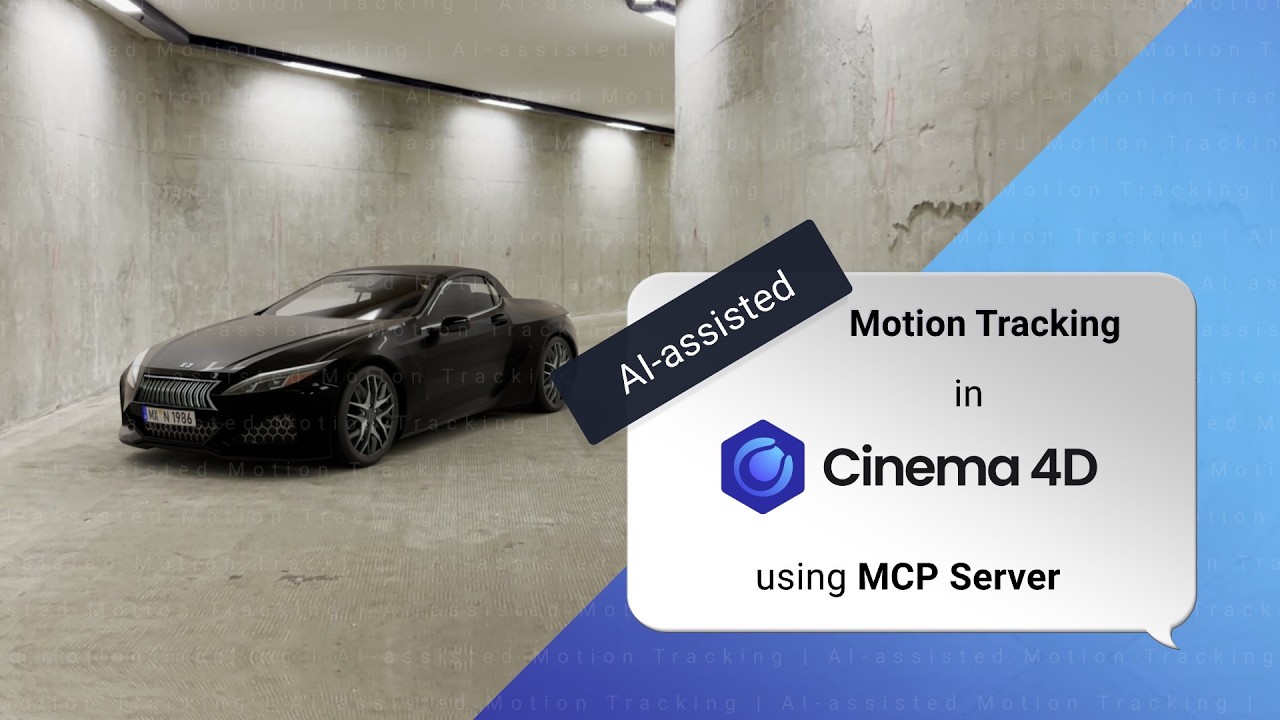
The practical applications of this technology extend deep into the technical weeds of 3D production. Maxon has highlighted several key areas where the AI assistant can take the lead, such as basic 3D camera tracking, UV mapping, and rigging. In the realm of motion tracking, for instance, an AI assistant can help navigate the often-finicky process of aligning virtual cameras with live-action footage, potentially identifying and correcting errors through a conversational interface. Furthermore, the automation of repetitive tasks is a significant highlight. New demonstration materials from Maxon showcase how the AI can build entire scene variations based on data pulled from external CSV files or automatically generate complex render queue jobs. This level of automation effectively turns the AI into a technical director’s assistant, capable of handling the logistical heavy lifting of a project.
A critical aspect of Maxon’s implementation is the philosophy of maintaining artist control and data integrity. One of the primary concerns surrounding the rise of generative AI in the creative arts is the "black box" nature of many tools, which often produce flattened, non-editable outputs. Maxon has addressed this by ensuring that all actions triggered by the AI assistant are performed through Cinema 4D’s own internal tools and APIs. The processes run locally on the user’s computer, and the results are not generated pixels or "hallucinated" geometry, but rather native Cinema 4D scene data. This means that every change made by the AI remains fully editable; an artist can review the work, refine specific parameters, or use the standard undo history to revert any step. By keeping the output in a native format, the software ensures that the AI acts as a facilitator of the existing toolset rather than a replacement for it.
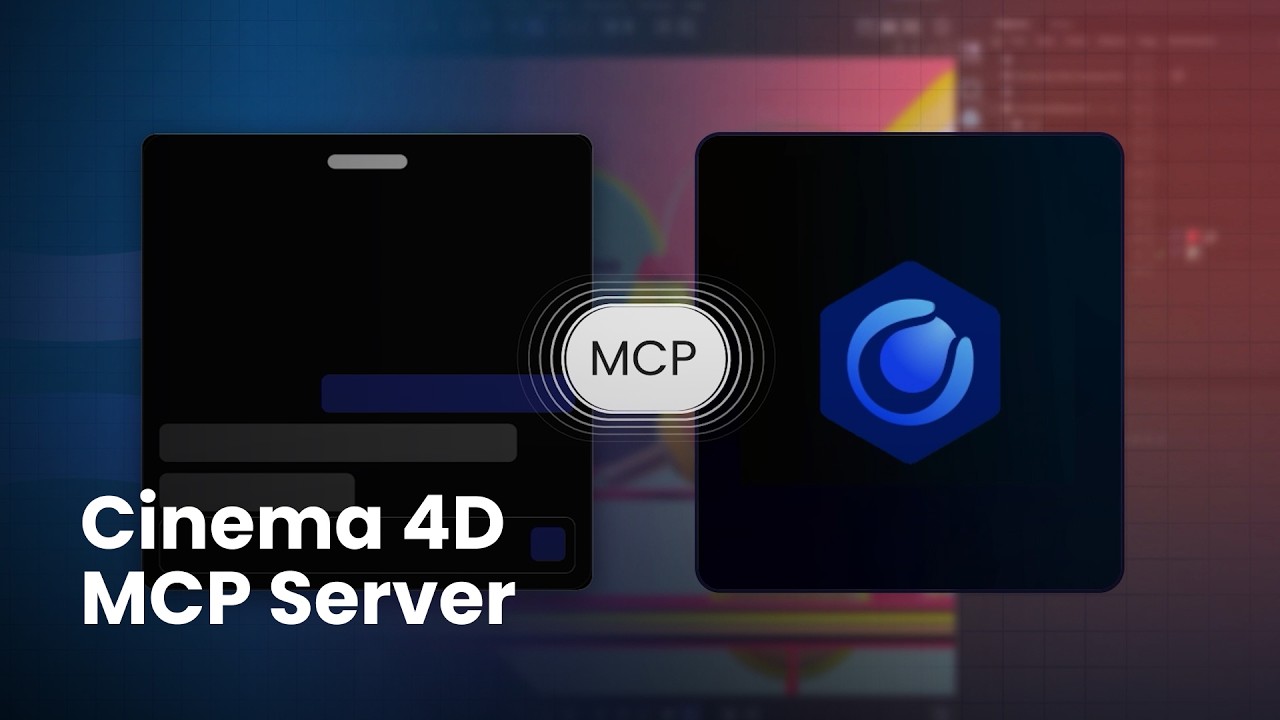
Security and transparency have also been prioritized in this update, reflecting the stringent requirements of professional production environments where data privacy is paramount. The MCP server is not an "always-on" feature; it is switched off by default, and users must proactively enable it to begin using an AI assistant. Once activated, the connection is secured by an MCP adapter access token, ensuring that only authorized requests are processed. Furthermore, Maxon has introduced a granular permission system, allowing artists to specify exactly which groups of Cinema 4D tools the assistant is allowed to access. To ensure total visibility, every action taken by the AI is recorded in a local audit log, and batches of changes are clearly demarcated in the undo history, allowing for a high degree of accountability in the production pipeline.
This move to support third-party assistants is consistent with Maxon’s recent history of strategic technological partnerships. It mirrors the company’s previous integration of Tencent’s HY 3D AI engine, which brought 3D model generation capabilities to Cinema 4D. By embracing the Model Context Protocol, Maxon is positioning Cinema 4D as an extensible platform that can grow alongside the rapidly evolving field of artificial intelligence, rather than being tethered to a single proprietary model that might quickly become obsolete. This flexibility is particularly valuable given the speed at which models like Anthropic’s Claude and OpenAI’s ChatGPT are being updated with new reasoning capabilities and larger context windows.
The introduction of the MCP server is part of the Cinema 4D 2026.4 update, which is available starting today for users on both Windows and macOS. The integration is designed to be user-friendly, requiring no additional software installations beyond the update itself to establish the connection with a supported AI service. As the industry moves toward more mobile and versatile production environments, Maxon is also looking toward the future of its ecosystem. The company has confirmed that a new Cinema 4D app for iPad is currently in development and is slated for release before the end of the year, though it remains to be seen how the AI assistant features will translate to the tablet interface.
The broader implications for the creative industry are significant. For years, the barrier to entry for high-end 3D animation has been the steep learning curve associated with the software’s interface and the technical rigors of the medium. While an AI assistant does not replace the need for aesthetic judgment or foundational knowledge of 3D principles, it does lower the technical hurdle for executing complex tasks. For the seasoned professional, it offers a way to reclaim time previously spent on mundane chores, allowing for more experimentation and higher-quality output within the same production windows.
As AI continues to weave itself into the fabric of creative software, the distinction between "using a tool" and "collaborating with a system" is becoming increasingly blurred. Maxon’s integration of third-party chatbots via the MCP server represents a sophisticated middle ground in this evolution. It acknowledges the power of modern large language models while firmly anchoring their utility within the established, reliable framework of a professional 3D suite. By focusing on native data, local execution, and user-defined permissions, Maxon is attempting to prove that AI can be a powerful ally to the artist without stripping away the precision and control that professional creators demand.
Artists interested in exploring these new capabilities can find detailed documentation and setup instructions on the official Maxon website. As the 2026.4 update rolls out, the community will likely begin to discover even more creative ways to utilize these assistants, potentially transforming the standard operating procedures for 3D modeling and animation in the years to reach. For now, the focus remains on the immediate benefits of speed and efficiency, as Cinema 4D users begin to experiment with a software environment that can finally understand and execute their spoken commands.