The global energy landscape is currently undergoing its most significant transformation since the Industrial Revolution. For decades, commercial enterprises operated within a framework of relatively predictable energy costs, relying on centralized fossil fuel power plants and stable geopolitical relations to keep the lights on and the assembly lines moving. However, that era of predictability has come to an abrupt and definitive end. Today, businesses are forced to navigate a "perfect storm" of compounding pressures, characterized by extreme geopolitical instability, unprecedented price shocks, and the urgent, non-negotiable mandate to transition to net-zero carbon emissions. This convergence of factors has ushered in a new era of commercial energy volatility, one where the traditional model of passive energy consumption is no longer viable for long-term survival, let alone growth.
At the heart of this shift is a fundamental change in how energy is priced and distributed. The transition toward a decarbonized grid, while essential for environmental sustainability, has introduced a level of intermittency that the old infrastructure was never designed to handle. As weather-dependent renewables like wind and solar become a larger part of the energy mix, the supply of electricity has become less synchronized with the peaks and troughs of industrial demand. When this inherent instability is combined with the shockwaves of international conflict—which can disrupt gas supplies and send wholesale prices skyrocketing overnight—businesses find themselves exposed to financial risks that were previously unimaginable. In this high-stakes environment, the ability to manage energy intelligently has moved from a back-office utility concern to a core pillar of corporate strategy.
In response to these challenges, a new paradigm of energy management is emerging, centered on the integration of onsite renewable generation, advanced battery storage, and sophisticated flexible energy tariffs. Companies like Wattstor are at the forefront of this movement, arguing that the very volatility that threatens businesses can, if managed correctly, be transformed into a competitive advantage. The logic is simple yet transformative: by becoming active participants in the energy market rather than passive consumers, businesses can decouple their operational costs from the whims of the global wholesale market. This shift requires a rethink of what it means to be a "prosumer"—an entity that both produces and consumes energy—and highlights the critical role of technology in bridging the gap between onsite hardware and market opportunities.
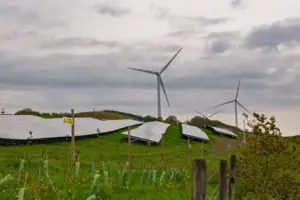
The first component of this strategy involves the aggressive deployment of onsite renewables. For a modern commercial or industrial facility, installing solar photovoltaics or wind turbines is no longer just a "green" statement; it is an act of self-defense. Generating electricity at the point of use bypasses the myriad costs associated with the national grid, including transmission fees and the overheads of traditional suppliers. However, onsite generation alone is insufficient. Because the sun does not always shine and the wind does not always blow at the exact moment a factory requires peak power, there remains a disconnect between generation and consumption. This is where the second pillar of the modern energy strategy—battery energy storage systems—becomes indispensable.
Battery storage acts as the critical buffer in the system, providing the flexibility needed to synchronize onsite production with operational needs. Without storage, excess energy generated during peak production hours is often wasted or sold back to the grid at disadvantageous rates, while the business remains forced to buy expensive power during periods of low generation. With a robust battery system, a business can capture that surplus and deploy it when it is most needed, effectively "smoothing" its energy profile. This capability does more than just ensure reliability; it provides a hedge against price spikes. When the grid is under stress and prices are at their highest, a business equipped with battery storage can opt out of the market entirely, drawing on its own reserves instead of paying a premium.
This brings us to the third and perhaps most complex element of the strategy: flexible energy tariffs. In the old world of energy procurement, businesses sought long-term, fixed-price contracts to ensure budget certainty. However, in an era of extreme volatility, these fixed contracts often include significant risk premiums charged by suppliers, and they prevent businesses from capitalizing on the periods when energy prices are low—or even negative. Flexible tariffs, which track wholesale prices in real-time, allow businesses to adjust their behavior based on market signals. When combined with onsite renewables and battery storage, these tariffs enable a sophisticated form of energy arbitrage. A business can charge its batteries when prices are low—or when its own solar panels are overproducing—and then either use that energy or sell it back to the grid when prices are high. This transforms energy from a static overhead cost into a dynamic asset that can generate revenue.
The integration of these three components—renewables, storage, and flexible tariffs—is the focus of the latest discussions surrounding Wattstor’s approach to the energy crisis. The challenge for most businesses is not simply the acquisition of the hardware, but the intelligent management of the entire ecosystem. It requires a sophisticated software layer capable of making split-second decisions: Should the energy from the solar panels be used to power the machinery, charge the battery, or be sold to the grid? Is it more cost-effective to draw from the grid now, or wait two hours for a predicted price drop? The complexity of these variables is why many organizations are turning to specialized partners to help them navigate the transition.
Beyond the immediate financial benefits, this integrated approach addresses the growing pressure from regulators, investors, and consumers to meet net-zero targets. The transition to a low-carbon economy is no longer a distant goal; it is a current operational requirement. However, many businesses have found that traditional methods of decarbonization—such as purchasing "green" certificates—are increasingly scrutinized for their lack of "additionality" and actual impact. By generating their own power and managing it efficiently onsite, companies can demonstrate a tangible, verifiable reduction in their carbon footprint. This not only aids in compliance with evolving ESG (Environmental, Social, and Governance) reporting standards but also builds brand resilience in a marketplace that is increasingly sensitive to environmental impact.
The conversation hosted by Energy Live News explores these themes in depth, featuring insights into how Wattstor’s model is being applied in real-world commercial settings. The discussion emphasizes that the goal is not merely to survive the current period of volatility, but to build an energy infrastructure that is fit for the future. As the grid becomes increasingly decentralized, the businesses that succeed will be those that have the foresight to invest in their own energy independence. This does not mean disconnecting from the grid entirely, but rather changing the nature of that connection to one of mutual benefit. By providing flexibility and demand-side response services, businesses can actually help stabilize the national grid, receiving payments for their contribution to overall system security.
Ultimately, the shift toward integrated onsite energy systems represents a move toward greater democratic control over energy. For too long, businesses have been at the mercy of global supply chains and geopolitical maneuvers far beyond their control. The combination of onsite renewables, battery storage, and smart, flexible procurement offers a way out of this vulnerability. It provides a roadmap for turning a period of unprecedented uncertainty into a window of opportunity. While the initial investment in such systems can be significant, the long-term rewards—ranging from lower operational costs and reduced carbon emissions to enhanced energy security—are becoming impossible to ignore.
As we look toward the 2030s, the divide between companies that have mastered their energy strategy and those that remain tethered to traditional, volatile supply models will likely widen. The "new era" described by industry experts is one where energy management is synonymous with risk management. For any business leader looking to safeguard their organization against the shocks of the coming decade, the message is clear: the time to transition from a consumer to an active energy participant is now. The tools and technologies to navigate this uncertainty are already available; the only question is how quickly businesses can adapt to use them to their advantage.
Copyright © 2026 Energy Live News Ltd ELN