01. Broken rotations
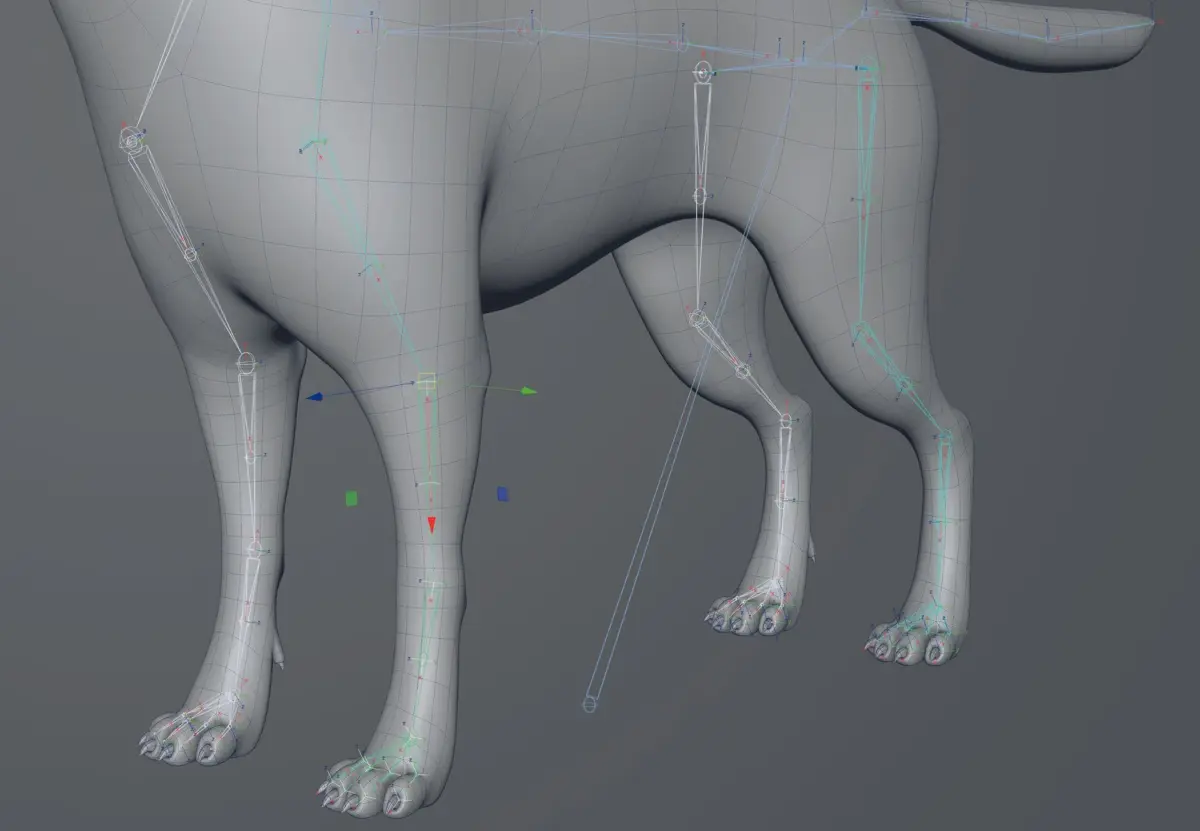
One of the most common issues encountered during the rigging process is the "reset" joint. This occurs when a joint’s orientation is accidentally or intentionally set to match the world coordinate system rather than the local direction of the joint chain. In this scenario, the joint’s X, Y, and Z axes point in the same direction as the global grid, regardless of the angle at which the joint was drawn.
In a simple three-joint arm setup—consisting of a shoulder, an elbow, and a wrist—this world-space alignment creates immediate functional problems. When an animator attempts to rotate the shoulder, the elbow joint may move away from its intended arc. Because the local axes do not follow the "bone" of the arm, the rotation becomes mathematically complex and visually jarring. The movement ceases to feel organic; instead of the arm pivoting naturally at the socket, it appears to slide or skew. For an animator, working with such a setup is akin to trying to drive a car where the steering wheel only moves in square increments. It is difficult to create the smooth, overlapping arcs that are the hallmark of high-quality animation when the underlying skeleton is fighting the intended direction of travel.
02. Set up your orientations
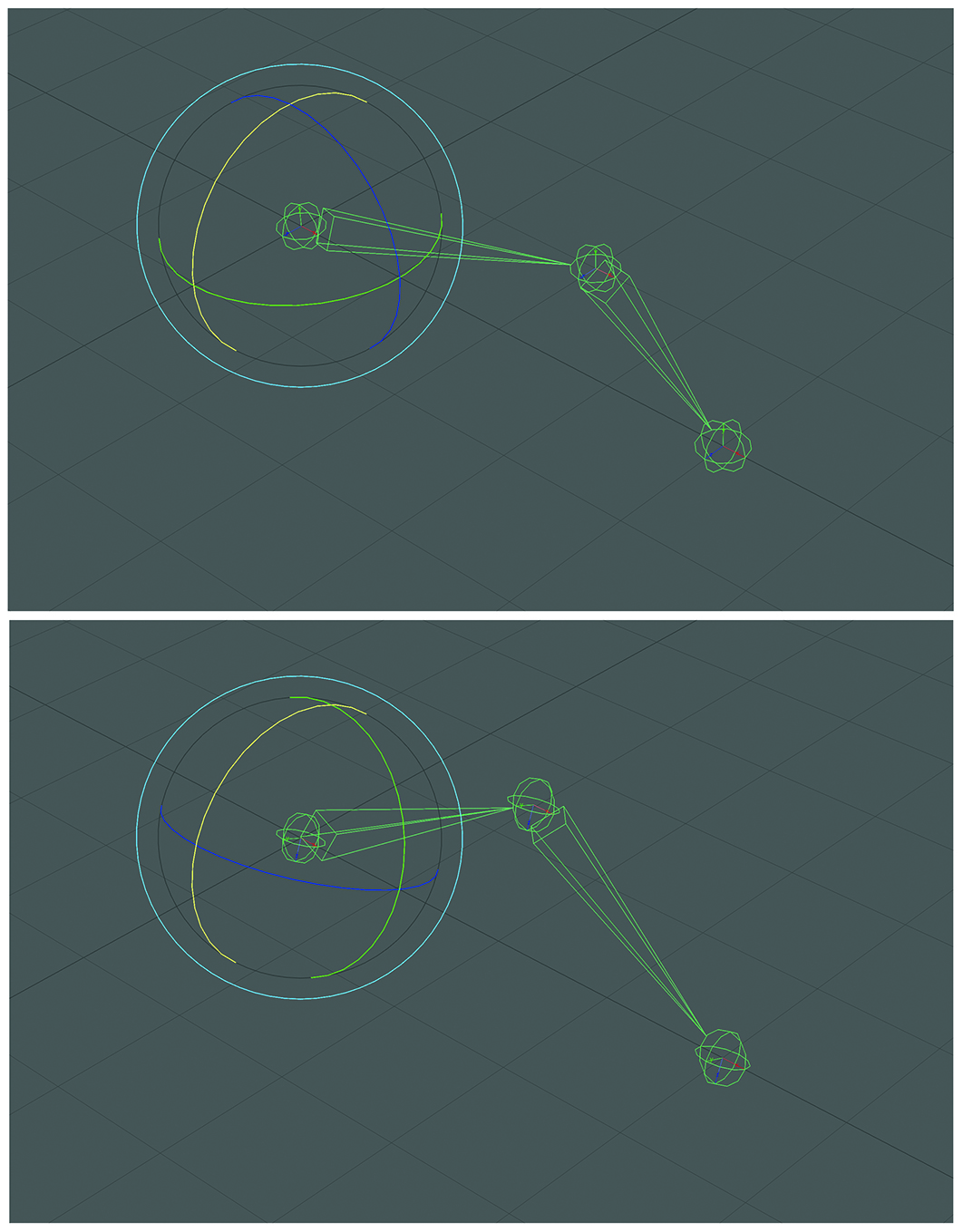
To rectify these issues, artists must look toward orientation tools provided within their 3D application. Correcting a rig involves more than just manual rotation; it requires a systematic re-alignment of the joint’s local coordinate system. Most professional software packages offer a dedicated "Orient Joint" tool that allows for precise control over how these axes behave.
There are generally three core parameters that an artist must define to fix a joint’s behavior. The first is the Primary Axis. This is the axis that will point directly down the joint toward the next child in the hierarchy. As previously noted, the X-axis is the traditional choice for this role in many pipelines, serving as the longitudinal "aim" axis.
The second parameter is the Secondary Axis. This axis defines the "up" or "side" direction of the joint, which is crucial for determining how the joint bends. For an elbow, the secondary axis should be aligned so that the "hinge" movement occurs cleanly on a single plane. Finally, artists must consider the Secondary Axis World Orientation. This setting tells the software which direction in the world space the secondary axis should try to align with (for instance, pointing toward the world’s Y-up direction). By balancing these three settings, a rigger can ensure that every joint in a character’s body behaves predictably, regardless of how complex the pose becomes.