03. Reset your orientations
The practical application of these settings can be seen when finalizing the three-joint arm. By selecting the joints and applying a consistent orientation logic—such as setting X as the Primary Axis and Y as the Secondary Axis—the rig undergoes a transformation. Once the tool is executed, the X-axis of the shoulder will point directly at the elbow, and the X-axis of the elbow will point directly at the wrist.
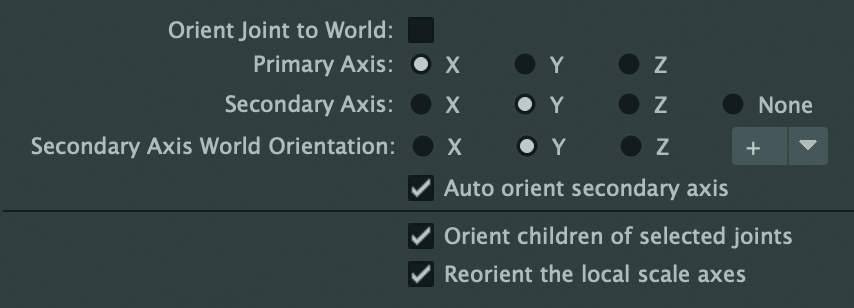
With this configuration, the Y-axis (the secondary axis) typically points "up" or outward from the bend of the arm. The result is immediate and transformative for the animation workflow. Now, when the shoulder is rotated, the elbow remains in its proper place, pivoting around a logical center. The forearm and wrist follow suit, allowing for clean twists and bends that require minimal effort from the animator. This predictability is the "secret sauce" of professional rigging; it allows the artist to focus on the performance and the silhouette of the character rather than fighting the limitations of the software.
The Role of the Technical Artist
The nuances of joint orientation highlight the vital role of the technical artist in the production cycle. Experts like Antony Ward, who has spent decades working with major game and VFX studios, emphasize that these "basics" are actually the most critical components of a successful project. Ward, an accomplished author and the owner of antcgi.com, has long advocated for a deep understanding of the technical manuals of software like Maya and Silo. His work underscores the fact that while 3D art is a creative endeavor, it is built on a framework of mathematical precision.
In a studio environment, the rig acts as the bridge between the modeler and the animator. If the rigger fails to account for joint orientation, the animator’s productivity drops, and the final quality of the movement suffers. Moreover, as assets move between different software packages—a process known as the "3D art workflow"—maintaining consistent orientation becomes even more complex. An asset that rotates perfectly in a modeling app may behave wildly when imported into a game engine if the axes aren’t properly mapped.
Ultimately, mastering these rotational axes is about providing freedom. By taking the time to configure the primary and secondary axes correctly, the rigger removes the technical barriers that stand in the way of creative expression. Whether it is reducing the frustrations of gimbal lock or ensuring that a character’s arm twists with the realism of a human limb, the careful management of joint orientation is what allows digital characters to truly come to life. As 3D technology continues to evolve, these fundamental principles of skeletal logic remain the bedrock of the industry, ensuring that the magic of animation remains seamless and convincing.