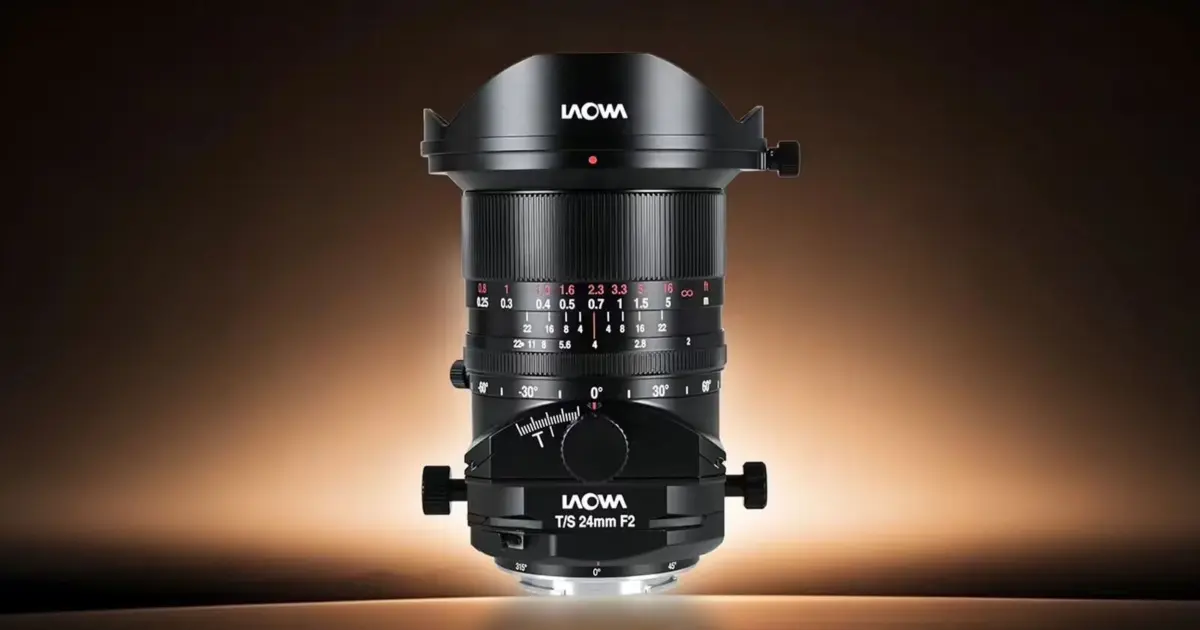
The compatibility of the new Laowa 24mm f/2 T/S is equally ambitious. Venus Optics intends to bring this lens to a wide array of mounts, covering nearly every major modern system. This includes the "big four" full-frame mirrorless mounts: Sony E, Nikon Z, Canon RF, and the L-Mount alliance. Furthermore, the lens is designed to accommodate the larger sensors of medium-format systems, specifically the Fujifilm GFX and Hasselblad XCD mounts. This is a crucial detail, as wide-angle tilt-shift lenses often struggle to provide enough coverage for medium-format sensors without severely limiting the range of movement. While some of Laowa’s previous tilt-shift efforts required a trade-off in movement when mounted on a GFX body, early reports suggest that the 24mm f/2 maintains its full functionality across these larger formats, providing a massive image circle that should satisfy even the most demanding architectural photographers.
Under the hood, the optical construction of the Laowa 24mm f/2 T/S is complex, reflecting the challenges of designing a fast lens that must also maintain a massive image circle for shifting. The lens features 13 elements arranged in 10 groups. To ensure high image quality and minimize the aberrations that often plague wide-angle lenses, Venus Optics has incorporated a variety of specialized glass elements. The design includes five Extra-low Dispersion (ED) elements to combat chromatic aberration and ensure color accuracy. Additionally, two aspherical elements are used to reduce spherical aberrations and distortion, while four high-refractive-index glass elements help keep the lens relatively compact while maintaining sharpness across the frame.
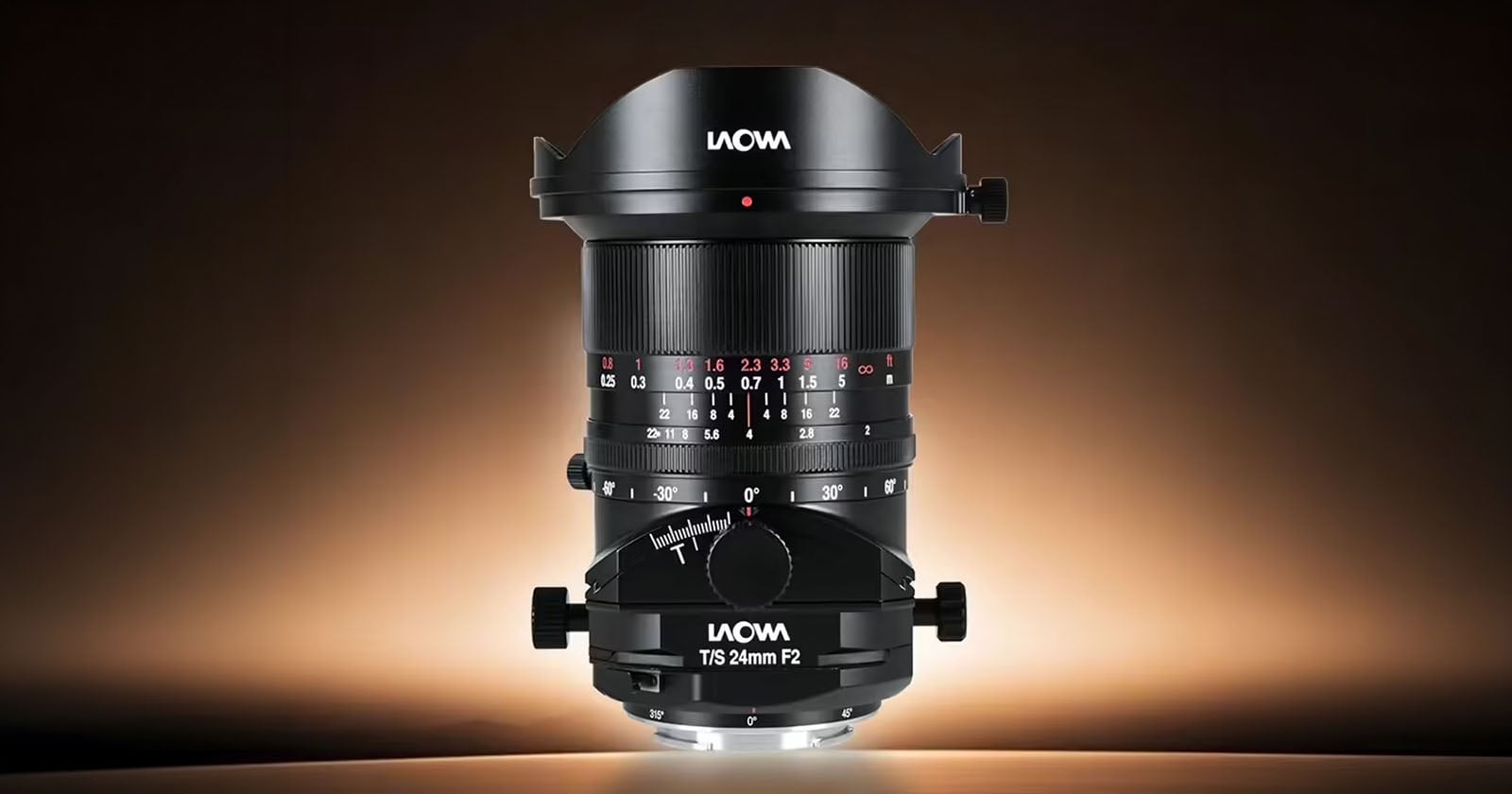
Aperture rendering is also a point of focus for this new model. The lens utilizes a 14-bladed aperture diaphragm, which is designed to produce smooth, circular bokeh and pleasing out-of-focus highlights. This is particularly relevant given the f/2 aperture, as photographers using the "tilt" function to create a thin slice of focus will want the surrounding blurred areas to appear as natural as possible. For those who prefer a "sunstar" effect in their architectural or landscape work, the high blade count will likely produce a distinct star pattern when stopped down.
Physically, the lens is a substantial piece of equipment, weighing in at 860 grams (approximately 30.3 ounces). This weight is a testament to the amount of glass required to achieve an f/2 aperture while maintaining a large enough image circle for shift movements. Despite its heft, the lens remains practical for field use, featuring a standard 77mm front filter thread. This allows photographers to use common circular polarizers and neutral density filters without the need for bulky, expensive adapter systems that are often required for ultra-wide lenses with bulbous front elements.