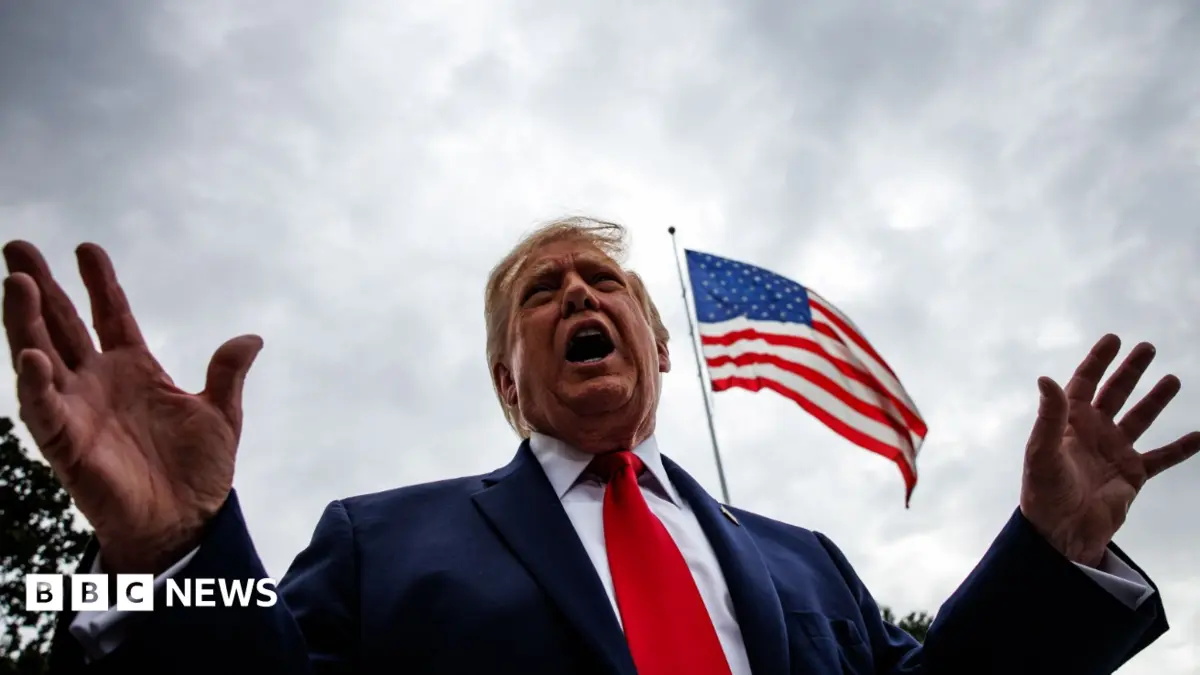
US President Donald Trump has formally rejected a diplomatic proposal put forward by Iran that aimed to reopen the strategically vital Strait of Hormuz to commercial shipping within a week. Speaking to reporters at the White House on Saturday, the American president dismissed the overture from Tehran, characterizing the move as a sign of weakness and desperation from an adversary buckling under intense economic and military pressure. Trump asserted that the Iranian government was eager to secure a quick resolution because of the severe toll the ongoing conflict and subsequent naval blockade have taken on the country’s domestic stability.
The president told reporters that Tehran is eager to make a deal to open the strait immediately because they are losing so badly. While Trump acknowledged his general willingness to engage in negotiations, he made it clear that the specific terms of the current proposal do not align with American interests or demands. He emphasized that the United States is currently operating from a position of significant strength in the region, claiming that Washington already maintains total control over the strategic waterway and that massive amounts of oil continue to pass through it under American oversight. While Trump reiterated his fondness for negotiating deals, he firmly stated that the proposal presented by Iran is simply not acceptable to his administration.
In Tehran, the response to the US president’s public dismissal was measured but critical. Iranian Foreign Minister Abbas Araghchi acknowledged the comments in a post published on the messaging platform Telegram. However, Araghchi indicated that Iran would not treat public remarks made to the press as the final word on the matter. Instead, the foreign minister stated that Tehran would wait for an official, formal response to be delivered through the established international mediators who have been working to facilitate communication between the two hostile nations. Araghchi noted that Trump has frequently made a wide range of statements, describing them as a mix of good and highly contradictory remarks. He concluded that Iran would remain patient, awaiting the definitive views of the mediators before making any further decisions on how to proceed.
The diplomatic push had gained momentum just a day prior, when Araghchi spoke to reporters at the United Nations in New York on Friday. During his press briefing, the Iranian foreign minister had expressed optimism that a diplomatic breakthrough was within reach, suggesting that an agreement to resolve the maritime crisis could be secured if the necessary conditions were met. According to Araghchi, the framework for such an agreement already exists within the parameters of a memorandum of understanding (MOU) that was signed by both the United States and Iran in June.