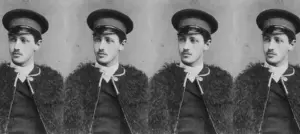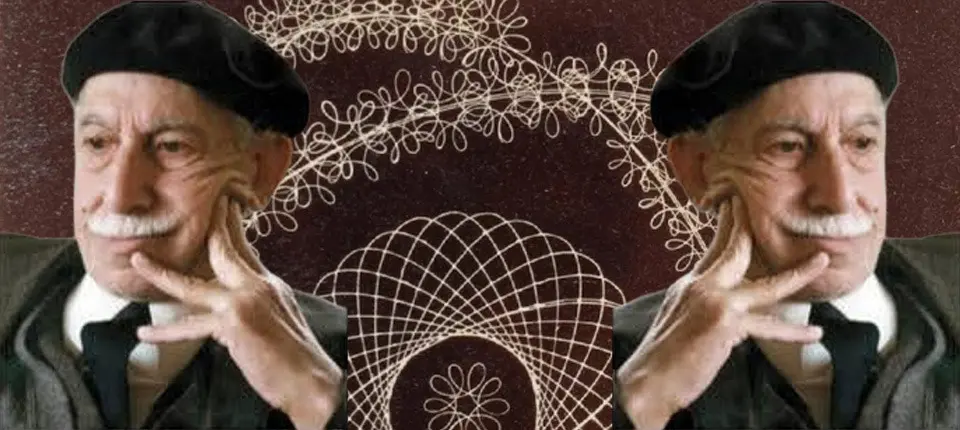
On this day in 1898, the literary world witnessed the birth of a figure who would eventually become one of the most influential and transformative voices in modern Arabic literature. Tawfiq al-Hakim, born in Alexandria, Egypt, remains a cornerstone of the global literary canon, particularly celebrated for his role in pioneering the modern Arabic drama and novel. As the literary community reflects on his contributions today, October 9, his legacy continues to resonate through the digital landscape, where his works and philosophical inquiries remain subjects of intense study and admiration.
The significance of al-Hakim’s birth is not merely a matter of historical record; it marks the beginning of an era where Arabic literature began to engage deeply with both its own classical heritage and the burgeoning modernist movements of the West. Throughout a career that spanned several decades, al-Hakim bridged the gap between traditional storytelling and the complexities of the 20th-century stage, earning him a place among the giants of world literature.
THE BEST OF THE LITERARY INTERNET
In the contemporary digital age, the "literary internet" serves as a vital repository for the preservation and discussion of such monumental figures. Platforms like Lit Hub Daily and various academic archives play a crucial role in bringing the works of Tawfiq al-Hakim to new generations of readers. By highlighting his birthday, these digital curators remind the public of the enduring power of the written word and the specific cultural shifts that al-Hakim facilitated during his lifetime.
The discussion surrounding al-Hakim today often centers on his versatility. He was not only a playwright but also a novelist, an essayist, and a philosopher. His ability to navigate different genres allowed him to explore the Egyptian identity from multiple angles, addressing the social, political, and spiritual tensions of a nation in transition. On the literary internet, these themes are frequently revisited, as modern readers find striking parallels between the existential dilemmas in al-Hakim’s plays and the complexities of the 21st century.
The Formative Years and the Influence of Paris
Tawfiq al-Hakim’s journey toward becoming a literary icon began in a household that valued education and civil service. His father was a judge, and following the family’s expectations, al-Hakim initially pursued a career in law. After graduating from the Cairo School of Law in 1925, he traveled to Paris to complete his doctoral studies. However, it was in the vibrant cultural atmosphere of Paris that his true calling emerged.
Rather than immersing himself in legal texts, al-Hakim found himself captivated by the European theater. He spent his years in France attending performances, reading the works of great Western dramatists, and absorbing the techniques of the avant-garde. This period was instrumental in shaping his artistic vision. He became fascinated by the works of Henrik Ibsen, Bernard Shaw, and Maurice Maeterlinck, whose influence would later be seen in his efforts to create a "serious" Arabic theater—one that moved beyond the popular farces and musicals of the time to tackle profound intellectual and philosophical themes.
Upon his return to Egypt in 1928, al-Hakim brought with him a revolutionary perspective. He recognized that while the Arab world had a rich tradition of oral storytelling and poetry, the formal structure of the modern play was largely underdeveloped in the region. He set out to fill this void, blending the structural innovations of the West with the thematic and linguistic nuances of the East.
A Revolution on the Stage: "The People of the Cave"
The publication of Ahl al-Kahf (The People of the Cave) in 1933 is often cited as the definitive starting point for modern Arabic drama. Based on the Quranic and Biblical story of the Seven Sleepers of Ephesus, the play explores themes of time, faith, and the human struggle against an indifferent universe. It was a departure from everything that had come before it in Egyptian theater.
In The People of the Cave, al-Hakim introduced what he called "theatre of the mind." He wrote plays that were as much intended for reading and intellectual contemplation as they were for physical performance. This was a necessary innovation at a time when the technical capabilities of the Egyptian stage were still catching up to the complexity of his scripts. The play’s success established al-Hakim as a vanguard of the "Nahda," or the Arabic Renaissance, a period of profound cultural and intellectual flourishing.
His contribution to the novel was equally significant. In the same year The People of the Cave was published, he released Awdat al-Ruh (Return of the Spirit). This novel, which depicts the 1919 Egyptian Revolution through the eyes of a young man and his family, became a foundational text for Egyptian nationalism. It was famously cited by Gamal Abdel Nasser as a major influence on his own political consciousness, illustrating the profound impact al-Hakim had on the socio-political fabric of his country.
The Social Critic and the Absurdist
As his career progressed, al-Hakim’s work became increasingly experimental. He was a keen observer of the social inequities and bureaucratic absurdities of his time. His semi-autobiographical work, Yawmiyat Na’ib fi al-Aryaf (Diary of a Country Prosecutor), published in 1937, remains one of the most biting satires of the Egyptian legal system and the disconnect between urban authorities and the rural populace. Through the eyes of a frustrated prosecutor, al-Hakim exposed the futility of applying rigid, Western-style laws to a peasantry whose lives were governed by entirely different social and economic realities.
In his later years, al-Hakim’s writing took a turn toward the philosophical and the absurd. He became interested in the human condition in a broader, more existential sense. Plays like Ya Tali’ al-Shajara (The Tree Climber) showcased his ability to engage with the Theatre of the Absurd, a movement that was gaining traction in Europe at the time. In this work, he utilized non-linear narratives and surreal imagery to explore the fragmentation of modern life, further cementing his reputation as a global literary innovator who could speak across cultural boundaries.
Legacy in the 21st Century
The enduring relevance of Tawfiq al-Hakim lies in his refusal to be confined by a single style or ideology. He was a man of the establishment who nevertheless challenged the status quo; a lover of Western art who remained deeply rooted in his Egyptian heritage. His concept of "al-Ta’aduliyah" (Equilibrium) reflected his lifelong search for a balance between opposing forces: the material and the spiritual, the past and the present, the individual and society.
Today, as we commemorate the anniversary of his birth, the "literary internet" serves as a testament to his lasting reach. Scholars and enthusiasts continue to digitize his manuscripts, translate his works into new languages, and engage in debates about his influence on contemporary writers like Naguib Mahfouz. The digital space allows for a continuous re-evaluation of his work, ensuring that his intellectual rigor and creative spirit remain part of the global conversation.
Al-Hakim’s life was a bridge between centuries and cultures. Born at the tail end of the 19th century, he lived through the major upheavals of the 20th, and his work continues to provide a framework for understanding the complexities of the 21st. By celebrating his birth, the literary community honors not just a man, but the very idea that literature can be a transformative force in society.
As the "Lit Hub Daily" and other literary outlets highlight his name today, they remind us that the history of literature is a living entity. The birth of Tawfiq al-Hakim on October 9, 1898, was a pivot point that changed the trajectory of Arabic letters forever. His plays continue to be read, his novels continue to be taught, and his philosophical questions continue to go unanswered, inviting each new generation to find their own "equilibrium" in an ever-changing world.