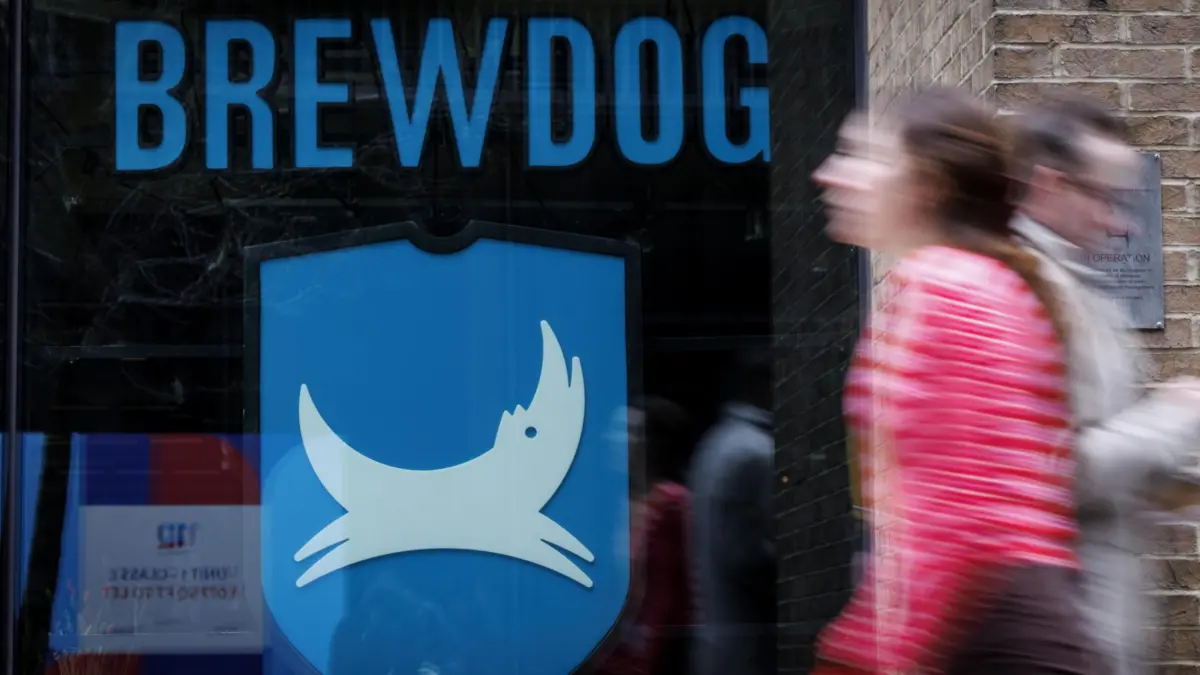
Former employees and hundreds of creditors of BrewDog’s collapsed retail operation are facing a complete financial wipeout, according to a newly released report from joint administrators. The details reveal that there are "insufficient funds" to secure payouts for those left out of pocket by the insolvency of the craft beer giant’s retail division, leaving small businesses, former staff members, and high-profile institutions with virtually no hope of recovering what they are owed.
The Aberdeenshire-founded brewing business, which grew from a two-man operation into an international brand, was carrying a debt mountain of more than £500 million when its retail division collapsed. In March, the brand and its UK operations were acquired by the United States-based multinational drinks firm Tilray in a rescue deal valued at £33 million. While the transaction saved a portion of the business and preserved hundreds of roles, it left behind a trail of devastating financial losses for suppliers, landlords, workers, and retail investors.
According to the statement of proposals and progress update from administrators at AlixPartners, the financial recovery process has been severely hindered by lower-than-expected returns on asset sales and mounting administrative costs. As a result, even preferential creditors—who typically stand near the front of the queue in insolvency proceedings—are highly unlikely to receive any distribution.
The Scale of the Unpaid Debt
The administration report outlines the stark reality of the financial deficit left behind by the retail arm’s collapse. Among the most pressing outstanding liabilities are the sums owed directly to the people who kept the bars running. Administrators confirmed that approximately £489,000 is owed to former employees for unpaid wages and accrued holiday pay.
In addition to the money owed to its former workforce, the retail division left a significant tax deficit. A further £2.4 million is owed to His Majesty’s Revenue and Customs (HMRC) for unpaid Value Added Tax (VAT). Because of the lack of available funds within the retail entity’s estate, neither the former staff nor HMRC are expected to receive disbursements from this arm of the administration.
The impact of the collapse extends far beyond unpaid taxes and staff wages. When Tilray acquired the brand, the transition resulted in the immediate closure of 38 BrewDog bars across the United Kingdom. These closures abruptly halted operations and left behind an estimated £20 million in unpaid bills scattered across hundreds of British businesses and local entities.
The list of affected creditors reflects the diverse supply chain required to operate a national hospitality network. Unpaid invoices belong to a wide variety of independent and local trades, including local coffee shops, bakeries, laundry services, and legal advisors. It also includes public bodies, such as local councils, and leisure operators like holiday parks.
The fallout has also reached major sporting and educational institutions. Among the unsecured creditors listed in the administration documents are West Ham United Football Club, Lord’s Cricket Ground, and the University of Manchester. Under the current projections, these unsecured creditors—who are collectively owed around £190 million—are expected to receive less than a penny in the pound of what they are owed, effectively representing a total loss for the vast majority of those affected.
High Security Costs and Disappointing Asset Sales
A key factor in the lack of funds available for distribution was the unexpectedly high cost of managing the estate after the bars were closed. AlixPartners revealed that the administration process incurred significant, unforeseen expenses related to the security of the vacant premises.
Following the immediate closure of the 38 pubs in March, several of the empty properties were targeted by "unauthorised occupiers" who managed to gain entry and occupy the sites. To resolve these situations and secure the properties, the administrators had to work extensively alongside landlords and legal teams to initiate eviction processes and secure the premises. The legal fees and heightened security measures required to protect these vacant buildings significantly depleted the remaining funds that might otherwise have been distributed to creditors.
At the same time, the process of liquidating the retail arm’s physical assets yielded disappointing results. The sale of bar fixtures, fittings, brewing equipment, and other retail assets raised only minor sums of money, falling far short of what was needed to address the company’s vast liabilities.
Secured Creditors and the Parent Company’s Liabilities
While the retail arm of the business has been left entirely hollowed out, the financial dynamics differ slightly for the parent company, BrewDog PLC. Unlike the retail division, the parent company is still expected to settle its liabilities to its primary preferential creditor, HMRC, in full. This outstanding tax bill totals approximately £3.66 million and consists primarily of unpaid VAT and excise duty.
However, the secured financial institutions that funded BrewDog’s aggressive global expansion are also facing substantial write-downs. The company’s single largest debt was held by the global financial services group HSBC, which was owed more than £61 million across its various banking and lending arms.
Through the restructuring and rescue process, HSBC has managed to claw back tens of millions of pounds. Despite these recoveries, the bank is still facing an estimated shortfall of £16.8 million. The administrators noted in their report that this outstanding deficit could potentially be reduced in the future through the ongoing sale of remaining corporate assets located in the United States.
The collapse has also dealt a heavy blow to BrewDog’s major institutional backers. Private equity firm TSG Consumer Partners, which acquired a 22% stake in the brewer in 2017 to fund its international growth, is set to lose £27.6 million as a result of the administration and subsequent restructuring.
The Toll on Workers and Crowdfunder Wipeout
The human cost of the collapse became apparent in March when the rescue deal with Tilray was finalized. While 736 employees successfully transferred to the US drinks firm as part of the acquisition—which saw Tilray take control of the BrewDog brand, its UK operations, and 11 retained bars—some 440 staff members were made redundant overnight.
Because the retail administration lacks the funds to pay out the £489,000 owed for wages and holiday entitlement, these redundant workers have been forced to seek financial redress through alternative channels. The administrators confirmed they have provided the affected staff with the necessary information and guidance to lodge claims with the UK government’s Insolvency Service, which acts as a safety net to pay statutory redundancy and unpaid wages when an employer enters bankruptcy.
For the company’s pioneering base of retail investors, the administration has brought a similarly painful end. The collapse has officially rendered the shares of approximately 200,000 crowdfunding investors completely worthless.

Earlier this year, AlixPartners confirmed that participants in the company’s famous "Equity for Punks" crowdfunding initiatives would receive no return on their investments. Under these schemes, which ran across multiple rounds over more than a decade, supporters typically invested around £500 each—though many passionate brand advocates invested significantly larger sums. In exchange, they received a small equity stake in the company, alongside product discounts, exclusive event access, and various promotional perks. The administrators have now formally stated that these shares hold "no value" whatsoever.
Staff Apology
BrewDog was established in 2007 by close friends James Watt and Martin Dickie in Fraserburgh, Aberdeenshire. Driven by an irreverent, anti-establishment marketing style and a rapid expansion strategy, the company grew rapidly. At its peak, the brand operated four production breweries and maintained a footprint of approximately 100 bars and pubs situated in major cities across the globe.
Following the collapse and the subsequent sale of the business assets to Tilray, co-founder James Watt expressed his deep regret over the outcome. Watt stated that he was "heartbroken" by the demise of the corporate structure he helped build, and offered a formal apology to both the staff members who lost their livelihoods and the hundreds of thousands of crowdfunding investors who lost their capital.
The brand’s new owner, Tilray, has been approached for comment regarding the ongoing administration process and the closure of the retail estate.