A high-stakes legal battle is underway at the High Court in Belfast as residents of the mainly nationalist Garvaghy Road challenge a landmark decision allowing the Orange Order to march along the route for the first time in nearly three decades.
The Parades Commission’s decision to permit the march has reignited one of Northern Ireland’s most sensitive and historically volatile disputes. As legal teams presented their arguments inside the courtroom on Saturday, a large crowd of residents, community leaders, and elected politicians gathered outside the building, reflecting the intense public interest and anxiety surrounding the weekend’s developments.
The dispute centers on a ruling by the Parades Commission on Friday afternoon, which gave the green light for the Portadown District Orange Order to complete its traditional return route from Drumcree Parish Church. However, the permission came with strict, legally binding compromises.
While the Orange Order had requested a parade of 60 participants departing at 13:00 BST, the commission ruled that the march must take place no later than 08:00 BST on Sunday. Furthermore, the number of participants has been capped at 35, and the commission has strictly prohibited any accompanying bands, musical instruments, or loyalist supporters from joining the procession.

The Garvaghy Road Residents’ Coalition (GRRC), which has long opposed loyalist parades through their community without local consent, immediately launched a judicial review in an attempt to halt the event. The coalition has also submitted its own application to the Parades Commission to stage a counter-protest on Sunday, estimating that up to 5,000 residents and supporters could take to the streets. The commission is expected to deliver its decision on the protest application on Saturday.
Legal Teams Clash Over Police Intelligence and Procedural Shifts
During Saturday’s urgent High Court hearing, legal representatives for the Garvaghy Road residents raised serious questions about the transparency and completeness of the information underpinning the Parades Commission’s decision.
Addressing the court, the residents’ lawyer expressed concern over whether the summary of the Police Service of Northern Ireland (PSNI) assessment included in the commission’s published determination represented the "entirety" of the information provided by senior police officers.
The residents’ legal team has formally requested access to the full, unredacted PSNI threat and risk assessments, as well as historical police reports from previous years, to determine whether there has been a genuine change in the security situation or if the commission’s approach has shifted arbitrarily. Counsel for the residents argued that the decision represented a "significant change" in the Parades Commission’s long-standing policy regarding the Garvaghy Road.

Acknowledging the immense pressure of the timeline, with the parade scheduled to take place the following morning, Judge Patricia Smyth urged both sides to focus on finding a pragmatic way forward. Before adjourning the proceedings briefly, Judge Smyth requested that the legal representatives consult on how to address the disclosure of the police documents within the very short window of time available.
‘Sense of shock’
The early morning timing mandated by the Parades Commission has introduced a direct logistical and religious conflict with local Catholic churchgoers. According to the official parish website for Drumcree, Sunday Mass at the Church of St John the Baptist, which is situated directly on the Garvaghy Road, is scheduled to begin at 08:30 BST.
With the Orange Order permitted to march up until 08:00 BST, local clergy and residents fear that the parade will coincide directly with parishioners arriving for worship. When questioned by BBC News NI about whether the schedules of local church services had been factored into their deliberations, the Parades Commission stated that the commissioners "recognise that the timings set out in the determination" should theoretically allow the morning Mass to proceed as normal.
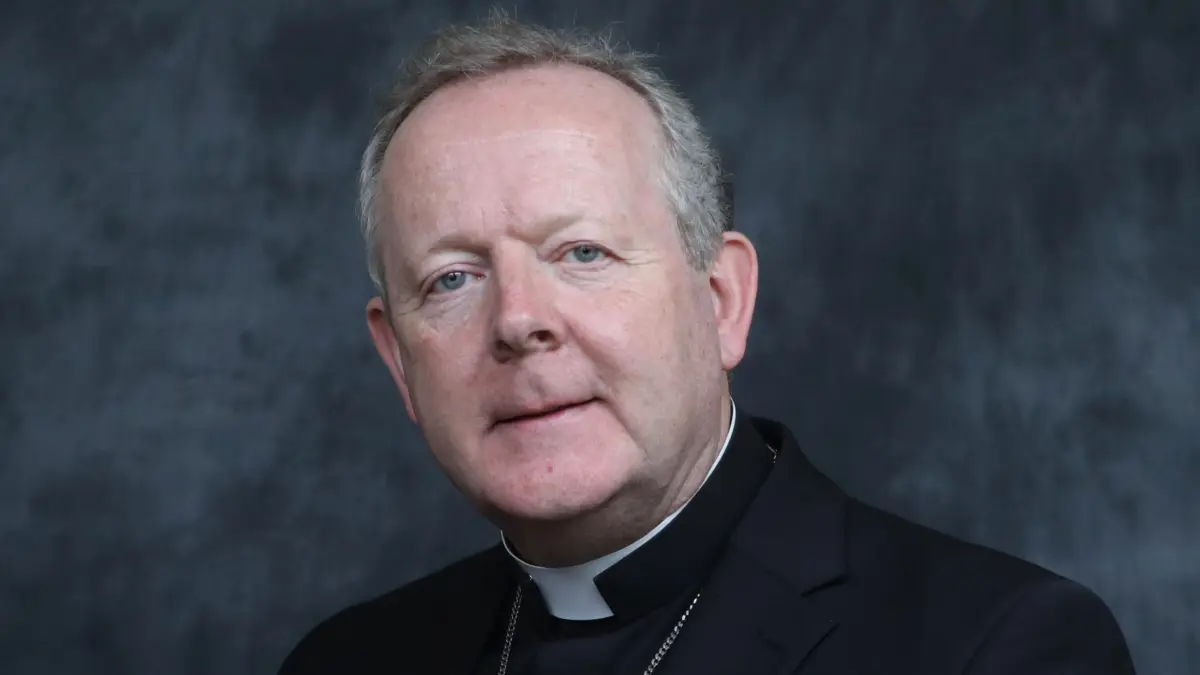
However, the decision has drawn sharp criticism from senior clergy. Archbishop Eamon Martin, the leader of the Catholic Church in Ireland, issued a statement on Saturday afternoon calling for "prayers and support for a peaceful resolution to the complex Garvaghy Road situation."

Archbishop Martin expressed his deep concern over the ruling, stating that he shared the "sense of shock and disappointment of so many people at recent developments." He noted that for many residents in the area, the sudden prospect of an Orange Order parade passing their homes brought back "deeply traumatic and painful memories" of the violent standoffs of the 1990s.
"I also appeal for support for the patient use of solely lawful and democratic processes to resolve this deeply complex and emotive situation," the Archbishop added, urging calm as the legal process ran its course.
‘March going to clash with parishioners’
Local clergy on the ground in Portadown have expressed more immediate, practical anxieties about the physical safety and emotional well-being of their congregations. Fr Peter Clarke, of St John the Baptist Church, warned that the early morning parade is almost certain to "clash" with parishioners coming and going from the morning service.
Fr Clarke confirmed that following the publication of the commission’s determination on Friday, he had emailed the body directly to register his strong objections. He expressed bewilderment at the commission’s logic, stating he "doesn’t know how they came to" their conclusion, though he acknowledged the matter was now in the hands of the High Court.

Reflecting on his own "unhappy recollections" of the height of the Drumcree dispute during the mid-to-late 1990s, Fr Clarke said he "wouldn’t like to see" a return to the community divisions and violence of those years. He noted that the potential disruption was not limited to his own church, as parishioners attending the 10:00 BST service at St Patrick’s Church on nearby William Street were also likely to have their journeys affected.
"Tensions are high" within the Portadown community, Fr Clarke observed, adding that he intended to address the unfolding situation directly from the pulpit during Sunday’s services.
‘Orange Order will comply fully with the law’
In contrast, representatives of the Orange Order have urged calm and called for their critics to respect the independent decision of the Parades Commission. In a formal statement issued on Saturday, the Portadown District Orange Order branch stated that while they were "not happy" with the severe restrictions placed on their parade, they would abide by the ruling.
"We will comply fully with the law and determination," said Portadown District Master Nigel Dawson. "We now ask our community to do likewise. We would appeal to everyone to conduct themselves responsibly and peacefully and not to do anything that could increase tensions within the community."

Dawson defended the lodge’s record, pointing out that local Orangemen had strictly adhered to the Parades Commission’s rerouting decisions and bans for the past 28 years, despite their strong disagreement with them. "All we ask now is that same respect" is shown by the nationalist residents and political leaders affected by this weekend’s decision, he added.
The Parades Commission itself sought to defuse the growing political storm in its written determination. The five-person panel, led by Professor Evelyn Collins, wrote that it had reached its decision after receiving "various written and oral submissions" from the parade organizers, local residents, police commanders, political parties, and church representatives.
"This decision is not, and should not be perceived, as a victory for one side or a loss for another," the commission’s 31-paragraph document stated.
However, the ruling has done little to ease local anxieties. Arriving at the High Court on Saturday morning alongside the residents’ legal team, Breandán Mac Cionnaith of the Garvaghy Road Residents’ Coalition made his group’s objectives clear.

"We are here to convince the law to see sense," Mac Cionnaith said. "We are here to seek justice for our community in Portadown." On Friday, the coalition had described local residents as "furious" and "fearful about what will happen over the weekend."
Political Divisions and a Massive Security Operation
The legal battle has drawn sharp political battle lines, with senior representatives from Northern Ireland’s main political parties arriving at court or issuing strongly worded statements. Outside the Belfast court, a visible crowd of elected representatives from Sinn Féin and the Social Democratic and Labour Party (SDLP) gathered in solidarity with the Garvaghy Road residents.
Sinn Féin President Mary-Lou McDonald launched a scathing attack on the Parades Commission’s ruling, labeling the decision to allow the march "utterly reckless." She argued that the determination showed a "complete disregard" for the rights, safety, and feelings of the nationalist community living along the Garvaghy Road.
"This is a grave situation; recklessness of this scale of course has implications and consequences," McDonald warned. She called on senior political figures, including UK Prime Minister Sir Keir Starmer and Irish Taoiseach Simon Harris, to intervene and "put this right" before Sunday morning.

Conversely, Unionist representatives have rallied behind the commission’s decision, framing it as a modest and highly restricted exercise of religious and cultural expression. Democratic Unionist Party (DUP) MP Carla Lockhart, who arrived at the High Court on Saturday morning alongside DUP MLA Diane Dodds, Alderman Dean McCullough, and loyalist activist Jamie Bryson, insisted that local residents had "nothing to fear."
"Thirty-five men walking down a road silently with no bands in an orderly fashion," Lockhart said, describing the planned procession. "These men work, live and do business in this community." She urged the public not to get "caught up in hysteria" and called on Sinn Féin to "show political leadership and ensure calm remains across the community."
Amid fears of potential civil unrest, the PSNI has mobilized a massive security operation in and around Portadown. The police service confirmed it has activated UK-wide "mutual aid arrangements" to bolster its numbers, with approximately 200 police officers being deployed from Scotland to support local contingency planning.
The scale of the police mobilization stands in contrast to the PSNI’s formal submission to the Parades Commission, in which the police stated they "had no information indicating that the parade would result in disorder or violence."

When did the Drumcree dispute begin?
The current crisis has revived memories of one of the most turbulent chapters in the history of Northern Ireland’s peace process. The Drumcree parade dispute began in earnest during the mid-1990s, centering on the annual July march by the Portadown District Orange Lodge from Drumcree Parish Church back into the town center via the nationalist Garvaghy Road.
At its height, the dispute threatened to derail the delicate negotiations that eventually led to the 1998 Good Friday Agreement. The standoff in July 1995, when police blocked the Orange Order from marching down the Garvaghy Road, resulted in a tense, multi-day confrontation at Drumcree hill. Similar blockades and standoffs occurred over the next three years, triggering widespread rioting, sectarian attacks, road blockades, and lives lost across Northern Ireland.
In response to the recurring violence, the British government established the Parades Commission in 1998 as an independent statutory body designed to regulate public processions and mediate disputes. The commission’s subsequent decisions to ban the Portadown lodge from returning via the Garvaghy Road have been subject to annual protests and legal challenges by the Orange Order for nearly thirty years.
The commission itself has faced renewed scrutiny in recent months. In August, the High Court quashed a previous Drumcree determination made by the commission, prompting the Northern Ireland Office to order an independent review of the body’s operations and decision-making processes.

As the High Court in Belfast considers the residents’ latest appeal, Portadown braces for a tense Sunday morning, with the memories of past conflict casting a long shadow over the Garvaghy Road.