The release of the Apple iPhone 18 Pro and iPhone 18 Pro Max marks a significant milestone in the evolution of mobile photography. While the outward design of the new flagships remains comfortably familiar to long-time users, the hardware tucked behind the sapphire crystal of the main camera represents one of the most substantial engineering shifts in the history of the product line. For the first time, an iPhone features a physical variable aperture, a move that signals Apple’s growing commitment to bridging the gap between smartphone convenience and professional-grade optical control.
In a rare move, Apple recently sat down for a candid conversation with PetaPixel to pull back the curtain on the development of this system. The dialogue with Jeremy Hendricks of Apple’s iPhone Product Marketing team and Matt Waldon, Senior Director of Camera & Depth Hardware, provided a deep look into the technical hurdles, the design philosophy, and the cascading series of decisions that led to the iPhone 18 Pro’s new primary sensor.
Why Is Now the Right Time for a Variable Aperture on iPhone?
The introduction of a variable aperture is a development many industry observers have anticipated for years. Several of Apple’s competitors experimented with the technology in the past, with varying degrees of success. This led to a natural question for the engineering team: why wait until the iPhone 18 Pro to implement a feature that has existed elsewhere in the market?
According to Jeremy Hendricks, the decision was rooted in the delicate balance Apple must maintain between simplicity and advanced capability. “Especially on our Pro line, we really want to make it as simple as possible for anyone to get the best shot possible, all while giving really technically advanced capabilities for pros—people who may be experienced in photography and videography,” Hendricks explained. He noted that the Pro line has had to evolve over nearly a decade to serve both the casual user who wants a "point-and-shoot" experience and the professional who requires granular control over the physics of the lens.
Interestingly, the push for a variable aperture did not actually begin with a desire for the aperture itself. Instead, it was the byproduct of a more fundamental goal: improving low-light performance.
“We really started from sensitivity, actually,” said Matt Waldon. “We’re always trying to make our cameras better, bring better image quality to customers. And in this case, we really wanted to improve the sensitivity. And there’s a few ways to do that.”
As Waldon detailed, the most common way to increase light sensitivity is to increase the physical size of the image sensor. While Apple has done this consistently over the years, there is a physical ceiling to how large a sensor can become before it requires a lens assembly that is too thick for a modern smartphone chassis. Larger sensors necessitate larger optics and significantly more processing power to handle the increased data. For the iPhone 18 Pro, Apple’s engineers found a more efficient path to better light gathering: creating a faster lens.
By moving from the previous generation’s f/1.8 aperture to a wider f/1.48, Apple was able to significantly increase the amount of light hitting the sensor. However, this "speed" came with a new set of optical complications.
“So this camera now has an f/1.48 lens,” Waldon noted. “And if we did that without variable aperture, in some shots—for example, if you’re shooting somebody close and you have something in the background you want to capture—you would really lose sharpness and not necessarily be able to take the shot you want to take.”
At f/1.48, the depth of field becomes incredibly shallow. While this is desirable for portraits, it can be a hindrance for landscape photography or group shots where edge-to-edge sharpness is required. The variable aperture, therefore, became a necessary engineering solution. It allowed Apple to offer the benefits of a "fast" lens for low light and bokeh while retaining the ability to "stop down" the lens to maintain clarity and detail when light is abundant.
Giving Photographers More Creative Control
While the engineering was driven by light sensitivity, the practical result is a new world of creative possibilities for the end user. Jeremy Hendricks emphasized that the variable aperture is the "next natural thing" to expand the creative range of the Pro camera system.
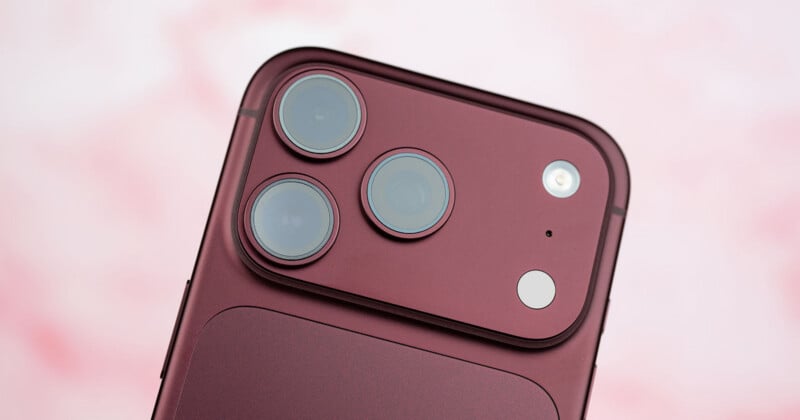
In traditional photography, the aperture is one of the three pillars of the "exposure triangle," alongside shutter speed and ISO. By bringing a physical aperture mechanism to the iPhone, Apple is giving users a tool that computational photography has previously only been able to simulate.
Waldon remarked on the excitement within the team regarding these creative applications. “Being able to shorten the depth of field even beyond what you can shoot with today at f/1.8… being able to close down the aperture gives you more things you can do when it comes to video. You can have more flexibility in shutter speed,” he said.
For videographers, this is a game-changer. In bright sunlight, a fixed wide aperture often forces the camera to use extremely high shutter speeds, which can result in "choppy" or unnatural-looking motion. By closing the aperture to f/4, users can maintain more cinematic shutter speeds without overexposing the frame. Furthermore, the physical blades of the aperture allow for the creation of "starburst" effects on bright light sources—an optical phenomenon that is difficult to replicate authentically through software alone.
Six Aperture Blades Struck the Right Balance
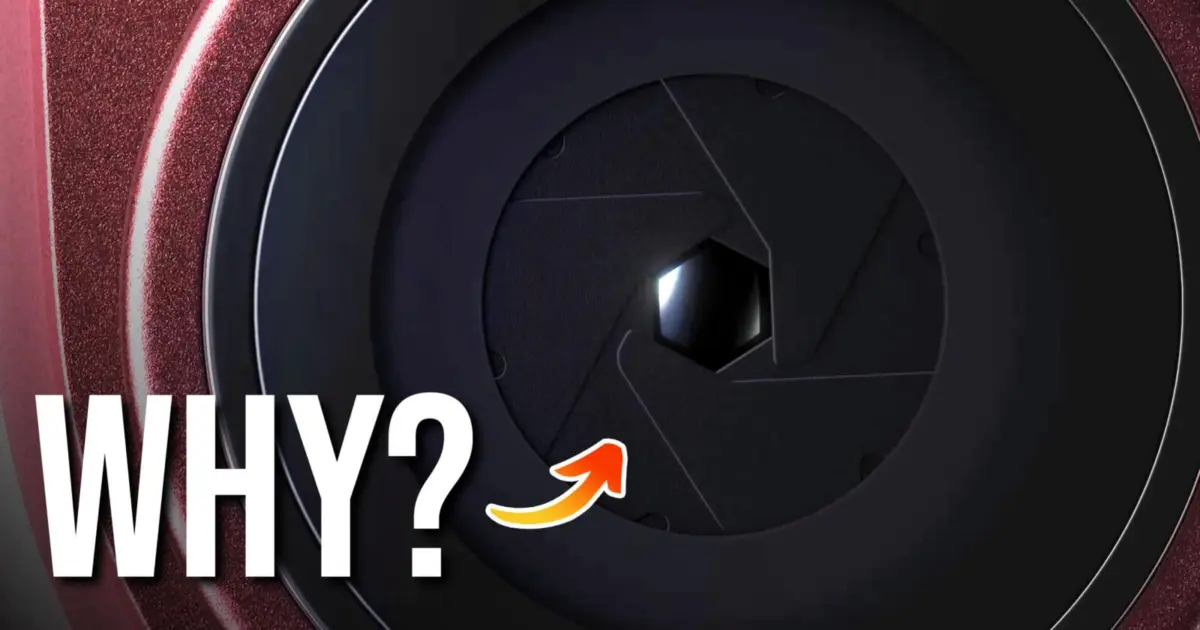
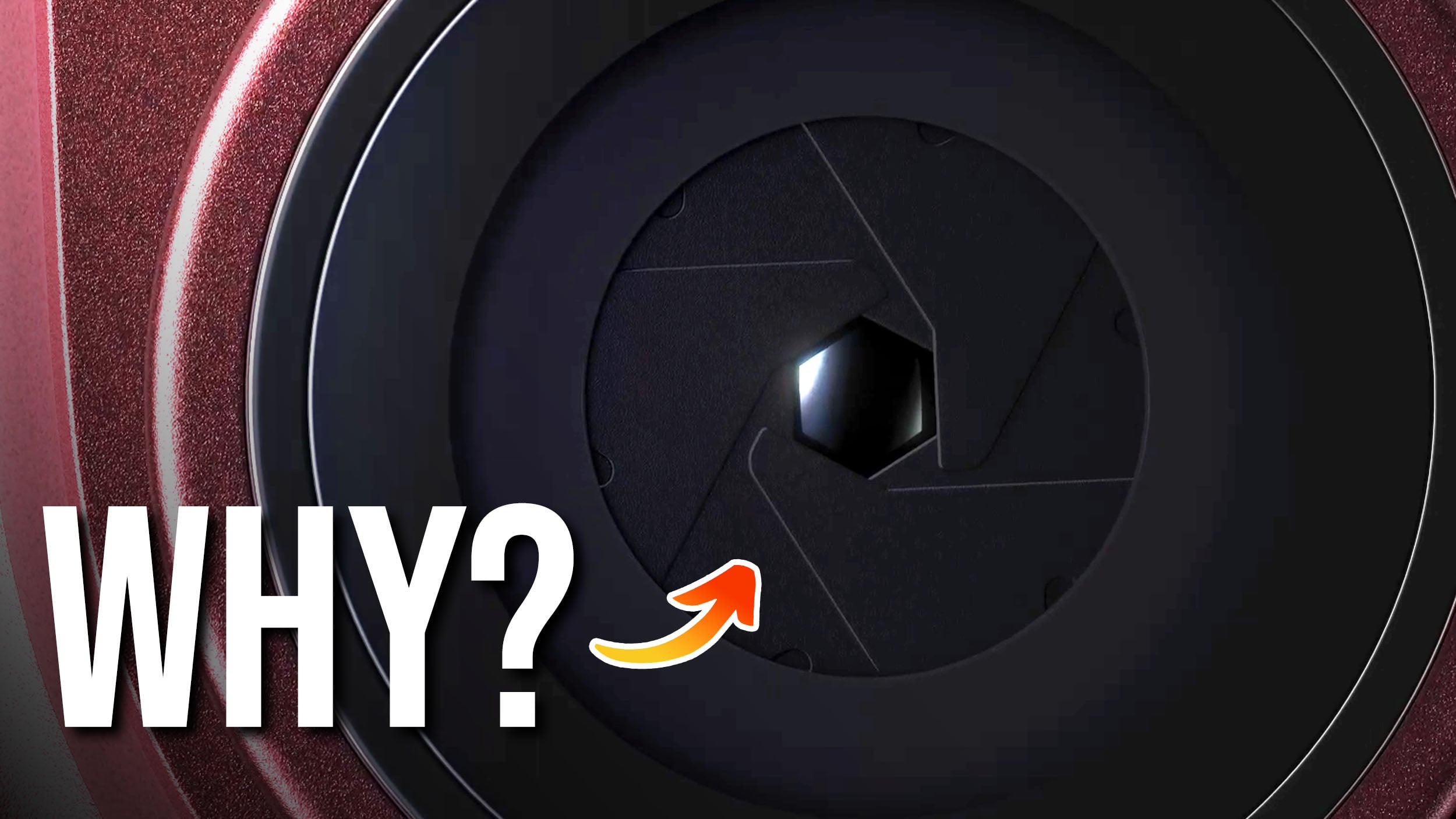
The heart of this new system is a stepless variable aperture mechanism featuring six precisely engineered blades. The choice of six blades was not arbitrary; it was the result of intense optimization to fit within the incredibly cramped confines of a smartphone camera module.
“Six blades was really a combination of things,” Waldon told PetaPixel. “One is just the physical dimensions of it. The more blades you add, given the size constraints, it becomes difficult to fit them all in. So there’s a physical constraint.”
However, the number of blades also dictates the aesthetic quality of the image. The shape of the aperture opening affects the look of "bokeh" (the quality of out-of-focus areas) and the structure of light flares. “We want enough blades to give sort of a nice, smooth aperture at every setting,” Waldon continued. “It impacts how the starburst looks. So for this particular design, six was really the sweet spot.”
The construction of these blades is a feat of material science. Each of the six blades is laser-cut from a specialized polymer composite designed by Apple to be incredibly light, yet durable enough to withstand years of near-constant movement. Each blade is thinner than a human hair, working in tandem with a new, ultra-compact rotor mechanism.
Hendricks noted the complexity of the achievement: “It’s amazing that you have this incredibly complex camera module, let alone with the rotor mechanism, with all of these different things that enable variable aperture in a really smart way on something that you have just in your pocket all the time.”

Each Aperture Value Has Its Place
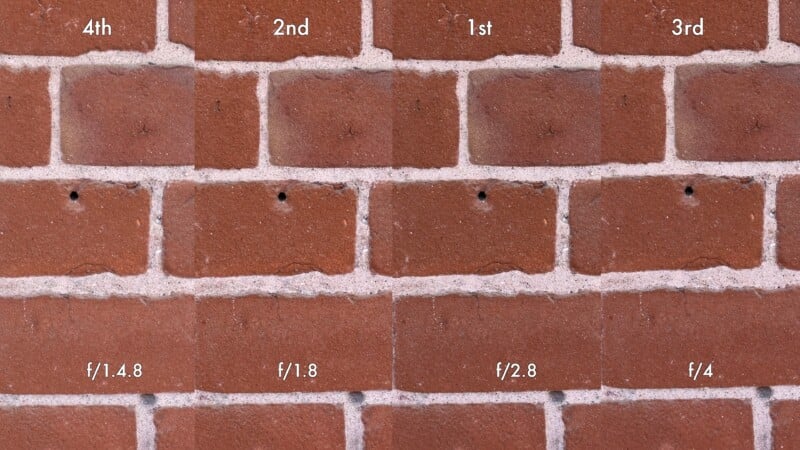
While the mechanical system is "stepless"—meaning it can technically move to any position—Apple has simplified the user interface to provide four distinct manual settings: f/1.48, f/1.8, f/2.8, and f/4.
The system defaults to f/1.8 for most standard shots. Apple engineers found that f/1.8 remains the "gold standard" for general use because it offers a familiar balance of sharpness and natural background blur.
Waldon explained the trade-offs at the extreme ends of the spectrum. At the widest setting of f/1.48, the lens can experience slight optical aberrations, which is a common characteristic of very fast lenses. Conversely, at the narrowest setting of f/4, the camera can encounter "diffraction," a physical property of light that can slightly soften an image when it passes through a very small opening. By providing the middle grounds of f/1.8 and f/2.8, Apple ensures users can find the "sweet spot" for almost any lighting condition or subject matter.
Pro Controls: The Software Half of the Equation
The hardware of the variable aperture is supported by a massive overhaul of the iPhone’s camera software, dubbed "Pro Controls." For years, power users have turned to third-party applications to unlock manual settings. With the iPhone 18 Pro, Apple is bringing those controls directly into the native Camera app.

“Pro Controls kind of invite people to learn about manual controls and try to experiment with them, even if you don’t have a deep background in that,” Hendricks said.
The philosophy remains "automatic by default." A user can still pick up the phone and tap the shutter button without ever knowing the aperture has changed. The phone’s computational engine makes those decisions instantly. However, for those who want to dive deeper, the manual interface allows for the adjustment of aperture, shutter speed, ISO, and white balance.
“The amazing thing now is that now that you do have the full control, you take advantage of the computational image pipeline,” Hendricks added. This means that even when a user manually sets the aperture, they still benefit from Apple’s advanced HDR processing, Photographic Styles, and video features like Audio Mix.
A Long-Term Vision for the Pro Camera
Apple’s entry into the variable aperture space comes at a time when other manufacturers have occasionally stepped back from the technology due to its mechanical complexity and the space it occupies within the device. However, Apple insists its approach is different.
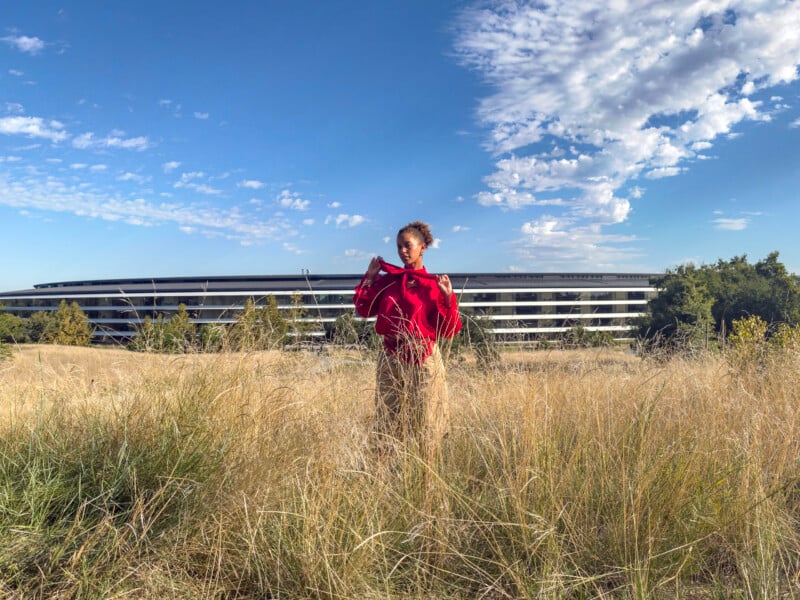
“We went into this very intentionally,” Waldon said. He noted that in some previous implementations by competitors, the difference in image quality between the aperture settings wasn’t significant enough to justify the hardware. Apple believes that with its specific optical format and the jump to f/1.48, the benefits are now undeniable.
“For our optical format and f-number, this is the right time to maintain fantastic quality and also give this creativity,” Waldon said. Unlike a experimental feature that might disappear in a year, Waldon confirmed that this is a foundation for the future: “We think this is something that is super important for our Pro cameras and it’s part of our plan going forward.”
The story of the iPhone 18 Pro’s camera is one of a "cascading series of events." A simple desire for better low-light photos necessitated a faster lens; a faster lens necessitated a variable aperture to maintain sharpness; and a variable aperture necessitated a new suite of Pro Controls to allow users to harness that power. While the iPhone 18 Pro may look like its predecessors, the sophisticated mechanical heart of its new camera system suggests that Apple is entering a new era of optical engineering.