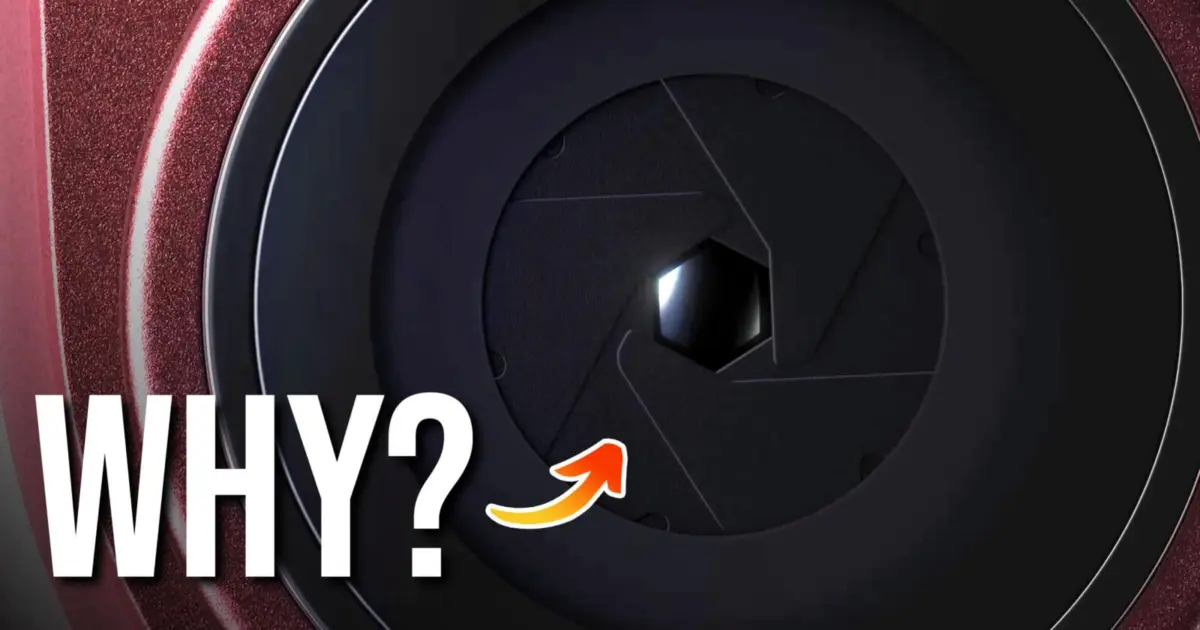
The system defaults to f/1.8 for most standard shots. Apple engineers found that f/1.8 remains the "gold standard" for general use because it offers a familiar balance of sharpness and natural background blur.
Waldon explained the trade-offs at the extreme ends of the spectrum. At the widest setting of f/1.48, the lens can experience slight optical aberrations, which is a common characteristic of very fast lenses. Conversely, at the narrowest setting of f/4, the camera can encounter "diffraction," a physical property of light that can slightly soften an image when it passes through a very small opening. By providing the middle grounds of f/1.8 and f/2.8, Apple ensures users can find the "sweet spot" for almost any lighting condition or subject matter.
Pro Controls: The Software Half of the Equation
The hardware of the variable aperture is supported by a massive overhaul of the iPhone’s camera software, dubbed "Pro Controls." For years, power users have turned to third-party applications to unlock manual settings. With the iPhone 18 Pro, Apple is bringing those controls directly into the native Camera app.

“Pro Controls kind of invite people to learn about manual controls and try to experiment with them, even if you don’t have a deep background in that,” Hendricks said.
The philosophy remains "automatic by default." A user can still pick up the phone and tap the shutter button without ever knowing the aperture has changed. The phone’s computational engine makes those decisions instantly. However, for those who want to dive deeper, the manual interface allows for the adjustment of aperture, shutter speed, ISO, and white balance.
“The amazing thing now is that now that you do have the full control, you take advantage of the computational image pipeline,” Hendricks added. This means that even when a user manually sets the aperture, they still benefit from Apple’s advanced HDR processing, Photographic Styles, and video features like Audio Mix.
A Long-Term Vision for the Pro Camera
Apple’s entry into the variable aperture space comes at a time when other manufacturers have occasionally stepped back from the technology due to its mechanical complexity and the space it occupies within the device. However, Apple insists its approach is different.

“We went into this very intentionally,” Waldon said. He noted that in some previous implementations by competitors, the difference in image quality between the aperture settings wasn’t significant enough to justify the hardware. Apple believes that with its specific optical format and the jump to f/1.48, the benefits are now undeniable.
“For our optical format and f-number, this is the right time to maintain fantastic quality and also give this creativity,” Waldon said. Unlike a experimental feature that might disappear in a year, Waldon confirmed that this is a foundation for the future: “We think this is something that is super important for our Pro cameras and it’s part of our plan going forward.”
The story of the iPhone 18 Pro’s camera is one of a "cascading series of events." A simple desire for better low-light photos necessitated a faster lens; a faster lens necessitated a variable aperture to maintain sharpness; and a variable aperture necessitated a new suite of Pro Controls to allow users to harness that power. While the iPhone 18 Pro may look like its predecessors, the sophisticated mechanical heart of its new camera system suggests that Apple is entering a new era of optical engineering.