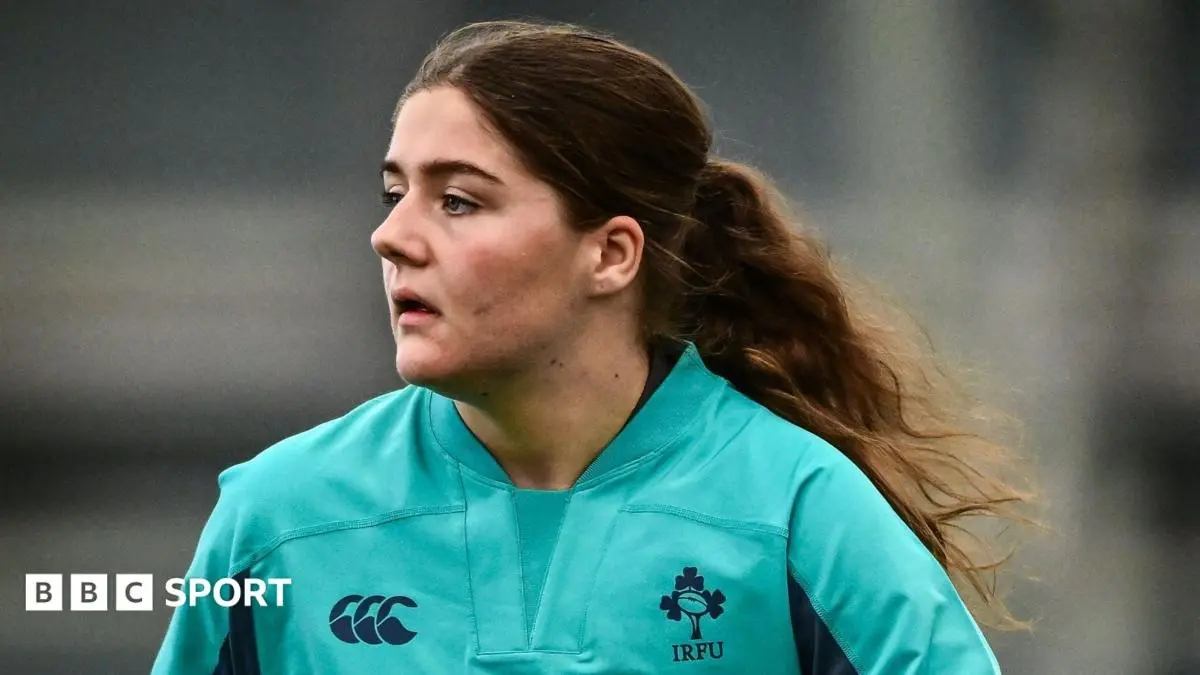
The landscape of Irish women’s rugby continues its evolution this weekend as head coach Scott Bemand signals a new chapter for the national side. Connacht back row Jemima Adams Verling has been named to make her senior Ireland debut in Sunday’s highly anticipated WXV Global Series opener against the United States. The fixture, set to take place at Dublin’s Tallaght Stadium, represents not only a critical test of Ireland’s progress on the world stage but also a milestone for a young player whose rapid ascent through the age-grade ranks has made her one of the most talked-about prospects in the domestic game.
At just 20 years of age, Adams Verling’s inclusion in the starting XV is a testament to the IRFU’s intensifying focus on the developmental pathway. Her journey to the senior international stage has been characterized by consistent, high-level performances across various levels of the game. In 2024, she was a standout figure during the Under-18 Women’s Six Nations, where her physicality and technical proficiency in the loose earned significant plaudits. This followed an equally impressive campaign in the inaugural Under-21 Women’s Six Nations the previous year, a tournament that served as a vital bridge between youth rugby and the professional standards required at the senior level.
Beyond the international age-grade setup, Adams Verling has been a cornerstone for the Clovers in the Celtic Challenge, a competition designed to provide provincial and developing players with the high-intensity minutes necessary to compete with established global powers. Her performances in the Celtic Challenge were the final catalyst for her inclusion in the senior setup. While she was a member of the squad during this year’s Women’s Six Nations, she did not see game time during that campaign. However, the experience of being embedded in the high-performance environment during the spring appears to have paid dividends, with Bemand now trusting her to handle the rigors of a Test match against a physically imposing American side.
On Sunday, Adams Verling will line out at blind-side flanker, joining a back row that balances youthful exuberance with world-class talent. She will operate alongside captain Erin King, who takes her place at open-side flanker. King’s leadership will be vital as Ireland look to dictate the tempo of the game at the breakdown. Completing the back-row trio is Aoife Wafer at number eight. Wafer’s inclusion is perhaps the most significant boost for the Irish pack; having been named the Women’s Six Nations Player of the Championship earlier this year, she has established herself as one of the premier ball-carriers in the northern hemisphere. The combination of Adams Verling’s work rate, King’s tactical leadership, and Wafer’s explosive power represents a dynamic engine room for the Irish side.
In the tight five, Scott Bemand has opted for a blend of experience and established partnerships to anchor the set-piece. The front row features the formidable prop pairing of Niamh O’Dowd and Linda Djougang, two players who have become synonymous with Ireland’s scrummaging stability. They are joined by veteran hooker Cliodhna Moloney-MacDonald, whose return to the fold and subsequent performances have provided a steadying hand for the Irish line-out.
The second row sees a necessary adjustment due to the absence of the influential Sam Monaghan. With Monaghan sidelined by injury, the responsibility falls to Dorothy Wall and Fiona Tuite-O’Sullivan to provide the verticality and defensive steel in the engine room. Wall, traditionally known for her uncompromising defensive work and carrying ability, will be expected to lead from the front in the physical exchanges, while Tuite-O’Sullivan’s athleticism will be key in maintaining Ireland’s mobility across the park.
The Irish backline also reflects a commitment to continuity, particularly in the pivotal half-back positions. Dannah O’Brien and Emily Lane retain their partnership from the Six Nations, a duo that grew in stature as the spring tournament progressed. O’Brien’s tactical kicking and Lane’s sharp distribution from the base of the ruck will be essential in navigating the challenges posed by a resilient United States defense.
In the midfield, the established pairing of Aoife Dalton and Eve Higgins continues. The chemistry between Dalton and Higgins has become a central component of Ireland’s offensive strategy, providing both defensive solidity in the 10-12 channel and a creative spark to release the outside backs. Their ability to read the game and exploit gaps in the defensive line will be a primary focus for the Irish coaching staff on Sunday.
The back three features a mix of tactical awareness and raw finishing ability. Stacey Flood starts at full-back, a role that demands high-level communication and a safe pair of hands under the high ball. On the wings, Ireland will look to the pace of Robyn O’Connor and Vicky Elmes Kinlan. O’Connor, in particular, enters the WXV series with high expectations following her breakout performances in this year’s Six Nations. Her ability to find the try line—highlighted by the two scores she registered during the spring—makes her a constant threat on the right wing.
Bemand has also named a potent bench, designed to maintain intensity in the final quarter of the match. The forward replacements include Neve Jones, Sadhbh McGrath, Eilis Cahill, Jane Clohessy, and Brittany Hogan. Hogan’s presence among the finishers is particularly noteworthy; she was a prolific scorer during the Six Nations, crossing the whitewash five times. Her ability to impact the game late on, whether as a carrier or a defensive specialist, provides Ireland with significant tactical flexibility. The backline cover is provided by Aoibheann Reilly, Anna McGann, and Niamh Gallagher, ensuring that the team remains balanced regardless of any mid-game tactical shifts or injuries.
The significance of Sunday’s match extends beyond the scoreboard. This fixture marks the first time a women’s rugby Test match will be played at Tallaght Stadium, the traditional home of League of Ireland football champions Shamrock Rovers. Moving the international side to a venue of this stature reflects the growing commercial and cultural footprint of women’s rugby in Ireland. It is a move intended to bring the game to new audiences and provide a high-quality environment for both players and supporters.
The clash with the United States is the first hurdle in a demanding WXV schedule for Bemand’s squad. Following the Dublin opener, Ireland will embark on a series of fixtures that will take them across the country and then to the southern hemisphere. They are scheduled to face Japan in a double-header, with matches set for Galway on September 27 and Cork on October 3. The first of these encounters will be an official WXV game, while the second provides further opportunity for squad rotation and development.
Following the domestic leg of the series, the Irish squad will travel to Cape Town, South Africa, for the final stage of their WXV campaign. There, they will face the host nation on October 24 and October 31. This global tour represents a significant logistical and physical challenge, but it is one that the Irish setup views as essential for building the depth and experience required to compete at the highest level of the international game.
As the team prepares for the 13:45 BST kick-off on Sunday, the focus remains firmly on the immediate task at hand. The United States remains a formidable opponent with a rich history in the women’s game, and Ireland will need to be at their clinical best to secure a victory in front of a home crowd. For Jemima Adams Verling, the match represents the realization of a dream, but for the team as a whole, it is the beginning of a vital journey toward the next World Cup cycle.
With a blend of seasoned internationals and emerging talents like Adams Verling and O’Connor, Ireland enters the WXV series with a sense of momentum. The coaching staff has prioritized a clear structure and a defined style of play, and Sunday’s opener will be the first true test of how that philosophy holds up under the pressure of global competition.
Ireland: Flood; O’Connor, Dalton, Higgins, Elmes Kinlan; O’Brien, Lane; O’Dowd, Moloney-MacDonald, Djougang, Wall, Tuite-O’Sullivan, Adams Verling, King (capt), Wafer.
Replacements: Jones, McGrath, Cahill, Clohessy, Hogan, Reilly, McGann, Gallagher.