The transition from a casual hobbyist to a dedicated photographer often hinges on a single, daunting realization: the camera body is merely the foundation of a much larger architectural project. For those entering the world of interchangeable-lens systems, the sheer volume of choices can be paralyzing. Whether a photographer is building their first kit from scratch or an experienced professional is looking to pivot into a new genre, the financial and technical stakes are high. However, the modern secondary market has fundamentally shifted this landscape. By leveraging high-quality used gear, photographers can now access flagship features and professional-grade glass that might otherwise remain out of reach.
Building a photography system is less about chasing the highest specifications and more about aligning technical capabilities with creative intent. The body determines the speed, resolution, and autofocus reliability at a photographer’s disposal, but the lenses ultimately dictate the perspective, the relationship with the subject, and the aesthetic character of the final image. As the industry matures into the mirrorless era, the availability of gear from the last six years on platforms like MPB provides a unique "sweet spot" for buyers—modern features like eye-tracking autofocus and in-body image stabilization are now widely available at a fraction of their original launch prices.
The Foundation: Building an Affordable First Kit
For the beginner, the first purchase is more than just a tool; it is an entry into an ecosystem. Choosing a brand often means committing to a lens mount that will define a photographer’s growth for years to come. While it is possible to switch systems later, the most efficient path involves selecting a mount with a robust roadmap of both entry-level and professional optics.
The APS-C mirrorless market has become the primary staging ground for new talent. These sensors offer a balance of portability and image quality that far exceeds smartphone capabilities while keeping costs manageable. By starting with a used APS-C body, beginners can allocate more of their budget toward lenses—the components that typically hold their value longer and have a more profound impact on the learning process.
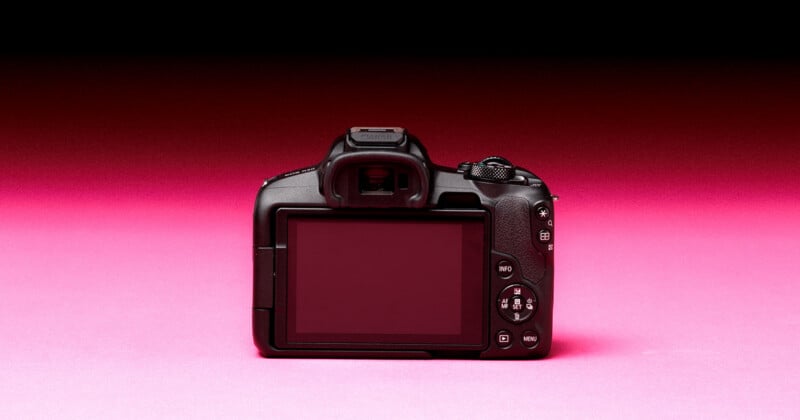
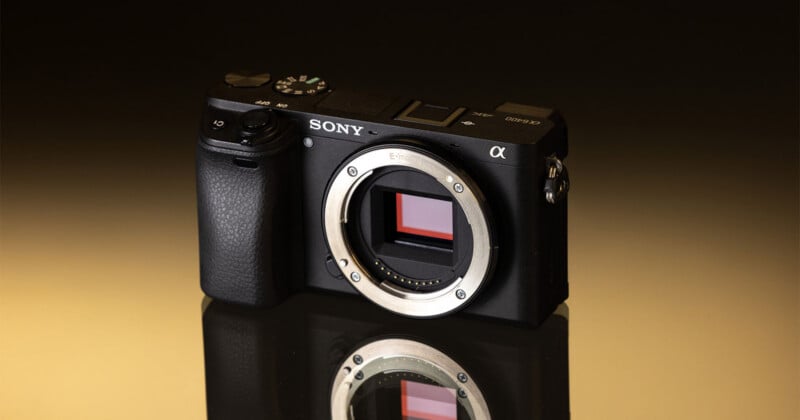
The Canon EOS R50, introduced in 2023, represents the modern entry point. Paired with the RF-S 18-45mm and the RF-S 55-210mm, it provides a comprehensive focal range that allows a novice to experiment with everything from wide-angle landscapes to compressed telephoto sports shots. Similarly, the Sony a6400 remains a powerhouse in the used market. Though it is not the newest in Sony’s lineup, its access to the vast E-mount library makes it a strategic choice. When combined with the versatile E 18-135mm f/3.5-5.6 OSS and the E 70-350mm G OSS, it offers a dual-lens solution that covers almost every conceivable beginner scenario.
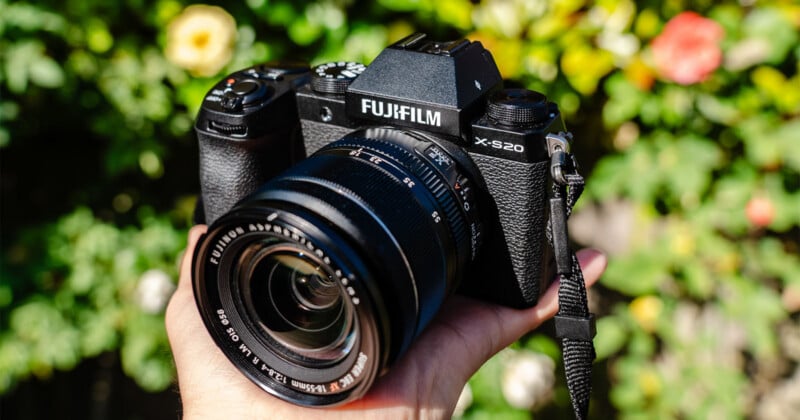
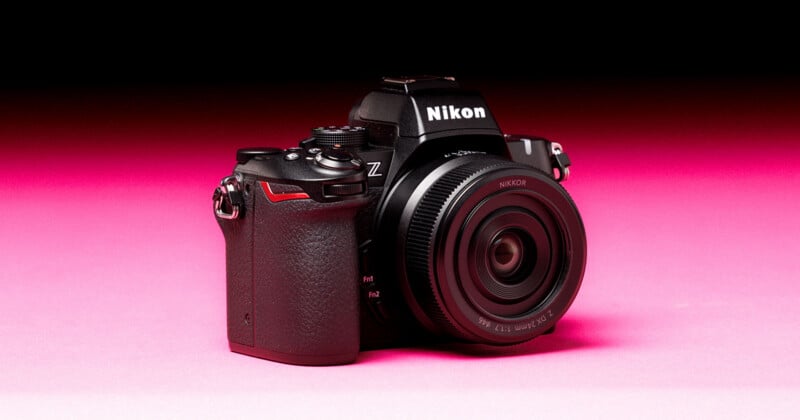
Fujifilm and Nikon offer different paths for the early-stage photographer. The Fujifilm X-S20 is a hybrid marvel, appealing to those who want to balance still photography with high-quality video. Its pairing with the XF 16-50mm and XF 70-300mm lenses provides a professional feel in a compact form factor. Meanwhile, the Nikon Z50 II encourages a more intentional approach. By pairing it with a NIKKOR Z DX 12-28mm for wide-angle work and a 24mm f/1.7 prime, beginners are forced to think more critically about composition and light, a move that often accelerates creative development.
The Technical Frontier: Nature and Wildlife Photography
Wildlife photography is perhaps the most demanding genre in terms of hardware. Success often depends on a system’s ability to track erratic subjects at great distances, often in challenging lighting conditions. In this arena, the lens is the primary driver of success, but the camera body must be fast enough to keep up.
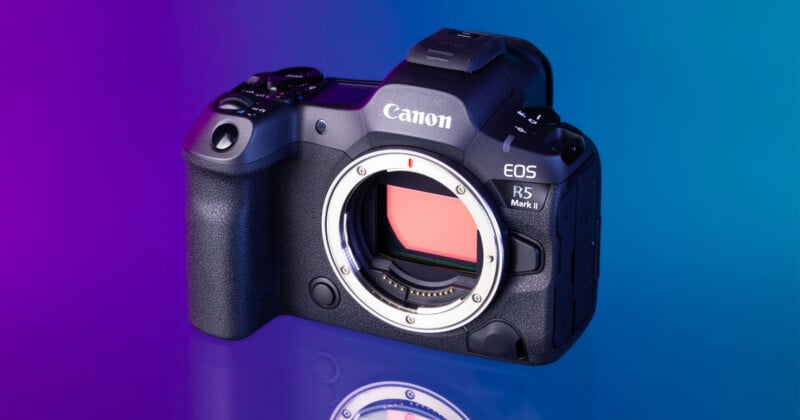
The Canon EOS R5 Mark II is a prime example of high-performance gear that has become more accessible through the used market. Its high resolution allows for significant cropping—a common necessity when a subject won’t stay close. Paired with the RF 100-500mm for versatility and the RF 200-800mm for extreme reach, it creates a formidable kit for birders and wildlife enthusiasts.
Sony’s a1 II offers a similar value proposition, blending high-speed bursts with massive resolution. When coupled with the FE 100-400mm GM and the specialized FE 300mm f/2.8 GM OSS, photographers gain the ability to isolate subjects with professional-grade bokeh and lightning-fast focus. Nikon’s Z8 provides a similar flagship experience in a more compact body, particularly when using the NIKKOR Z 180-600mm and 100-400mm lenses to cover a broad spectrum of distances.
The Art of the Journey: Travel Photography
Travel photography requires a kit that can do everything without weighing the photographer down. A single day on the road might require capturing a vast mountain range at sunrise, a candid street portrait at noon, and a dimly lit dinner in the evening. Versatility and portability are the twin pillars of a successful travel kit.
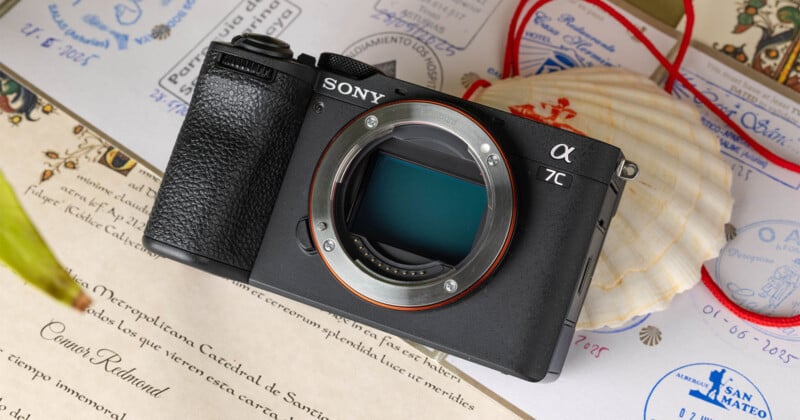
The Sony a7C II is a favorite for this genre, packing a full-frame sensor into a body that resembles an APS-C camera. Its pairing with the FE 20-70mm f/4 G is a masterclass in modern lens design, offering a wider-than-average starting point that is perfect for architecture and interiors. Adding the FE 70-200mm f/4 G OSS II ensures that the traveler is prepared for distant details without the bulk of an f/2.8 zoom.
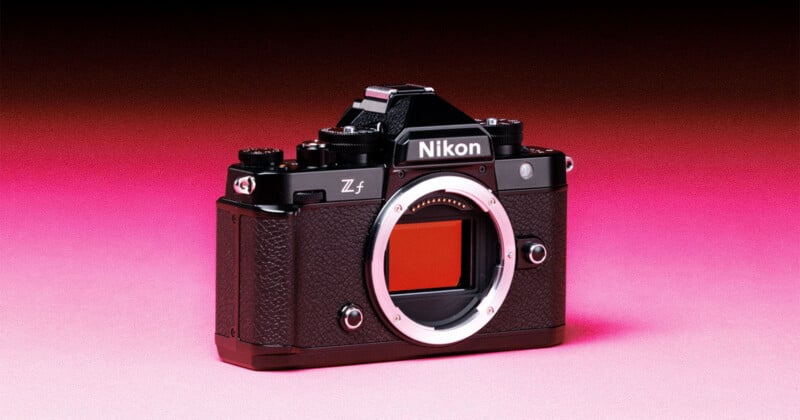
For those who prefer a more tactile experience, the Fujifilm X-T5 and Nikon Zf offer vintage aesthetics with cutting-edge internals. The X-T5’s 40.2-megapixel sensor provides incredible detail for its size, while the Nikon Zf’s full-frame sensor and NIKKOR Z 24-120mm f/4 S pairing offer a "one-lens" solution that satisfies most travel needs. Adding a small prime, like the NIKKOR Z 40mm f/2, allows the photographer to blend into street scenes and capture low-light environments with ease.
Capturing Character: Portrait Photography
In portraiture, the relationship between the lens and the subject is paramount. High resolution is often less important than the "rendering" of the lens—how it handles out-of-focus areas (bokeh) and how it reproduces skin tones.
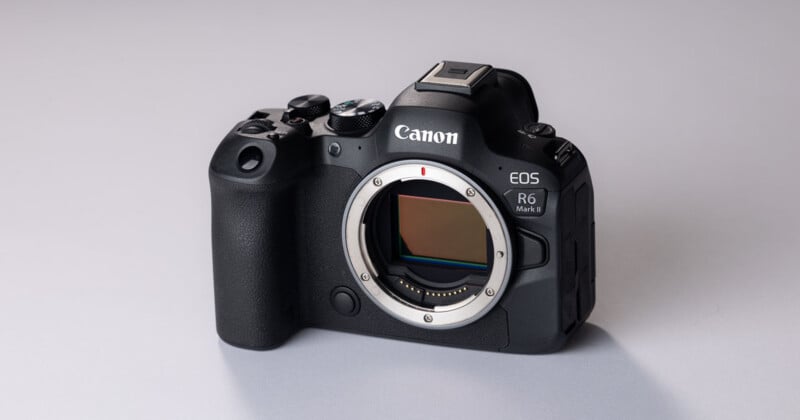
The Canon EOS R6 Mark II, with its sophisticated eye-detection autofocus, has become a staple for portrait and event photographers. Pairing it with the RF 85mm f/2 Macro IS STM provides that classic short-telephoto compression that flatters human features. For more environmental work, the RF 24-105mm f/2.8L IS USM Z offers a flexible alternative that can handle groups and wider storytelling.
Sony and Nikon photographers often gravitate toward fast primes to achieve maximum subject separation. The Sony a7 IV, paired with the FE 85mm f/1.4 GM II and the FE 35mm f/1.4 GM, represents a professional standard for editorial and wedding work. Nikon’s Z6 III, a newer addition to the lineup, offers exceptional speed, making it ideal for portraits where the subject is in motion. Its pairing with the NIKKOR Z 85mm f/1.2 S creates some of the most sought-after imagery in the industry today.
Precision and Scale: Fine Art and Commercial Photography
Fine art and commercial work demand a level of precision where every pixel counts. For these photographers, the goal is often the ability to produce large-scale prints or high-end advertisements where texture and dynamic range are critical.
The Sony a7R V, with its 61-megapixel sensor, is built for this level of scrutiny. When used with the FE 50mm f/1.2 GM, it produces images with a depth that is almost three-dimensional. However, for those looking to push even further, the Fujifilm GFX100S II opens the door to the medium-format world. Its 102-megapixel sensor offers a level of tonal transition and detail that full-frame systems struggle to match. By purchasing such a system used, fine art photographers can move into large-format territory at a cost comparable to high-end full-frame kits.
On the commercial and editorial side, the Panasonic Lumix S5II has emerged as a dark horse. Its L-Mount alliance allows photographers to mix and match lenses from Panasonic, Leica, and Sigma. The Lumix S Pro 24-70mm f/2.8 and 70-200mm f/2.8 create a reliable, professional "workhorse" kit that can handle the rigors of daily assignments, from product shoots to high-profile interviews.
The Need for Speed: Sports and Action
Sports photography is an arms race of autofocus tracking and frame rates. The gear must be able to anticipate movement and capture the decisive moment without fail. The Sony a9 III, with its groundbreaking global shutter, has redefined what is possible in this space, eliminating distortion in fast-moving subjects. Paired with the FE 70-200mm f/2.8 GM OSS II and the FE 300mm f/2.8 GM OSS, it is a kit designed for the sidelines of the world’s biggest arenas.
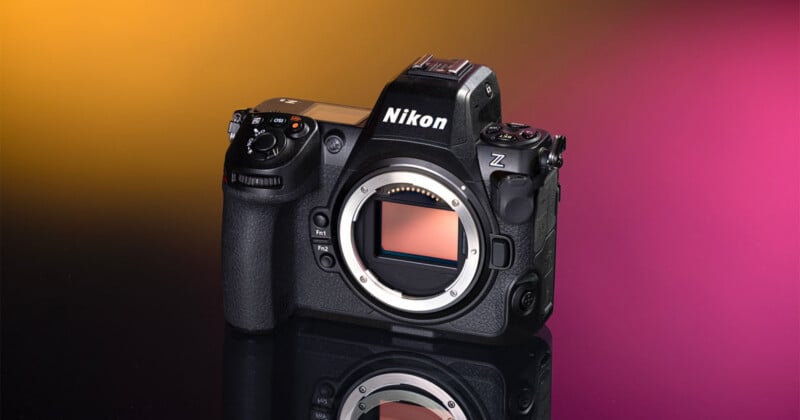
Canon and Nikon maintain their presence in this sector with the EOS R1 and the Z9. These flagship bodies are built for durability and speed. The Nikon Z9’s 45.7-megapixel sensor is particularly useful for sports, as it allows photographers to crop into the action when they are restricted to a specific vantage point.
Small Worlds: Macro Photography
Macro photography requires a specialized set of tools where magnification and working distance are the primary concerns. The OM SYSTEM OM-1 Mark II is a unique contender here; its Micro Four Thirds sensor provides a natural advantage in depth of field, which is often razor-thin at close distances. The M.Zuiko 90mm f/3.5 Macro IS PRO offers incredible magnification, making it a favorite for insect and floral photography.
For full-frame users, the Nikon Z8 and Panasonic Lumix S5II provide excellent macro platforms. The NIKKOR Z MC 105mm f/2.8 VR S is widely considered one of the sharpest lenses in Nikon’s Z-mount lineup, offering a dual-purpose solution that excels at both macro and traditional portraiture.
Building for the Future
The journey of a photographer is one of constant evolution. The equipment that feels perfect today may become a limitation tomorrow as creative interests shift. This is where the used market, facilitated by platforms like MPB, becomes an essential part of a photographer’s career. By buying, selling, and trading gear, photographers can treat their kits as fluid assets rather than permanent burdens.
Strategic gear building is not about owning the most expensive items; it is about owning the right items. Whether it is a beginner finding their first 24mm prime or a professional upgrading to a 102-megapixel medium-format body, the goal remains the same: to remove the technical barriers between the eye and the image. In a world where technology moves fast, the ability to access the best tools through a circular economy ensures that the next great photograph is always within reach.