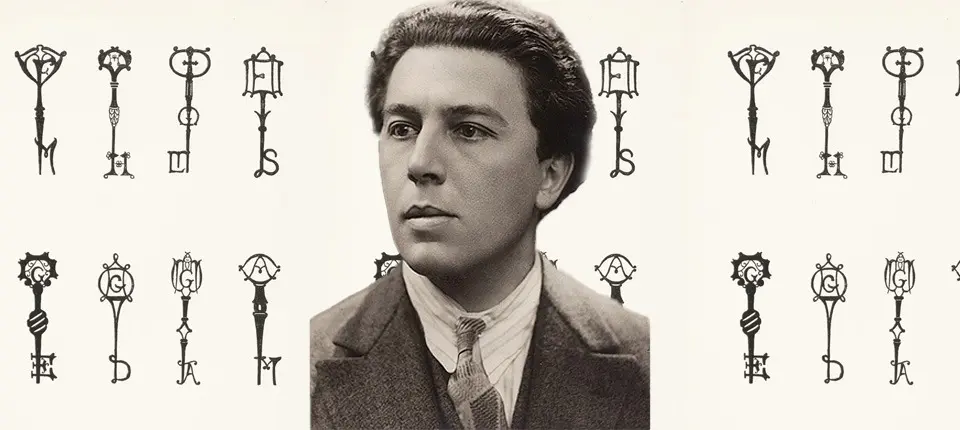
On this day in 1966, the literary and artistic world lost one of its most polarizing and influential figures. André Breton, the French writer, poet, and principal founder of the Surrealist movement, passed away in Paris at the age of 70. His death marked the end of an era for the avant-garde, yet it also solidified his status as the "Pope of Surrealism," a title he earned through decades of rigid intellectual leadership and an unwavering commitment to the liberation of the human mind.
Breton’s passing on September 28, 1966, followed a period of declining health, but his intellectual vigor had remained largely undiminished until the end. As he was laid to rest in the Batignolles Cemetery in Paris, a city he had spent his life transforming into a landscape of dreams and subconscious discovery, the global literary community paused to reflect on a legacy that spanned two world wars and fundamentally altered the trajectory of modern art and literature.
Born in 1896 in Tinchebray, Orne, Breton’s early life was marked by the clinical and the chaotic. During World War I, he served in neurological wards, where he encountered the burgeoning field of Freudian psychoanalysis. Working with soldiers suffering from shell shock, Breton became fascinated by the power of the unconscious mind and the "automatic" expressions of the traumatized psyche. These experiences provided the raw material for what would become Surrealism—a movement dedicated to resolving the previously contradictory conditions of dream and reality into an absolute reality, or a "surreality."
Breton’s journey into the heart of the literary internet of his time began with his involvement in Dadaism. Alongside figures like Tristan Tzara, Breton initially embraced the nihilistic, anti-art sentiment of the Dada movement in the aftermath of the Great War. However, Breton soon found Dada’s commitment to pure destruction limiting. He sought a more constructive path, one that used the irrational not just to mock the bourgeoisie, but to unlock a deeper human truth. This philosophical pivot led to the publication of the first Manifesto of Surrealism in 1924, a document that remains one of the most significant manifestos in the history of the arts.
In the manifesto, Breton defined Surrealism as "psychic automatism in its pure state, by which one proposes to express—verbally, by means of the written word, or in any other manner—the actual functioning of thought." He argued that the dictates of reason, aesthetic concerns, and moral preoccupations were merely shackles that prevented humanity from accessing the true richness of the imagination. By advocating for automatic writing and the recording of dreams, Breton invited writers and artists to bypass the conscious mind and tap into the "merveilleux," or the marvelous, which he believed resided in the everyday.