The findings, released in a comprehensive study by researchers from Imperial College London and the World Weather Attribution (WWA) group, indicate that the disaster was not the result of a single isolated weather event but rather the consequence of what scientists described as a "disastrous cocktail" of environmental factors. Among the most significant of these "bad ingredients" were the compounding effects of greenhouse gas emissions, which have driven global temperatures upward and fundamentally altered the stability of the Himalayan cryosphere. The report emphasizes that human-induced global warming has transitioned from a long-term threat to an immediate driver of lethal geological events in the world’s highest mountain ranges.
The mechanics of the disaster were as swift as they were terrifying. According to the research team, the glacier underwent a catastrophic collapse, falling approximately 4,660 feet from its original position. The sheer kinetic energy generated during this massive vertical drop, combined with the pre-existing thermal stress on the ice, caused the frozen mass to liquidize almost instantly upon impact. This process created an immediate and overwhelming flood of ice-cold water, silt, and debris that surged through the narrow mountain valleys. The speed of the onset left little room for warning or evacuation, as the flood raced through remote villages, claiming the lives of thousands of local residents and wiping out entire communities in its path.
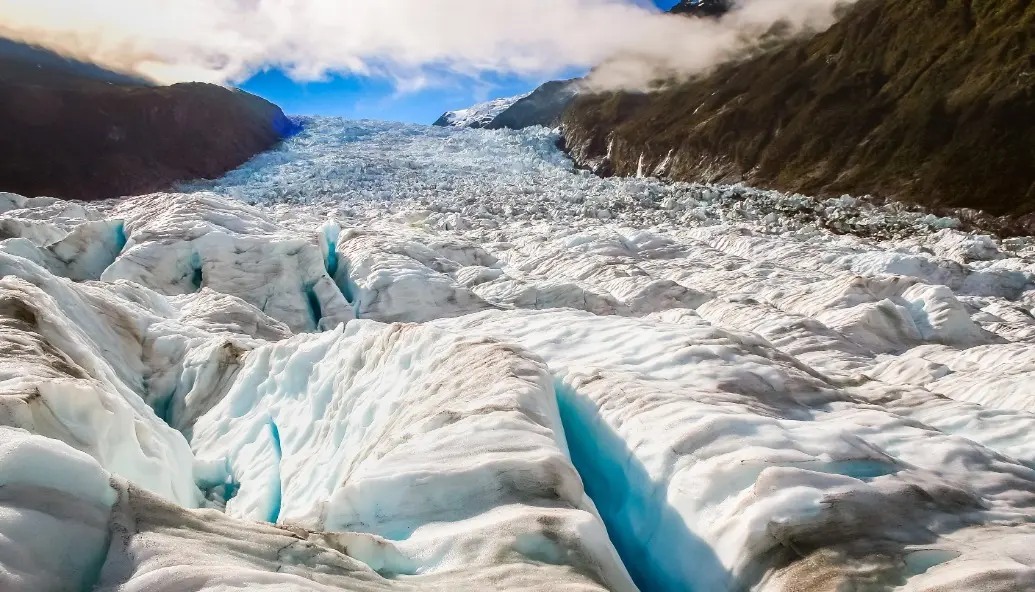
Beyond the immediate tragedy of the collapse, the report provides a sobering look at the long-term degradation of the region’s glacial health. Scientists have observed that glaciers across the Himalayas and the Tibetan Plateau have been thinning at an alarming rate, losing more than half a meter of thickness every single year. This systemic thinning has left the ice sheets more vulnerable to internal fractures and external temperature fluctuations. Specifically, the researchers pointed to the Langtang-Lirung glacier, noting that its retreat has accelerated significantly since 2010. This acceleration serves as a localized indicator of a much broader and more dangerous trend affecting the "Third Pole," a region that holds the largest reserve of freshwater outside the polar ice caps.
Adding to the complexity of the situation is the steady upward migration of the freezing threshold. The study highlights that the altitude at which temperatures remain below freezing—often referred to by scientists as the zero-degree isotherm—has been moving higher by approximately 100 meters every decade. As this line climbs, larger sections of glaciers that were historically locked in a permanent deep freeze are now being exposed to seasonal melting and thermal expansion. This shift weakens the "glue" that holds these massive ice and rock formations together, making the type of rock-and-ice avalanches seen in Nepal and Tibet increasingly likely.
The scale of the event has shocked the scientific community, not only for its human toll but for its geological rarity. The study notes that rock-and-ice avalanches of this particular magnitude are exceptionally rare in the natural historical record. Annual frequency estimates for an event of this size are placed at approximately once every 1,000 to 10,000 years. The fact that such a rare event has occurred now is being viewed as a clear signal that the environmental systems of the Himalayas are being pushed past their breaking point. The researchers stated that this event serves as a grim milestone, demonstrating that the "limits to adaptation" are already being reached in some of the world’s most vulnerable regions. This suggests that traditional methods of disaster mitigation and climate adaptation may no longer be sufficient to protect populations living in the shadow of these rapidly changing glaciers.
The local catastrophe in Nepal and Tibet is mirrored by a broader, global decline in glacial stability, as documented by the World Meteorological Organization (WMO). In its latest global water report, the WMO confirmed a distressing trend: every major glaciated region on Earth recorded significant ice loss for the fourth consecutive year in 2025. This synchronized melting across different continents and hemispheres indicates a global climate system in profound flux. The WMO warned that the persistence of this trend means that the conditions which led to the Nepal floods are becoming more common, suggesting that other glaciated regions may soon face similar risks of sudden, violent flooding and glacial lake outburst events.
To illustrate the sheer volume of water being released by the world’s melting glaciers, the WMO provided a staggering statistic. Between 2023 and 2025, global glaciers lost a volume of ice equivalent to 560 million Olympic-sized swimming pools. This massive influx of meltwater into the global hydrological cycle not only contributes to sea-level rise but also destabilizes mountain river systems, making them more prone to the kind of "flash" events that devastated Tibet and Nepal. The loss of this ice also represents the disappearance of a vital "water tower" for billions of people who rely on seasonal glacial melt for agriculture, drinking water, and hydroelectric power.
The broader climate picture continues to darken as international meteorological agencies synthesize data from the past decade. The WMO has confirmed that the past 11 years have been the hottest on record in human history. This sustained period of record-breaking heat has created a feedback loop in high-altitude environments. As the atmosphere warms, it holds more moisture, which can lead to heavier snowfall or rain at high altitudes. When this moisture interacts with already weakened and thinning glaciers, the risk of a catastrophic failure increases exponentially. The "unusually high temperatures" cited by the researchers as the trigger for the Nepal disaster are part of this larger, systemic warming trend that shows no signs of abating.
The Imperial College London and World Weather Attribution study serves as a call to action for international climate policy. By directly linking the intensity and likelihood of the Nepal and Tibet floods to greenhouse gas emissions, the researchers have provided a clear scientific basis for the argument that climate change is no longer a "slow-onset" disaster. Instead, it is manifesting as sudden, high-magnitude events that can overwhelm even the most resilient mountain communities. The "cocktail" of bad ingredients—rising temperatures, thinning ice, and an upward-shifting freezing line—is a recipe for continued disaster unless there is a significant shift in global carbon trajectories.
As the region begins the long and painful process of recovery, the scientific data remains a stark reminder of the fragility of the Himalayan ecosystem. The loss of life and the destruction of infrastructure in Nepal and Tibet are a testament to the power of a changing climate to reshape the earth in a matter of minutes. With glaciers retreating and temperatures continuing to climb, the focus of the international community is increasingly turning toward the necessity of more robust early warning systems and a deeper understanding of the "limits to adaptation" mentioned in the report.
Ultimately, the confirmation that high temperatures preceded the collapse of the glacier provides a definitive link between global atmospheric trends and local tragedies. The earthquake-intensity crash that liquidized the ice was not an act of chance, but a predictable consequence of a world that is heating up faster than its natural defenses can manage. The 560 million Olympic-sized swimming pools of lost ice and the 11-year streak of record heat are not just statistics; they are the precursors to a new era of environmental instability that the world is only beginning to understand. The events in Nepal and Tibet stand as a sobering warning of what the future may hold for glaciated regions across the globe if the current pace of warming continues.
Copyright © 2026 Energy Live News Ltd ELN