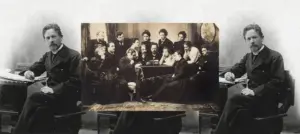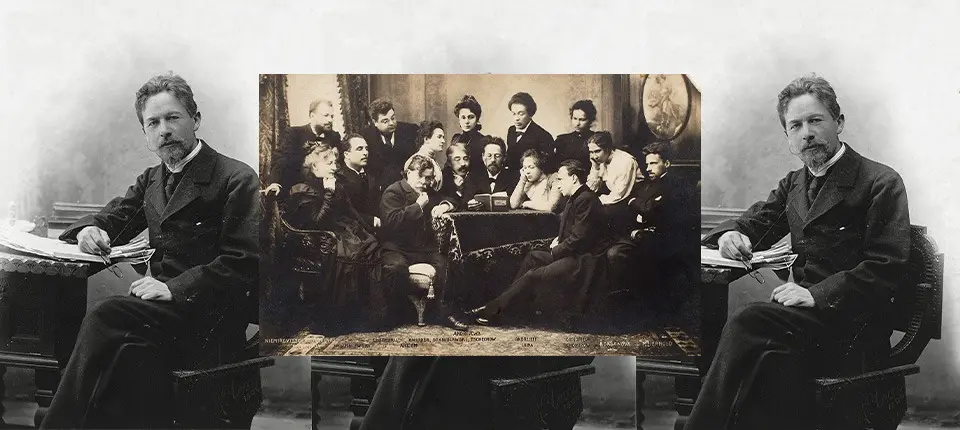
In the late autumn of 1896, the Alexandrinsky Theatre in St. Petersburg hosted the premiere of Anton Chekhov’s The Seagull. It was, by almost all contemporary accounts, a disaster of historic proportions. The audience hissed, the actors were bewildered by the play’s departure from traditional dramatic structures, and Chekhov himself fled the theater in a state of profound humiliation. At the time, he famously declared that "not if I live to be seven hundred will I write another play." History, of course, had other plans; the play would later find its footing at the Moscow Art Theatre, cementing Chekhov’s status as a titan of modern drama. This week in the literary world, as we look back on that infamous failure, the industry continues to grapple with its own transformative moments, ranging from the ethical dilemmas of artificial intelligence to the role of literature in witnessing global catastrophe.
The literary landscape of mid-October 2026 is defined by a tension between tradition and radical change. As writers and thinkers navigate an era of geopolitical instability and technological upheaval, the "best of the literary internet" reflects a community attempting to find meaning in the wreckage of the old world while cautiously building the new.
THE BEST OF THE LITERARY INTERNET
A significant portion of the current discourse focuses on the intersection of storytelling and survival. In a featured conversation, Adam Johnson speaks with Amitav Ghosh about his latest work, The Wayfinder. Ghosh, a writer long preoccupied with the deep currents of history and the looming shadow of the climate crisis, continues to explore how narratives shape our understanding of the world. This dialogue serves as a cornerstone for a broader week of reflection on how literature acts as a witness to history in real-time.
Nowhere is the work of witnessing more urgent than in the Middle East and Ukraine. A recent reckoning published on Lit Hub explores how the ongoing genocide in Gaza has fundamentally reshaped the Middle East, moving beyond immediate political shifts to a deeper, more existential transformation of the region’s cultural and intellectual identity. Parallel to this, Oksana Lutsyshyna has curated a selection of essential Ukrainian literature, highlighting the work of Artur Dron, Andriy Lyubka, and Lena Lyagushonkova. These writers are engaged in the grueling "work of witnessing," documenting a national struggle that is as much about the preservation of language and story as it is about territory.
The ethical responsibilities of the literary community are also being tested on the domestic front. A major point of contention has emerged regarding the publishing industry’s contradictory relationship with technology. Many are asking why major publishers are simultaneously suing Big Tech companies for copyright infringement while "embracing" generative AI with the other hand. This paradox highlights a growing anxiety among authors and editors: the fear that the human element of storytelling is being commodified and automated by the very institutions meant to protect it.